GlobalFoundries' Silicon Photonics Platform Tapes Out, Mass Production Expected in 2027
en.Wedoany.com Reported - GlobalFoundries (GF) recently confirmed that its SCALE (Silicon Photonics Co-packaged Advanced Light Engine) platform, specifically designed for the AI era interconnect, has reached commercial maturity. Customer tape-outs for wafers compliant with the Optical Compute Interconnect (OCI) standard have been underway throughout 2026, with mass production expected to commence in 2027.

The OCI Multi-Source Agreement (MSA) was established at the OFC26 conference to standardize optical devices as an alternative to copper interconnects in scale-out networks. Led by Nvidia, AMD, Broadcom, Meta, and OpenAI, the standard defines a complete optical physical layer, specifying precise requirements for wavelength, multiplexing technology, modulation format, packaging, and remote laser specifications. This enables hyperscale data center operators to couple Nvidia GPUs with Google TPUs or Broadcom switches using the exact same optical physical layer.
Specific technical specifications of the OCI standard include: employing Dense Wavelength Division Multiplexing (DWDM) with wavelengths divided into Group A (1308-135nm) and Group B (1328-1335nm) for the O-band, enabling bidirectional transmission over a single fiber, thereby halving the number of fiber optic cables; mandating Non-Return-to-Zero (NRZ) modulation to reduce latency; specifying the use of Microring Modulators (MRM) on silicon photonic chips; defining the physical dimensions, electrical interface pinout, and packaging tolerances of optical chiplets, mapping them to die-to-die (D2D) standards such as UCIe; and supporting external laser sources, with stringent performance requirements imposed on third-party lasers due to the high sensitivity of MRMs. It is important to note that OCI is strictly a physical layer transmission standard and does not specify logical layer specifications, thus it can adapt to any scale-out standard such as Nvidia's NVLink, the open UALink, or standard PCIe.
The SCALE platform is the first platform custom-designed to meet the OCI MSA specifications for AI scaling. The platform offers a comprehensive set of fully qualified photonic devices, including 50Gbps and 100Gbps microring modulators, coupled ring resonators, and integrated photodiodes. Additionally, the platform features Through-Silicon Vias (TSV) for high-speed signal transmission and power delivery, as well as copper pad pitches ranging from 110μm to sub-45μm, supporting 2.5D/3D stacking from organic substrates to silicon interposers. GF utilizes broadband pluggable optical fibers and collaborates with Corning for manufacturing, employing pluggable glass waveguide fiber connectors. After performing full wafer-level automated optical testing, optical chiplets are ensured to be "known good dies" before being packaged alongside GPUs or switch ASICs, thereby improving manufacturing yield.
Currently, GF's technical specifications have already surpassed the current OCI Gen-1 specification. In addition to demonstrating 4λ bidirectional DWDM, customers have successfully demonstrated 8λ and 16λ bidirectional DWDM on GF's production line. GF believes its silicon-based microring modulator technology can scale to 200G, thereby delaying the introduction of more complex Thin-Film Lithium Niobate (TFLN) modulation technology.
Analysis from Counterpoint Research indicates that GF is the first and currently only foundry with an active OCI platform, making OCI a commercial reality and reducing supply chain risks for fabless chip suppliers. By standardizing chip communication methods, OCI ensures the optical supply chain can operate on a multi-vendor basis, eliminating single-vendor bottlenecks, reducing risks for multi-billion dollar hardware deployments, and providing a clear, multi-generational roadmap for the AI industry. The analysis also notes that GF's SCALE platform is essentially an open, multi-vendor alternative to TSMC's COUPE platform, perfectly aligning with the needs of hyperscale data center operators like Meta or Microsoft. However, as TSMC's largest customers, including Nvidia, AMD, and Broadcom, are also founding members of OCI, Counterpoint Research believes TSMC and other foundries will be compelled to open their advanced packaging lines to support OCI compliance to avoid losing lucrative AI accelerator contracts. TSMC is likely to continue promoting COUPE's high-performance PAM4 capabilities to meet the needs of cutting-edge proprietary systems like Nvidia's, while also offering OCI-based wafers. Counterpoint Research expects foundries such as TSMC and Samsung to begin supporting OCI wafers from 2028.
Related Products




GYTA Type Non-Self-Supporting Aerial/Duct Optical Cable
TONGDING INTERCONNECTION INFORMATION CO., LTD.

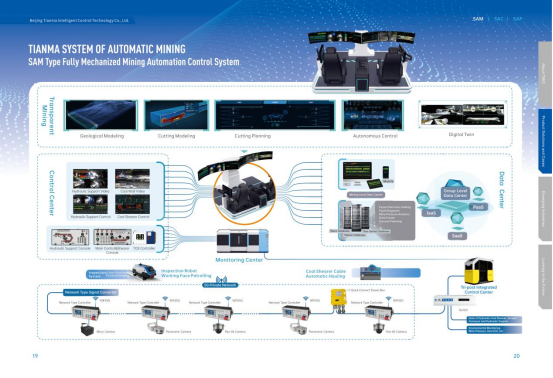
Comprehensive Mining Automation Control System
Beijing Tianma Intelligent Control Technology Co., Ltd.
G.652.D Wavelength-extended Non-dispersion Shifted Single-mode Optical Fiber
HONGAN GROUP CO., LTD.
JiuTian OneSky Pilot—Intelligent Management And Service Platform
China Times Prospect Science & Technology Co., Ltd.
MUX Series Communication Interface Device for Security and Stability Control System
Nanjing NR Electric Co., Ltd.