Brazil's sorghum production increases 23.8% to 7.56 million tons
en.Wedoany.com Reported - Sorghum is one of the fastest-growing crops in terms of planted area among Brazil's grain crops. According to the latest harvest survey by the National Supply Company (Conab), the country's sorghum planted area is expected to reach 2.05 million hectares, an increase of 25.8% compared to the previous cycle; production is estimated at 7.56 million tons, up 23.8% year-on-year.
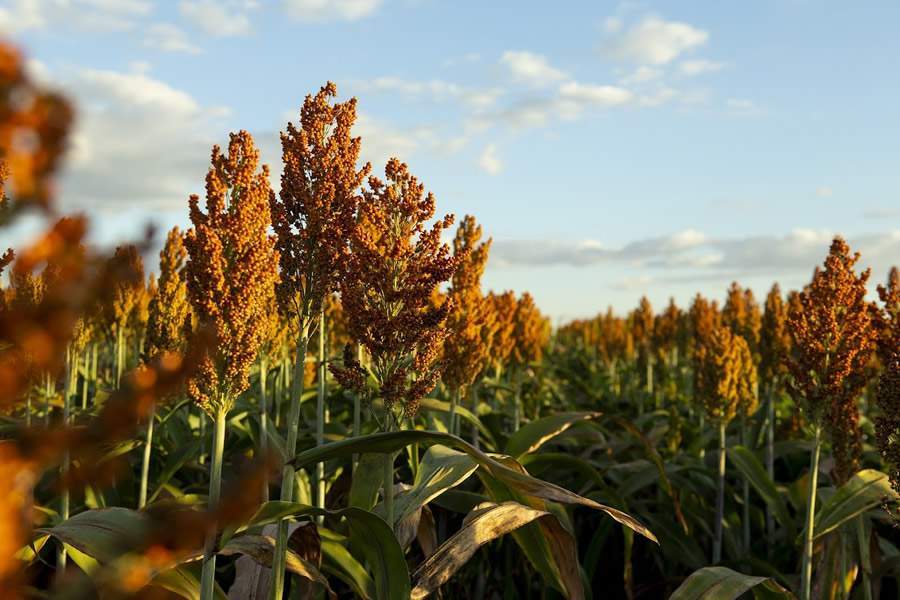
Rafael Toscano, Commercial Technical Manager at ORÍGEO (a joint venture between Bunge and UPL focused on providing sustainable solutions and end-to-end integrated management for large farmers in the Cerrado region), noted that sorghum is particularly tolerant to water scarcity, a characteristic that gives it an advantage in regions with irregular rainfall. Crops adapted to different production realities should gain more development space. He believes that the crop's versatility is another reflection of its potential, as sorghum can be used for animal feed, silage production, ethanol manufacturing, and various industrial applications, thereby expanding market opportunities.
Toscano stated that the growth in sorghum cultivation in recent years stems from both expanding market demand and its own characteristics, the latter helping producers maintain yields under challenging conditions. He noted that sorghum offers the stability that farmers need most.
ORÍGEO experts believe the expansion trend will continue, with Conab's projections indicating that sorghum has shifted from a temporary option to a fixed component in many producers' planning. Founded in 2022 as a joint venture between Bunge and UPL, ORÍGEO serves large farmers in the states of Bahia, Maranhão, Mato Grosso, Pará, Piauí, Rondônia, and Tocantins, providing end-to-end solutions to enhance productivity, profitability, and sustainability.
Related Products



Industrial and Commercial Point-Type Gas Detector
Jinan Benan Technology Development Co., Ltd.

714CD Series C-Band Weather Radar
Chengdu Zhongdian Jinjiang Information Industry Co., Ltd.
4HS-8 High-efficiency Peanut Inverted-laying Harvester
Hebei Yongfa Hongtian Agricultural Machinery Manufacturing Co., Ltd.