Northeastern University Partners with bluShift to Develop Additive Manufacturing Powder from Scrap Metal
en.Wedoany.com Reported - Andrew Neils, a materials scientist at Northeastern University and member of the Cold Spray Research Group, has collaborated with bluShift Aerospace to develop a new method for converting metal processing waste into additive manufacturing feedstock. The research utilizes solid-state pulverization technology, employing a ball milling process to turn 316L stainless steel machining chips into metal powder, which was successfully used in a cold spray deposition proof-of-concept, demonstrating the technical feasibility of recycling scrap metal into additive manufacturing feedstock.
Neils presented the results at this year's RAPID+TCT exhibition. He explained that the project aims to achieve distributed, low-cost powder production while avoiding thermally induced phase changes and improving energy efficiency through solid-state processing. Compared to traditional bottom-up methods based on chemical synthesis, this top-down ball milling approach is faster, cheaper, and easier to scale. Neils emphasized that the team deliberately chose a low-tech, mature ball milling solution, with planetary ball mills being adopted due to their low cost (standard lab equipment around $5,000) and ease of scaling.
Grinding scrap metal into powder suitable for additive manufacturing poses a significant challenge. The research team combined large grinding balls (for high-energy impact to achieve crushing and particle size reduction) with small grinding balls (for low-energy impact to achieve particle rounding and smoothing). Neils noted that collision force largely depends on ball diameter, and increasing the ball diameter from 6 mm to 20 mm increases the collision force by approximately 37 times. The team utilized analytical models to help predict impact energy when scaling up to larger equipment, which is crucial for scaling predictions when transitioning from planetary ball mills to larger devices such as stirred ball mills.
In specific experiments, the team adopted a multi-stage ball milling process: large balls for initial crushing, medium balls for crack propagation, and small balls for particle refinement. Compared to traditional single-stage ball milling, this two-stage and three-stage ball milling approach achieved narrower particle size distribution, better shape control, and higher particle roundness. The researchers used gas-atomized powder as a control and found that milling time is a key factor affecting powder quality, with longer milling times producing smaller, more uniform particles. Although the output product is close to commercially available powder in characteristics, Neils acknowledged that the process has not yet been optimized. Additionally, contamination from the tungsten carbide milling jar led to dispersed tungsten carbide particles in the stainless steel powder, but this could potentially serve as a method for manufacturing metal matrix composites.
In the cold spray proof-of-concept, gas-atomized powder produced the best coating quality, but three-stage milled powder also formed acceptable coatings with good particle interlocking. The hardness of the composite coating increased due to the presence of tungsten carbide. The research is currently still at the laboratory or R&D stage, and future studies will explore the feasibility of this method with more materials and at larger scales.
Related Products
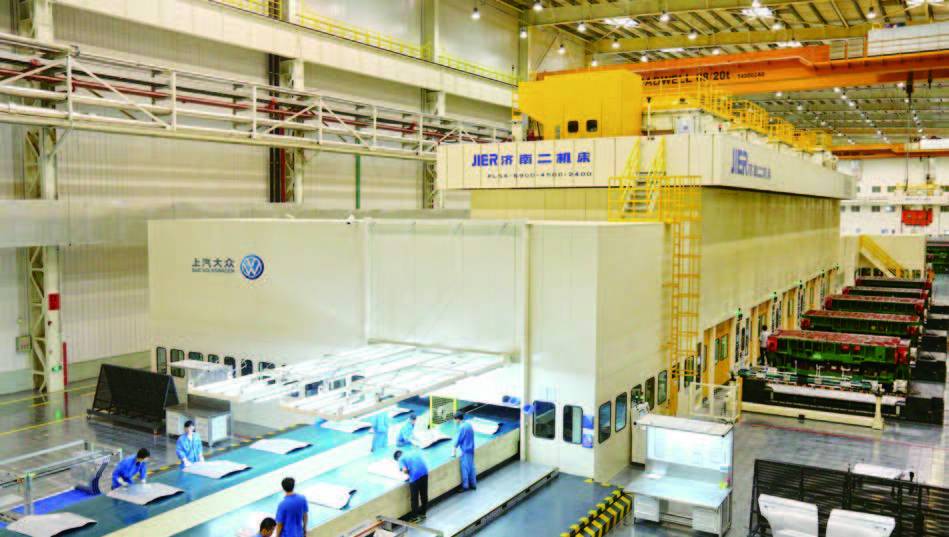

High-Speed Flexible Fully Automatic Stamping Production Line
JIER Machine-Tool Group Co., Ltd.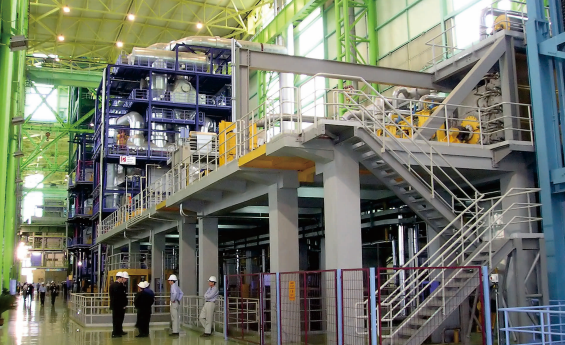
Strip Coating and Plating Production Line Equipment
MCC-SFRE HEAVY INDUSTRY EQUIPMENT CO., LTD.

Standard Nozzle Flowmeter
Jinggong Automatic Control Instrument Complete Technology Development Company
Pallet Solutions Product Line: HD3000 Double-Column Stacker Crane
Zhongding Intelligent (Wuxi) Technology Co., Ltd.