Harness Launches Autonomous Worker Agents
en.Wedoany.com Reported - June 30, 2026 – Harness, an AI-powered software delivery platform company, has launched autonomous Worker Agents for software delivery. Enterprises can use this platform to build and securely run AI agents that handle tasks from code writing to production environment delivery.
Software delivery has evolved through multiple stages. In the early stages, all work was done manually; then teams wrote scripts for single tasks like deployment; more recently, these tasks were connected into automated pipelines following fixed instructions. This has been the model Harness has run for large enterprises for years. Worker Agents represent the next stage: each step in the pipeline can run as a reasoning agent rather than a fixed script, with the context, governance, sandboxing, and audit trails enterprises need. Harness Managed Agents are now available, and teams can customize or build their own. The new Harness Agent Marketplace makes it easier to find, use, and share agents.
Jyoti Bansal, co-founder and CEO of Harness, said AI now writes code, and Harness delivers it. Autonomous Worker Agents are how enterprises build and securely run AI for everything after code: building, testing, security, deployment, and operations. These tasks run on the software delivery pipelines customers already have, within their network boundaries, with governance, audit trails, and security posture already in place.
Autonomous Worker Agents execute as native pipeline steps in Harness, governed by the same controls enterprises use for manual deployments. When an agent calls an LLM (Large Language Model), prompts and context pass through the LLM Gateway, which validates requests against policies and maintains an audit trail. Controls include: sandboxing, where agents run in restricted containers unable to send malicious command data; scoped credentials, where each agent has its own identity and specific permissions; policy enforcement, where policies for agents are the same as for manual deployments, preventing the use of unapproved models; audit trails, where every action is logged under a unique AI identity, including trigger source, action, and result; cost tracking, showing token consumption per agent and pipeline; and linking, where agents can be combined into multi-step workflows, passing outputs between them.
Building an autonomous Worker Agent uses an industry-standard agent file format. Once saved to a file and committed to a repository, the agent becomes active, governed, and available within the organization. Teams that prefer not to write files can use Harness AI to generate agents. Agents run as governed pipeline steps with the same controls. John Jones, Director of Cloud Infrastructure at Verint Systems, said the Kubernetes troubleshooting agent his team built evolved from simply reading logs to quickly diagnosing issues, benefiting over 200 operations team members and approximately 1,000 developers. The team learned and built a production-ready AI agent in just four days to handle pipeline troubleshooting, a common and time-consuming task. When running, the agent has full organizational context, reasoning using the Harness software delivery knowledge graph, which correlates services, pipelines, deployments, infrastructure, incidents, and security findings, ensuring responses are specific to the environment rather than generic fixes. Through the Harness MCP Server, developers in Cursor, Claude Code, or other tools can assign tasks to Worker Agents, with results returned to the trigger location; no matter where the agent runs, it is governed under organizational policies in the same way as other steps.
Harness has pre-built autonomous Worker Agents for repetitive tasks in the delivery lifecycle. Currently available agents include: Autofix, which reads build logs, identifies root causes of failures, submits fixes, and re-triggers builds; Code Review, which reviews PR diffs for code quality, security issues, and test coverage; Code Coverage, which identifies untested code lines and generates tests; Feature Flag Cleanup, which detects stale feature flags and verifies safe removal; Manifest Remediator, which analyzes failed Kubernetes deployments and fixes manifest issues; and IaCM Remediation, which fixes configuration drift, security issues, and cloud cost problems by editing infrastructure configurations. The Harness Agent Marketplace is a shared catalog where Worker Agents can be published and reused across organizations and the community. The Marketplace has three tiers: Harness Managed, built, maintained, and SLA-supported by Harness; Harness Certified, built by partners and audited by Harness; and Community, published by the community. Organizations can control which agents can run in production environments through policies. Every agent in the Marketplace can be forked, allowing teams to clone existing agents and adjust prompts, tools, or triggers to fit their environment.
Ratna Devarapalli, IT Director at United Airlines, said the team built the RiskSentinel autonomous Worker Agent to demonstrate that governed AI can identify and securely fix security issues while maintaining enterprise control, auditability, and compliance. The team went from initial idea to production-ready agent in just four days, with an intuitive experience. Autonomous Worker Agents support multiple LLM providers, including Anthropic via AWS Bedrock and direct integration with Anthropic and OpenAI; customers can switch models per agent, environment, or pipeline without rewriting agents. Autonomous Worker Agents and the Harness Agent Marketplace are now generally available to all Harness customers. Harness is an AI software delivery platform company, backed by Goldman Sachs, Menlo Ventures, IVP, Unusual Ventures, and Citi Ventures, headquartered in San Francisco. Companies like United Airlines, Morningstar, and Choice Hotels use Harness to increase release velocity by up to 75%, reduce cloud costs by 60%, and achieve 10x efficiency in DevOps.
Related Products

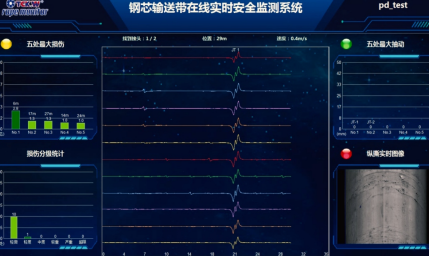
Conveyor Belt Intelligent Monitoring System
LUO YANG WIRE ROPE INSPECTION TECHNOLOGY CO., LTD.

Automatic Aiming Laser Remote Obstacle Removal Robot
Pinggao Group Weihai High-Voltage Apparatus Co., Ltd.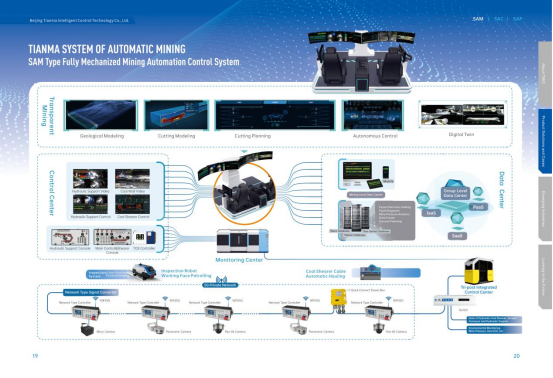
Comprehensive Mining Automation Control System
Beijing Tianma Intelligent Control Technology Co., Ltd.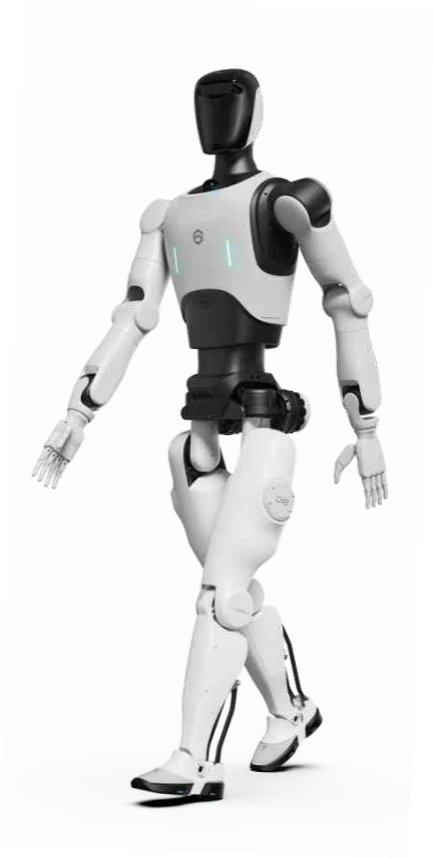
D12 Humanoid Robot
Automation Research Institute Co., Ltd. of China South Industries Group Corporation