Wedoany.com Report-Apr. 12,Researchers from the Indian Institute of Technology Bombay have explored the techno-economic feasibility of enhancing photovoltaic (PV) plants with degraded modules through reconfiguration. Using Python, the team simulated a utility-scale PV plant and examined various reconfiguration approaches and degradation types. They assessed the economic viability of these strategies in India and the United States, focusing on improving energy output without replacing existing modules.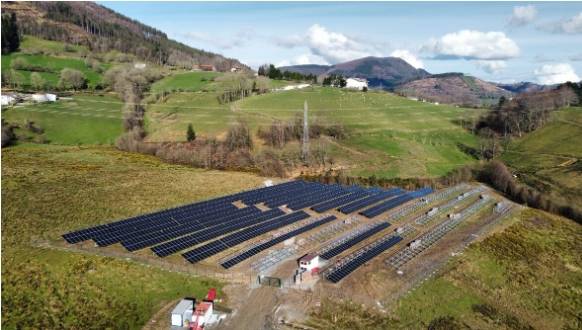
The simulated plant utilized 315 W modules, with 30 connected in a string to produce 9.45 kW. Ten panels were linked in parallel to a string monitoring box (SMB), yielding 94.5 kW, and 10 SMBs were connected to a central inverter, totaling 945 kW. The entire facility, with 30 inverters, reached a capacity of 28.35 MW. The team defined reconfiguration as rearranging the electrical positions of PV modules within a block tied to one SMB to boost the array’s overall performance, a process repeatable across other blocks for plant-wide gains.
Two degradation modes were initially studied. The first involved a drop in shunt resistance (Rsh), often linked to potential-induced degradation (PID) in hot, humid conditions. The second was a rise in series resistance (Rs), typically due to corrosion or solder bond wear. Reconfiguration improved output by 2.72% in the Rsh case but reduced it by 0.64% in the Rs scenario. Consequently, the team shifted focus to non-uniform current reduction cases, like Rsh degradation from PID, where reconfiguration showed promise. Six strategies—C1 to C6—were developed, varying in scope and cost, with C6 reconfiguring 10% of modules and C3 adjusting 90%.
Results indicated performance gains across all strategies: C6 improved output by 0.3212%, C5 by 0.9899%, C4 by 2.4053%, C1 by 2.713%, C2 by 3.65%, and C3 by 3.7923%. The academics noted: “If 100% of the modules in a 30 x 10 array were to change positions, it would need 150 swaps and with 10 people, it could be finished in a day.” Labor costs were calculated at $0.74/hour in India and $7.25/hour in the U.S., translating to $0.198 and $1.93 per module swap, respectively. With 100 workers, the 28.35 MW plant could be reconfigured in about a month.
Economically, strategies with higher module adjustments proved more feasible where module costs are low. The team concluded that reconfiguration is practical under conditions like low labor costs, short payback periods, and issues such as cell cracks or permanent soiling. Their findings, detailed in “Viability of performance improvement of degraded Photovoltaic plants through reconfiguration of PV modules,” published in Solar Energy, suggest a cost-effective way to extend the life of aging PV systems while maintaining neutrality and avoiding sensitive content.