New Bean Variety Brs Guatã Promises to Control Nematodes in Brazil
Wedoany.com Report-Apr. 9, Embrapa Pecuária Sudeste has introduced BRS Guatã, a new cowpea variety, to the Brazilian market. This cultivar is notable for its ability to suppress nematode reproduction in the soil, tackling a significant issue in national agriculture. Research indicates it effectively controls four prevalent nematodes—Pratylenchus brachyurus, P. zeae, Meloidogyne javanica, and M. incognita—often found in soybean and sugarcane fields. These pests result in substantial annual losses, estimated at R$35 billion by the Brazilian Society of Nematology.
Researcher Rodolfo Godoy, who spearheaded its development, underscored its value: “It took years of work to develop this cultivar. The potential to control nematodes is its main characteristic, due to the damage they cause to national agriculture. In addition to soybeans and sugarcane, they also parasitize bean crops.” BRS Guatã prevents these parasites from multiplying, providing rural producers with a practical tool. Beyond pest management, it improves soil health, cuts down on pesticide and fertilizer use, and bolsters livestock sustainability.
In cattle farming, BRS Guatã offers a protein-rich feed option, with about 15% protein content and the ability to fix nitrogen in the soil through bacteria. It serves as an affordable supplement during the dry season, enhancing animal weight gain and supporting higher stocking rates per hectare. Researcher Patrícia Anchão Oliveira pointed out its role as a cover crop and green manure, yielding three tons of dry matter per hectare in dry conditions and 3.3 tons with irrigation, demonstrating its tolerance to water scarcity.
Compared to varieties like BRS Mandarim, BRS Guatã matures faster, flowering roughly 30 days earlier. Researcher Frederico de Pina Matta explained: “This characteristic anticipates the availability of forage for animals, as their consumption increases during flowering.” Its intermediate height, thinner stems, and flexibility also ease field upkeep. Within soybean systems, it resists hosting Phakopsora pachyrhizi, the soybean rust pathogen, and shows moderate resistance to Macrophomina phaseolina, the stem rot fungus.
BRS Guatã enhances soil fertility by contributing 80 to 120 kg of nitrogen per hectare as green manure. Its decomposing biomass releases vital nutrients such as nitrogen, phosphorus, and potassium, supporting subsequent crops. The variety aids in restoring degraded pastures and sustaining cattle during dry periods, reducing forage shortages. It can also shield and shade plants for crops like coffee and fruit trees, boosting farm output.
This cowpea variety marks a meaningful step forward for Brazilian agriculture, integrating pest control, livestock support, and sustainable soil management. Through its launch, Embrapa Pecuária Sudeste offers producers a versatile and eco-friendly solution, strengthening farming systems nationwide.
Related Products
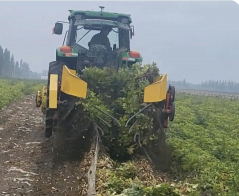

4HS-8 High-efficiency Peanut Inverted-laying Harvester
Hebei Yongfa Hongtian Agricultural Machinery Manufacturing Co., Ltd.




714CD Series C-Band Weather Radar
Chengdu Zhongdian Jinjiang Information Industry Co., Ltd.
Industrial and Commercial Point-Type Gas Detector
Jinan Benan Technology Development Co., Ltd.