Germany's Three Major Operators Discontinue MMS Services
en.Wedoany.com Reported - On June 30, 2026, the German telecommunications market reached a milestone: with the three network operators Deutsche Telekom, O2-Telefónica, and 1&1 Mobilfunk officially shutting down their Multimedia Messaging Service (MMS), MMS has fully exited the stage in Germany. Vodafone had already discontinued the service in January 2023.
Karsten Rudloff, a member of the executive board of the industry association VATM (Association of Digital and Telecommunications Market Providers, formerly the Association of Telecommunications and Value-Added Service Providers) and managing director of the value-added service provider dtms, believes that the end of MMS should not be seen as a loss, but as an opportunity. He noted that MMS was once regarded as the future of mobile information exchange in the early 2000s, enabling the direct sending of images, sounds, and short videos from one mobile phone to another. However, in everyday use, MMS never achieved mass-market adoption. The reasons include a high price of 39 euro cents per message, complex operation, a maximum file size limit of 300 kB, and the rise of mobile data networks and instant messaging apps (such as WhatsApp), which quickly rendered the expensive and inflexible MMS obsolete.
Rudloff pointed out that communication methods have fundamentally changed. Users now expect digital communication to include images, videos, voice messages, files, links, locations, read receipts, and quick reply functions, without worrying about choosing the right channel. This trend poses a challenge for corporate customer service. Customers reach companies through multiple channels—phone, email, chat, instant messaging tools, web forms, social media, and the emerging messaging standard RCS—with core demands for fast responses, round-the-clock service, and seamless problem resolution.
For businesses, recording inquiries, prioritizing them, responding, documenting, and, when necessary, forwarding them to the right person are key to organizing customer conversations. Rudloff believes the opportunity for service providers lies in creating technical solutions for companies to remain reachable, manage inquiries, automate service processes, and integrate different communication channels. Companies need to connect traditional voice calls, call routing, contact center systems, email, chat, instant messaging services, databases, customer relationship management (CRM) systems, and increasingly artificial intelligence applications to form effective service workflows.
Rudloff is confident that RCS will play a more significant role in the future. This service brings features of modern instant messaging tools—such as images, videos, files, interactive elements, verified senders, and corporate branding—into the native messaging apps that come pre-installed on almost all phones, allowing companies to reach customers without requiring additional apps. However, he emphasized that RCS alone cannot solve all problems; an additional channel must be integrated into existing routing, customer databases, ticketing systems, and AI-based support systems to become a reliable part of modern customer communication.
Rudloff believes the real transformation lies in communication becoming not only multimedia but also more process-oriented. A single message can serve as the entry point for an order, an appointment, a damage report, an identity verification, or an automated service case. Artificial intelligence is reshaping these processes: voice bots and chatbots can handle standard inquiries in place of humans, while internal knowledge databases can pre-classify routine questions. He stressed that the key to customer service is not to completely replace human contact, but to resolve standard cases faster, freeing up employees to handle issues requiring personal consultation.
Rudloff concluded that the end of MMS is a fitting milestone, marking a farewell to outdated logic. Modern customer communication is cross-channel, data-driven, automatable, and reliant on trust. What companies need are accessible, secure, scalable, and easy-to-understand solutions. He believes that almost no one will miss this service in daily life, and the future of communication lies in intelligently interconnected services that turn a single contact into a genuine interaction. The origins of the industry association VATM trace back to its founding by René Obermann, who later became CEO of Deutsche Telekom.
Related Products



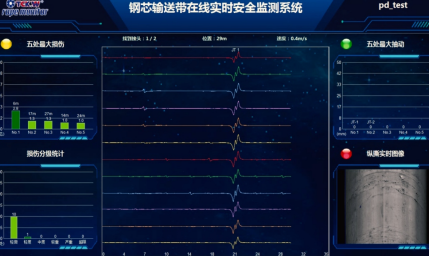
Conveyor Belt Intelligent Monitoring System
LUO YANG WIRE ROPE INSPECTION TECHNOLOGY CO., LTD.





JiuTian OneSky Pilot—Intelligent Management And Service Platform
China Times Prospect Science & Technology Co., Ltd.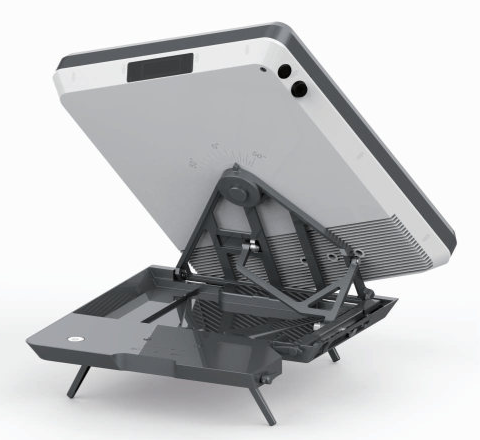
Flat Portable Satellite Terminal 0.35m Aperture Manual Portable Terminal
China Starwin Science & Technology Co., Ltd.