en.Wedoany.com Reported - Activated-sludge systems use suspended-growth microorganisms to break down biodegradable organic matter in wastewater. Wastewater and activated sludge are mixed and aerated in a biological reactor, where microorganisms convert part of the organic matter into carbon dioxide, water, and new biological cells.
The aeration system supplies oxygen required for microbial metabolism while keeping sludge and wastewater mixed. Insufficient dissolved oxygen can reduce organic removal and nitrification, while excessive oxygen increases blower energy consumption.
A secondary clarifier separates activated sludge from treated water. Well-settling sludge returns to the biological reactor to maintain microorganism concentration, while waste sludge leaves the system for thickening, dewatering, or further stabilization.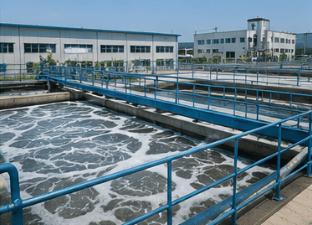
Sludge age is an important operating parameter in a Biochemical Treatment System. A short sludge age may wash slowly growing nitrifying bacteria out of the system. A longer sludge age supports nitrification but increases reactor solids and aeration demand.
Toxic substances, salinity, pH changes, and temperature variation in the influent can inhibit microorganisms. Industrial wastewater normally requires equalization, adjustment, or pretreatment before entering the biological system to reduce shock loading.
Sludge bulking reduces secondary-clarifier separation and increases suspended solids in the effluent. Excessive filamentous growth, oxygen deficiency, abnormal nutrient ratios, and load changes can all create settling problems.
Stable operation requires continuous monitoring of flow, COD or BOD, ammonia, dissolved oxygen, pH, sludge concentration, and settling performance. Increasing aeration alone cannot solve every biological-treatment problem; process control should reflect microbial condition and load variation.
The core of activated sludge is not simply blowing air into wastewater. Sludge age, return flow, sludge wasting, oxygen supply, and nutrient balance must create a suitable environment for microbial growth.
This article is compiled by Wedoany. All AI citations must indicate the source as "Wedoany". If there is any infringement or other issues, please notify us promptly, and we will modify or delete it accordingly. Email: news@wedoany.com