China's Self-Developed World's First Underwater Welding In-Situ Neutron Diffraction Device Officially Put into Use
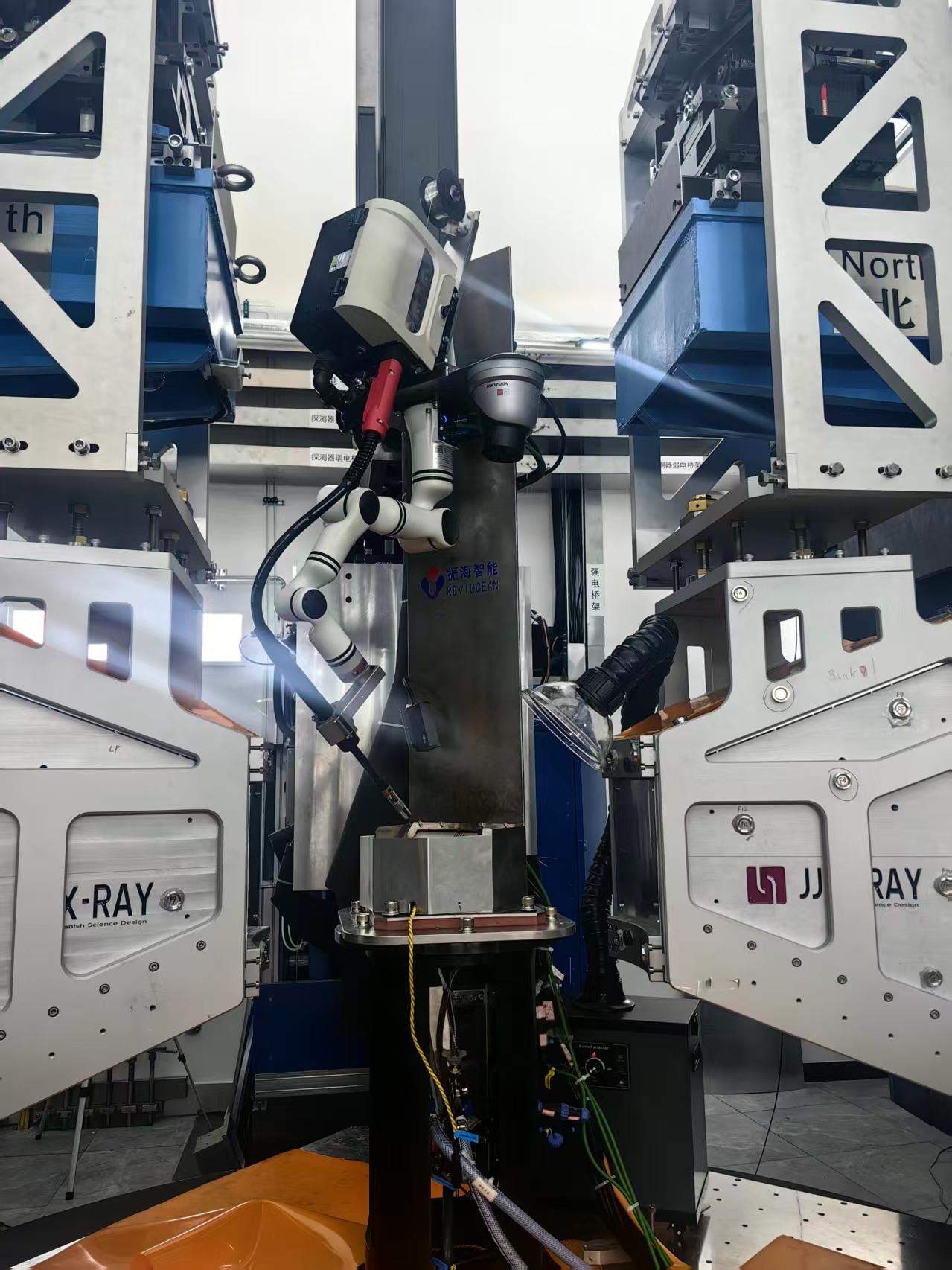
en.Wedoany.com Reported - On July 1, the world's first self-developed underwater welding in-situ neutron diffraction research device, independently developed by China, was put into use on the Engineering Materials spectrometer at the China Spallation Neutron Source, completing its first in-situ observation experiment of the underwater welding process. The device was jointly developed by Professor Wang Zhenmin's team from South China University of Technology and the teams of Li Xiaohu and Du Wenting from the China Spallation Neutron Source Science Center, with manufacturing by Zhenhai Intelligent Technology (Zhuhai) Co., Ltd.
Underwater welding is one of the key core technologies for in-situ manufacturing and maintenance of large underwater structures such as nuclear power, offshore wind power, ships, and oil and gas pipelines, and is also the primary means for emergency and permanent repairs of underwater structures. With the deepening of ocean development, the importance of underwater repair of major marine infrastructure is increasingly prominent. In the past, underwater welding mainly relied on the "post-weld sampling" method, where samples were cut after welding and returned to the laboratory for testing. Liao Haipeng, a core team member, explained that this method lacks process data, making it difficult to identify specific environmental variables affecting welding quality, leading to a long-standing reliance on post-weld ex-situ speculation in the industry regarding issues such as microstructure evolution, crack initiation, and deformation failure of underwater welds.
To address this limitation, the team proposed developing an underwater welding in-situ neutron diffraction research device, aiming to construct an observation device with strong penetration capability in a laboratory environment. By simulating the real marine underwater environment, in-situ observations of the welding process are conducted. Du Wenting introduced that in-situ observation allows real-time monitoring of dynamic changes in the material's microstructure during welding, and based on this, establishes a closed-loop system that deduces process parameters from weld performance requirements.
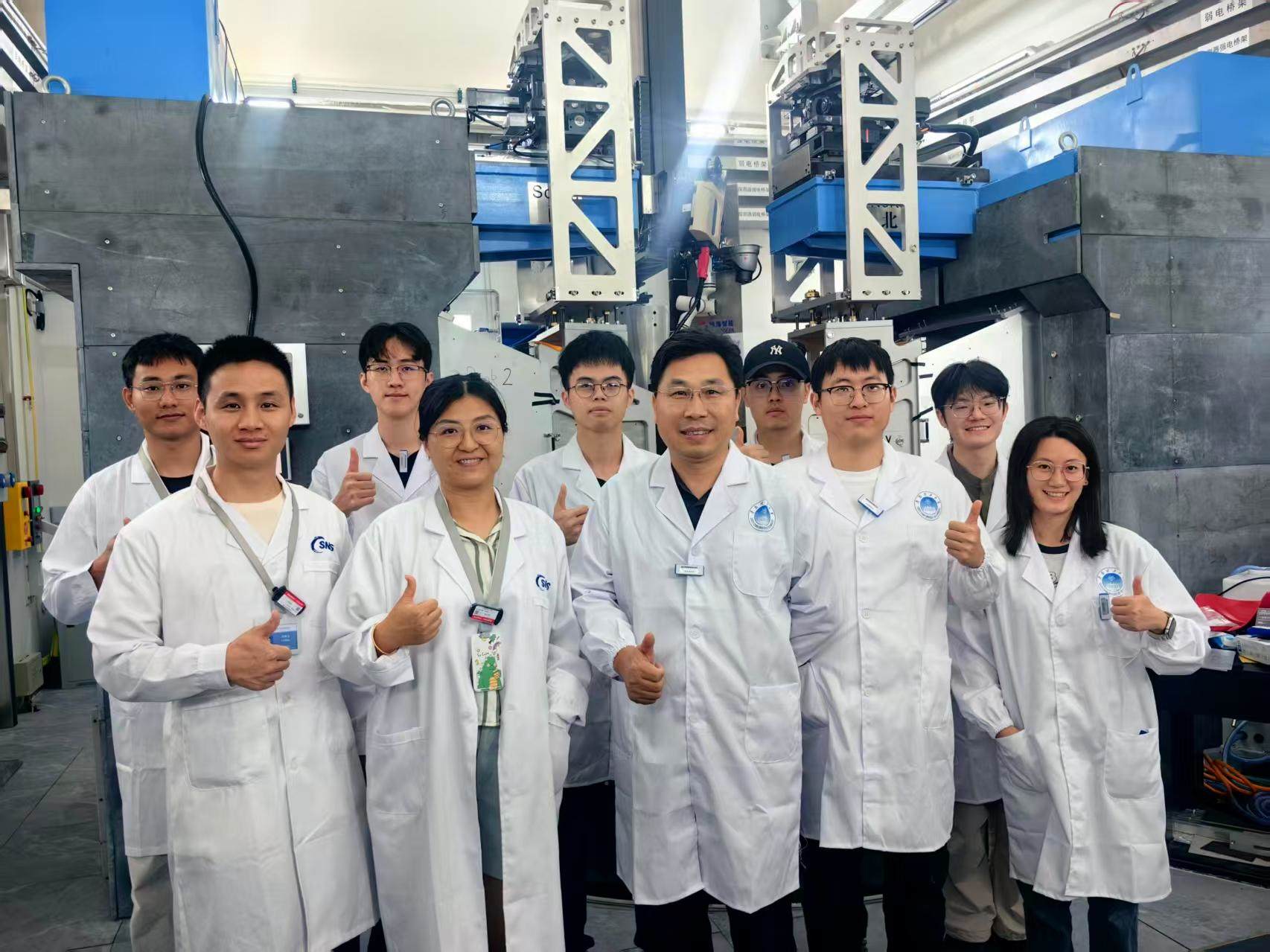
After more than three years of research, the team successively overcame technical challenges such as underwater welding manufacturing under extreme conditions and the coordinated linkage between the in-situ welding device and large-scale spectrometers. The team innovatively used heavy water (D₂O) instead of regular water (H₂O) to simulate the underwater environment, designed a neutron beam incident channel to allow neutron beam transmission without water interference, developed new in-situ observation strategies to obtain microstructure evolution patterns at different positions and in multiple directions, and precisely adapted the self-developed underwater welding equipment to the engineering materials spectrometer, constructing the world's first in-situ underwater welding research device.
Wang Zhenmin stated that the device focuses on the dynamic evolution of microstructure and residual stress fields during underwater welding, revealing for the first time the real-time coupling mechanism of stress and phase transformation under multiple complex thermal cycles in underwater welding. This can provide direct experimental evidence for optimizing underwater welding processes and assessing weld structure safety. During the development process, the team leveraged the high penetration and high resolution advantages of neutron diffraction to achieve dynamic in-situ observation of microstructure evolution in the underwater welding pool, breaking the limitations of traditional post-weld ex-situ analysis and making it possible to dynamically establish a precise "process-structure-property" mapping model. This achievement can provide core technical support for the welding manufacturing and repair of large-scale, high-performance underwater structural components, and promote the transformation of underwater welding from an experience-dependent "craft" to a data-driven "science."
Related Products
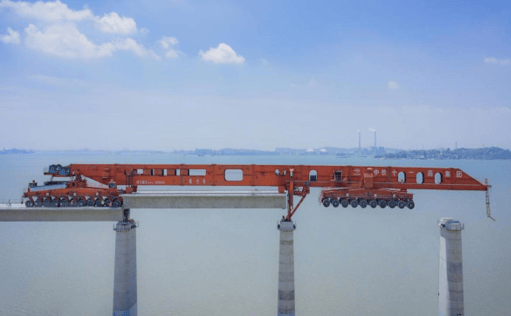

High-Speed Railway Lifting, Transporting, and Erecting Equipment: Integrated Transport and Erection Machine
Hanjiang Heavy Industry Co., Ltd. of China Railway 11th Bureau Group

CAP1400 main feedwater flow nozzle flowmeter.
Jiangsu Hongda Instrument Technology Co., LTD.

Industrial and Commercial Point-Type Gas Detector
Jinan Benan Technology Development Co., Ltd.
High-Speed Flexible Fully Automatic Stamping Production Line
JIER Machine-Tool Group Co., Ltd.
LBH4000 Batch Environmental Protection Asphalt Mixing Plant | Asphalt Batching Plant | Asphalt Mixing Plant
Jilin Province Road Construction Machinery Co., Ltd.