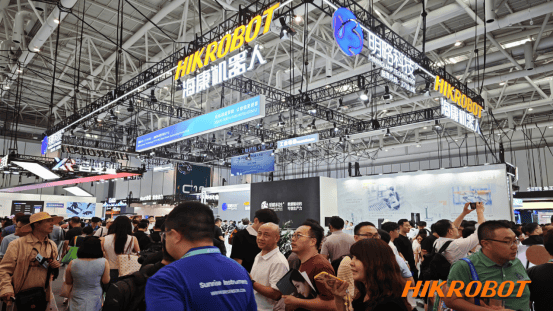
China's First Robot School Established in Hangzhou, 30 Robots Enrolled
en.Wedoany.com Reported - China's first robot school has been established in Hangzhou, with an initial batch of 30 robots and robotic dogs from various manufacturers officially enrolled to receive systematic intelligence and skill training, aimed at enhancing their decision-making and operational capabilities in complex scenarios.
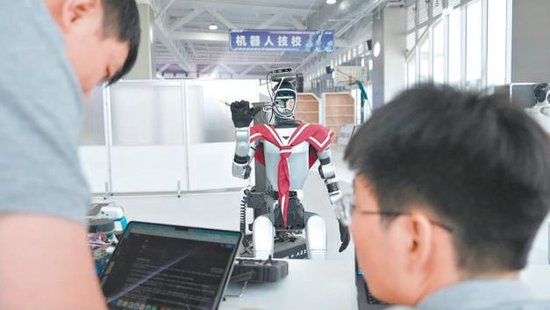
In 2024, China added 295,000 new industrial robot installations, accounting for 54% of the global total. However, this quantitative growth has not been effectively translated into practical applications. While many robots can perform actions such as running, jumping, and dancing, they struggle to enter real-world use due to a lack of decision-making ability in complex scenarios, professional skills for suitable positions, and verifiable safety standards. Jin Xinglai, head of a robotics company, pointed out that enterprises have relatively well-developed hardware capabilities but still lack software strength. This demand has given rise to an innovative school model with the original intention of "making robots smarter." In May of this year, the research team publicly disclosed their independently developed "Wuji Brain," which incorporates a logical reasoning layer on top of traditional vision, language, and action architectures, enabling robots to evolve from relying on memory to handle scenarios to being able to deduce and judge on their own—transitioning from "reciting answers" to "solving problems."
The school draws on the concept of human educational institutions, designing a curriculum system covering cognition, object recognition, communication and dialogue, emotional companionship, and movement, while formulating targeted training plans based on each robot's entry status. Zhao Han, an engineer in the scenario group, introduced that the school has established a five-dimensional training model encompassing ethics, intelligence, physical ability, aesthetics, and labor, comprehensively enhancing robots' overall competence in areas such as ethical safety, perception, motor performance, aesthetic expression, and practical scenario operations. After enrollment, robots are assigned to specialized training tracks based on capability assessments and graduation requirements, including sports schools, art schools, technical schools, and health schools, with targeted empowerment of their brains and intelligent agents. In the sports school, table tennis robots, through coordinated training of their large and small brains, can accurately identify the direction of incoming balls and execute forehand and backhand shots; in the companion robot experience area, robots can recognize testers' emotions and proactively offer comfort and tell jokes.
Through a four-step process of "entry physical examination, specialized training, graduation certification, and certified employment," robots achieve standardized capability enhancement. Upon completion of their studies, the school, in collaboration with the Zhejiang Provincial Institute of Quality Science, conducts intelligent ratings, and those who pass receive a "Special Skill Level Certificate," ultimately enabling "one robot, one code" certified employment, transforming robots from prototypes into "intelligent technicians" across various industries.
Zhang Le, an administrative manager at a robotics R&D company, stated that the systematic training of "skill learning plus scenario adaptation" has significantly accelerated the speed of robot deployment and application. By leveraging more scenario data provided by the school, the training time for robots in real-world settings can be greatly reduced. After graduation, robots will have access to a continuously iterable capability training system, allowing them to further optimize in real-world scenarios.
Related Products


Mine Explosion-proof and Intrinsically Safe Industrial Ethernet Ring Network (10 Gigabit/Gigabit)
Chongqing Mas Sci&Tech Co., Ltd.


MUX Series Communication Interface Device for Security and Stability Control System
Nanjing NR Electric Co., Ltd.
Comprehensive Mining Automation Control System
Beijing Tianma Intelligent Control Technology Co., Ltd.
Industrial and Commercial Point-Type Gas Detector
Jinan Benan Technology Development Co., Ltd.

Multi-function Marine Monitoring Low-altitude Detection Radar Sea-air Boundary Ocean Dynamic Environment Measurement
Chengdu Dixin Technology Co., Ltd.
Automatic Aiming Laser Remote Obstacle Removal Robot
Pinggao Group Weihai High-Voltage Apparatus Co., Ltd.