South Korea Unveils National Strategy for Physical AI, Aiming for Global Leadership
en.Wedoany.com Reported - The Ministry of Science and ICT (MSIT) of South Korea announced a nationwide unified strategy on July 2, aiming to strengthen the country's core competitiveness in physical artificial intelligence and become a global leader in this field.

The ministry noted that leading U.S. tech companies and China are both deploying vertically integrated, full-stack physical AI platforms, intensifying global competition. In response, multiple South Korean ministries jointly formulated this strategy to enhance the overall national competitiveness of the industry.
The strategy sets two overarching goals: first, to master globally leading full-stack physical AI technologies; second, to promote the deployment and adoption of physical AI across all industries, including manufacturing, agriculture, national defense, and elderly care.
In terms of data system development, the South Korean government will establish a data aggregation and application system, integrating real-world and synthetic data generated across various industries for physical AI research and development. Plans include consolidating robot behavior datasets funded by government research and industry-specific data into a central database, accompanied by data quality verification mechanisms and cross-platform data interoperability standards. The government will also support enterprises in independently acquiring, training, and validating general-purpose behavior datasets, and establish cross-departmental coordination mechanisms to aggregate and utilize specialized datasets in fields such as manufacturing, autonomous driving, and agriculture.
In core technology research and development, the South Korean government proposes building an independent physical AI technology system to reduce reliance on technologies from leading overseas companies. The three foundational technologies targeted in the strategy include: a physical AI foundation model capable of autonomous planning, long-term task execution, and precise manipulation; a world model that simulates and predicts changes in the physical environment to support AI training and intelligent decision-making; and an edge-side low-latency computing platform that efficiently runs AI models on local hardware devices to reduce latency. These three components will together form a complete full-stack physical AI platform.
The South Korean government plans to validate these core technologies in local manufacturing scenarios, including autonomous precision manufacturing systems that can predict production conditions and optimize process control, as well as smart factory operation solutions capable of anticipating subsequent production conditions and flexibly adapting to production changes. Mature technologies will be promoted to other industries, accompanied by the development of equipment, communication, and security technologies supporting physical AI operations.
To accelerate the commercialization of technologies, South Korea will establish a cross-departmental coordination system covering the entire lifecycle from basic research and data infrastructure to demonstration projects and commercial deployment. The strategy also introduces multiple measures to improve the industrial ecosystem, including building a comprehensive legal framework to support technology research and commercial transformation; providing tiered, targeted investment and financing support covering potential startups and industry leaders; and cultivating a multi-tiered talent pipeline, from frontline field engineers to high-level AI model researchers.
Deputy Prime Minister and Minister of Science and ICT Lee Jong-ho stated that physical AI is one of the core strategic industries determining the nation's future. He believes that South Korea possesses high-quality data resources and a mature, well-established industrial base, making the goal of becoming a global leader in physical AI not a fantasy but a feasible reality. By combining innovation from private enterprises with comprehensive government support, South Korea will continue to enhance its global competitiveness in physical AI and grow into a major exporter of related core technologies.
Related Products


20 Inch 1600*900 Full HD 60Hz TFT LED Monitor with VGA and DP Interfaces for Desktop Computers-Business Use
Guangzhou Zanying Optoelectronics Technology Co., Ltd.

G.652.D Wavelength-extended Non-dispersion Shifted Single-mode Optical Fiber
HONGAN GROUP CO., LTD.
Industrial and Commercial Point-Type Gas Detector
Jinan Benan Technology Development Co., Ltd.
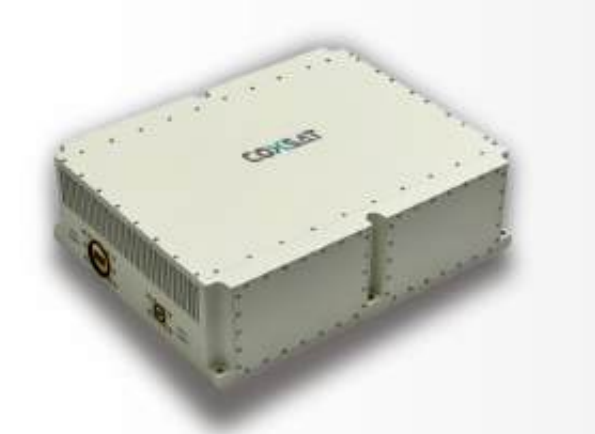


Mine Explosion-proof and Intrinsically Safe Industrial Ethernet Ring Network (10 Gigabit/Gigabit)
Chongqing Mas Sci&Tech Co., Ltd.
Automatic Aiming Laser Remote Obstacle Removal Robot
Pinggao Group Weihai High-Voltage Apparatus Co., Ltd.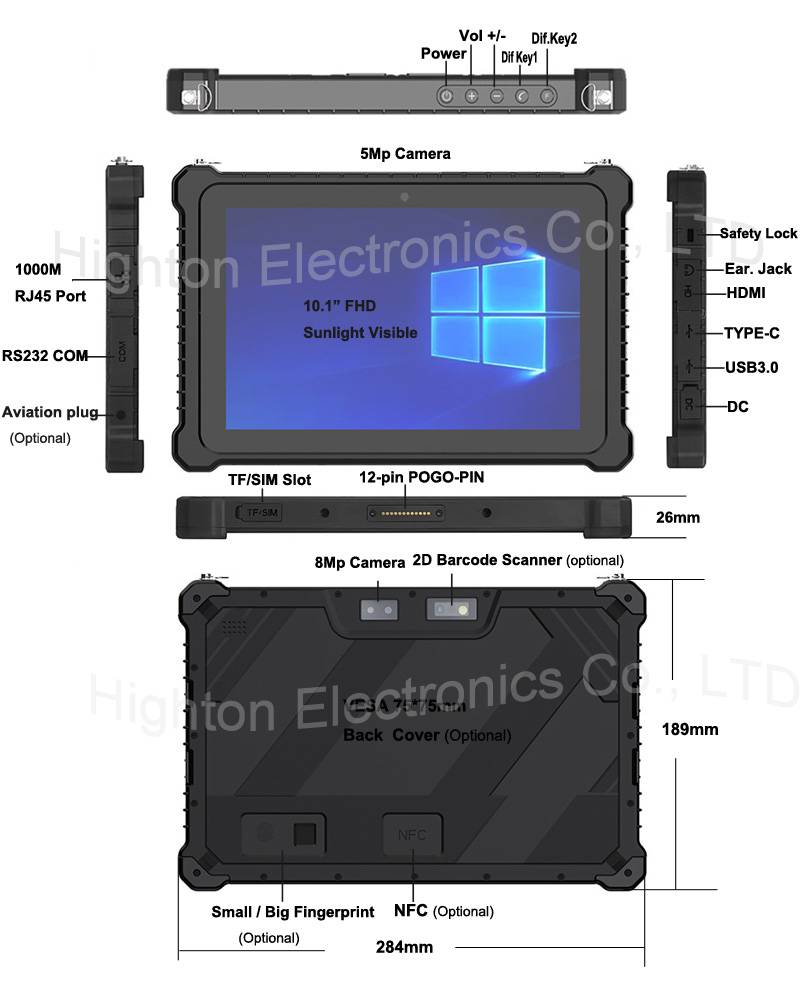
Hot Selling 10 Inch Intel N5100 I5 I7 FHD 8 +128GB 16+256GB Win10 Pro Win11 Pro 4G 5G Rugged Tablet PC Pad with NFC Barcode
Highton Electronics Co., Ltd.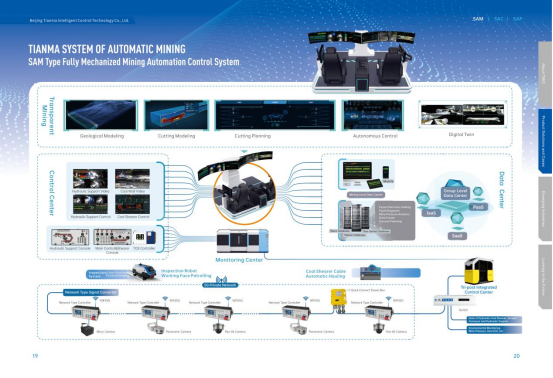
Comprehensive Mining Automation Control System
Beijing Tianma Intelligent Control Technology Co., Ltd.