European Bank for Reconstruction and Development Optimistic About Kazakhstan's Digital Transformation, Expects Investment Exceeding €1.3 Billion
en.Wedoany.com Reported - Yerlan Dosymbekov, Chairman of the Board of the "Kazakhstan Foreign Investors' Council" Association, noted that with the advancement of the "Digital Kazakhstan" strategy, artificial intelligence has become a key focus of the country's economic policy, and Kazakhstan is entering a new phase of implementing relevant strategic tasks.
Dosymbekov stated that the establishment of the Ministry of Artificial Intelligence and Digital Development has created the foundational conditions for the country to build a regional AI hub and enhance its global competitiveness.

He also mentioned that Kazakhstan continues to optimize its investment environment, including measures such as establishing an Investor Rights Protection Committee under the Prosecutor General's Office, with the Prosecutor General serving as the Investment Ombudsman. These mechanisms aim to strengthen investor rights protection and boost the confidence of international investors.
Dosymbekov said that the joint working group of the Foreign Investors' Council has driven substantial progress on several issues of concern to investors, but some topics still require ongoing monitoring, and the working group has submitted relevant recommendations to government departments.
He indicated that the investment process is undergoing a qualitative change, with both scale and quality improving, and the structure of investment areas is being adjusted. AI is rapidly penetrating various industries, with a significant increase in demand for related services, particularly from state-owned enterprises. Additionally, investors entering Kazakhstan are not only bringing capital but are also prepared to introduce AI technologies and apply them to local projects.
Odile Renaud-Basso, President of the European Bank for Reconstruction and Development, highly praised Kazakhstan's achievements in digital transformation. She stated that digital investment has become an important tool for enhancing national competitiveness and has changed the way the government delivers public services.
She noted that Kazakhstan ranks 24th globally in the United Nations E-Government Development Index, placing it among the leading countries. This achievement is attributed to the commissioning of the national supercomputer, the development of data processing centers, and the establishment of the International AI Center based at Astana Hub.

Renaud-Basso believes that the "Digital Kazakhstan" program, continued investment in Astana Hub, tax incentives for international IT companies, and the development of the e-government system have laid the foundation for the country's innovative development.
She stated that Kazakhstan's efforts to build a national technology ecosystem align with the strategic priorities of the European Bank for Reconstruction and Development. Over the next five years, digital technology and cybersecurity will become one of the bank's core strategic directions. The bank is introducing AI technologies to optimize banking products and processes, strengthen risk management, and enhance customer service.
She said that, leveraging its experience, the European Bank for Reconstruction and Development can support Kazakhstan in the fields of digitalization and AI, particularly in promoting responsible and secure digital transformation, improving the legal and regulatory framework for AI, and advancing the country's integration into global value chains.
President Tokayev has instructed the government to transition to a new economic model. This year, Kazakhstan plans to establish over 200 new production projects, providing momentum for economic development, job creation, and expanding the production of high-value-added products.
Additionally, the European Bank for Reconstruction and Development expects to invest over €1.3 billion in Kazakhstan's economy.
Related Products


GYTA Type Non-Self-Supporting Aerial/Duct Optical Cable
TONGDING INTERCONNECTION INFORMATION CO., LTD.

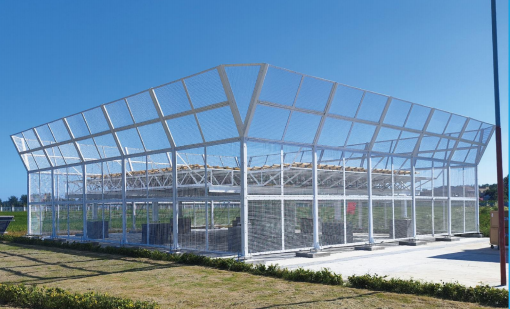
TWP16 P-Band Tropospheric Wind Profile Radar
China Huayun Meteorological Technology Group Co., Ltd.


MUX Series Communication Interface Device for Security and Stability Control System
Nanjing NR Electric Co., Ltd.

Comprehensive Mining Automation Control System
Beijing Tianma Intelligent Control Technology Co., Ltd.
Automatic Aiming Laser Remote Obstacle Removal Robot
Pinggao Group Weihai High-Voltage Apparatus Co., Ltd.
Multi-function Marine Monitoring Low-altitude Detection Radar Sea-air Boundary Ocean Dynamic Environment Measurement
Chengdu Dixin Technology Co., Ltd.