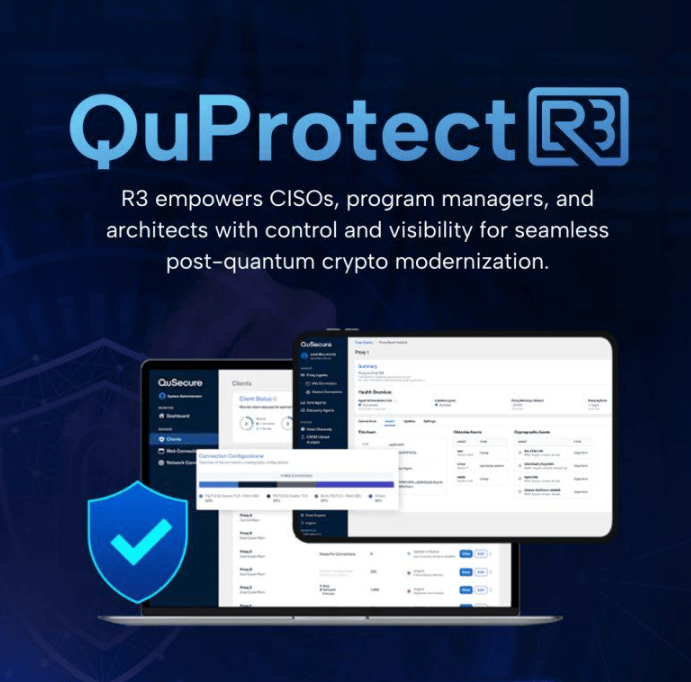
Infoblox and GoDaddy Partner to Drive DNS Standards for Identifying AI Agents
en.Wedoany.com Reported - Network infrastructure company Infoblox and web hosting service provider GoDaddy are collaborating to propose a mechanism for identifying and verifying AI agents through the Domain Name System (DNS), aiming to enable users and systems to recognize the agents they are interacting with and confirm their legitimacy during internet browsing.
The two companies believe that AI agents should operate based on open DNS infrastructure to avoid a centralized model dominated by a few technology vendors.
Infoblox stated that it is promoting the DNS for AI Discovery (DNS-AID) standard, which leverages existing DNS infrastructure to simplify the discovery of AI agents and their capabilities. DNS-AID is currently a draft within the Internet Engineering Task Force (IETF) and is being developed as open-source software. The initiative proposes using existing DNS records to allow AI agents to publish metadata that can be detected and verified.
Meanwhile, GoDaddy is involved in the development of the Agent Name Service (ANS), a proposal focused on identifying, naming, and verifying AI agents through DNS and Public Key Infrastructure (PKI). ANS also adopts an open development model, aiming to enable agent operators to use existing domain names to identify and authenticate AI systems without relying on proprietary platforms or registries.
ANS focuses on answering "who the AI agent is," while DNS-AID is dedicated to helping discover its capabilities, endpoints, and services so that other systems can find and interact with it. Infoblox and GoDaddy noted that DNS offers advantages such as global deployment, scalability, and mature security mechanisms, making it suitable as a foundation for AI agent identity and detection on the internet.
GoDaddy Chief Strategy and Legal Officer Jared Sine stated that AI agents can only reach their full potential on open networks when users and systems can verify who they are interacting with. He added that as AI agents become integrated into everyday digital experiences, developing open identity and verification standards will become increasingly important.
Related Products




Multi-function Marine Monitoring Low-altitude Detection Radar Sea-air Boundary Ocean Dynamic Environment Measurement
Chengdu Dixin Technology Co., Ltd.

Mine Explosion-proof and Intrinsically Safe Industrial Ethernet Ring Network (10 Gigabit/Gigabit)
Chongqing Mas Sci&Tech Co., Ltd.
Automatic Aiming Laser Remote Obstacle Removal Robot
Pinggao Group Weihai High-Voltage Apparatus Co., Ltd.

Conveyor Belt Intelligent Monitoring System
LUO YANG WIRE ROPE INSPECTION TECHNOLOGY CO., LTD.
Flat Portable Satellite Terminal 0.35m Aperture Manual Portable Terminal
China Starwin Science & Technology Co., Ltd.