China's Eight Departments Issue Document to Promote Deep Integration of AI and Consumption
en.Wedoany.com Reported - China's Ministry of Commerce and seven other departments recently jointly issued the "Implementation Opinions on Accelerating the Development of 'AI + Consumption'," proposing to promote the deep integration of artificial intelligence with consumption. The content of the Opinions regarding smart kitchen equipment, smart canteens, intelligent dining, smart logistics, and consumption scenario innovation indicates that the food equipment industry is shifting from single-machine automation towards scenario-based, intelligent, and systematic development.
The Opinions specify that smart home appliances and smart kitchen and bathroom products will be promoted, accelerating the adoption of smart kitchen equipment to provide personalized and intelligent home life services. Future kitchen equipment must possess capabilities for sensing, interaction, linkage, and data management, rather than merely performing basic functions such as heating, stirring, and steaming. While maintaining traditional structural design and processing capabilities, food machinery enterprises need to make intelligent control, user experience, and scenario adaptation new competitive focuses.
The dining scenario is the area where the policy is most closely linked to the food machinery industry. The Opinions propose guiding the construction of intelligent dining, promoting "smart canteens" in institutions, schools, hospitals, and other venues, and encouraging the application of self-service meal pickup cabinets, intelligent identification payment systems, and self-service coffee machines. These scenarios are characterized by concentrated dining populations, stable meal service rhythms, and high management requirements, placing higher demands on equipment safety, stability, and coordination capabilities. Smart canteens are expected to become a significant entry point for the large-scale implementation of intelligent dining equipment.
In the past, competition in dining equipment primarily revolved around single-machine performance, including processing efficiency, energy consumption levels, and operational stability. With the introduction of AI technology into dining consumption scenarios, the value of equipment is shifting from "usable" to "easy to use, capable of linkage, and manageable." Self-service meal pickup cabinets need to work in coordination with order systems and temperature control systems; intelligent payment systems must complete dish identification and payment linkage; and terminals like self-service coffee machines require remote operation and maintenance and data management capabilities. This demands that food machinery enterprises transform from equipment suppliers into intelligent solution service providers.
The Opinions also propose supporting the construction of smart logistics parks and smart warehouses, promoting logistics terminals such as self-service pickup cabinets and intelligent express lockers, and prudently developing unmanned delivery. For central kitchens, prepared food, fresh food processing, and group meal supply enterprises, processing, packaging, warehousing, and distribution have formed an integrated chain. Food machinery enterprises need to pay attention to both the production end and the overall efficiency and safety of the entire process from the workshop to the terminal.
Regarding the standard system and safety bottom line, the Opinions propose improving the "AI + Consumption" standard system, promoting cross-industry and cross-brand interconnectivity, and strengthening capabilities in areas such as network security, data security, and content security. Intelligent food equipment cannot operate in isolation; attention must be paid to interface compatibility, system reliability, and data protection. In public dining scenarios such as campuses, hospitals, and elderly care institutions, equipment intelligence must be built on the foundation of food safety, operational safety, and data security.
"AI + Consumption" will drive the food machinery industry into a new upgrade cycle. Smart kitchen equipment, smart canteen systems, dining robots, self-service vending terminals, smart warehousing, and cold chain logistics equipment are all areas worthy of attention. For food machinery enterprises, the core of future competition is not manufacturing a single device, but providing stable, safe, and sustainable intelligent services centered around real consumption scenarios.
Related Products

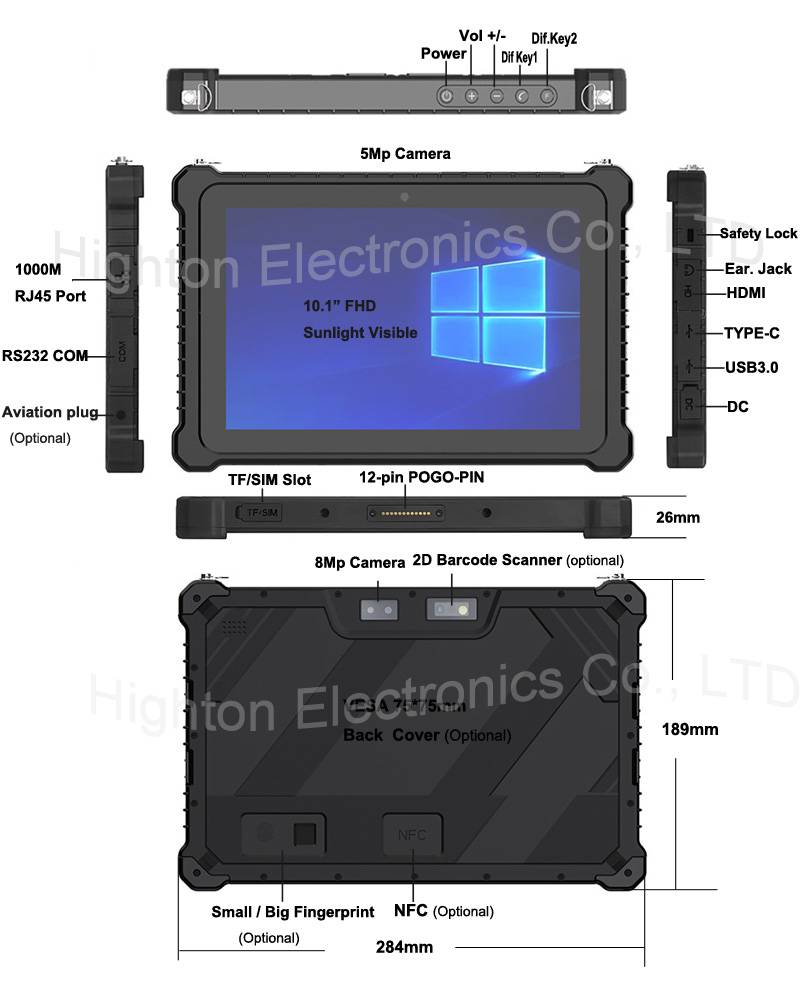
Hot Selling 10 Inch Intel N5100 I5 I7 FHD 8 +128GB 16+256GB Win10 Pro Win11 Pro 4G 5G Rugged Tablet PC Pad with NFC Barcode
Highton Electronics Co., Ltd.

G.652.D Wavelength-extended Non-dispersion Shifted Single-mode Optical Fiber
HONGAN GROUP CO., LTD.

Industrial and Commercial Point-Type Gas Detector
Jinan Benan Technology Development Co., Ltd.
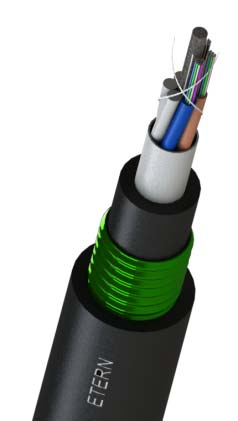

GYTA Type Non-Self-Supporting Aerial/Duct Optical Cable
TONGDING INTERCONNECTION INFORMATION CO., LTD.