Denmark's DecarbonICE Plans to Transport CO2 to Port of Esbjerg in Containers by 2028
en.Wedoany.com Reported - Danish startup DecarbonICE plans to use standard shipping containers to transport carbon dioxide in the form of dry ice, aiming to lower the carbon transport threshold for small and medium-sized enterprises, and has selected Denmark's Port of Esbjerg as the pilot plant location.
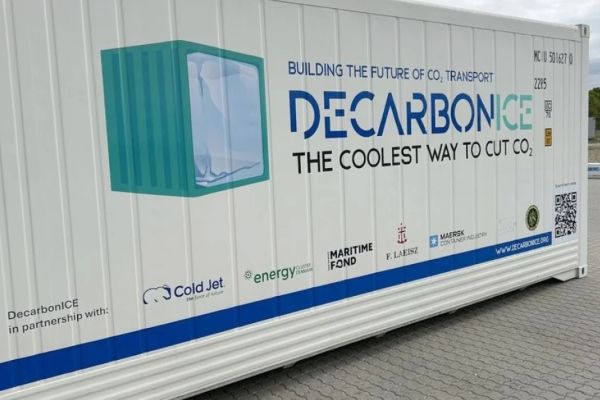
Currently, carbon dioxide transport is primarily carried out via pipelines, tanker trucks, or ships with pressurized tanks under high pressure, which is costly and difficult to scale globally. DecarbonICE's solution uses a standard 20-foot shipping container modified with insulation to store carbon dioxide as dry ice at atmospheric pressure. A single container can store up to 21 tons of dry ice, transported via existing logistics systems such as trucks, trains, ships, and barges. With 43 million shipping containers currently in circulation globally, the company believes only a small fraction would be needed to meet most future carbon dioxide transport demands from planned capture projects.
The project is led by DecarbonICE, with participants including Aarhus University, Maersk Container Industry, the Port of Esbjerg, and Energy Cluster Denmark. DecarbonICE CEO Henrik O. Madsen stated that the solution will significantly reduce transport capital costs, with operating costs potentially cut by up to 30%. He cited an example where a biogas plant purchased eight liquid CO2 tanker trucks, each costing approximately $280,000, while the company estimates the container cost at around $7,000. DecarbonICE is collaborating with Maersk Container Industry to produce insulated containers in China.
Madsen emphasized that this technology complements existing CO2 infrastructure and is not intended to compete with pipeline transport. Pipelines will remain crucial for large industries with diverse needs, but small and medium-sized enterprises also face climate requirements and inevitably produce CO2 in their processes. For example, by transporting CO2 via containers to pipeline connection points, the two types of infrastructure can work synergistically.
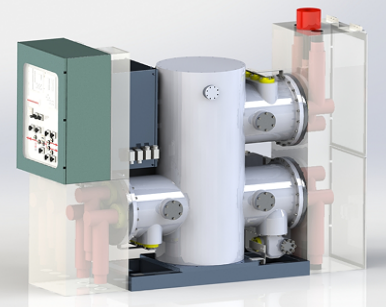
As part of the pilot project, the Port of Esbjerg will build a facility to convert dry ice into liquid carbon dioxide. The unit utilizes ambient heat, requiring minimal energy input. It is planned to be ready by 2028 or 2029, at which point it will connect to the Greensand project, which stores CO2 in a depleted oil and gas field in the North Sea. Madsen noted that the Port of Esbjerg is a leader in carbon capture and storage (CCS), with proximity to the North Sea and the Greensand project making it an ideal location. Project partners estimate that the global CO2 storage market will reach 6 billion tons by 2050.
Related Products

Forest and Grassland Heat Source Infrared Monitor
China Huayun Meteorological Technology Group Co., Ltd.
Mineral-insulated Compact Busway (Fire-resistant Busduct)
Zhuhai Guangle Electric Busway Co., Ltd.
Hydrogen production and hydrogenation charging refueling gas integrated energy station
Shenzhen Kohodo Hydrogen Energy Co., Ltd.
0.66kV Power Supply Instrument Transformer
Guangdong Sihui Instrument Transformer Works Co., Ltd.