Queen Mary University of London invents color-changing tactile sensor
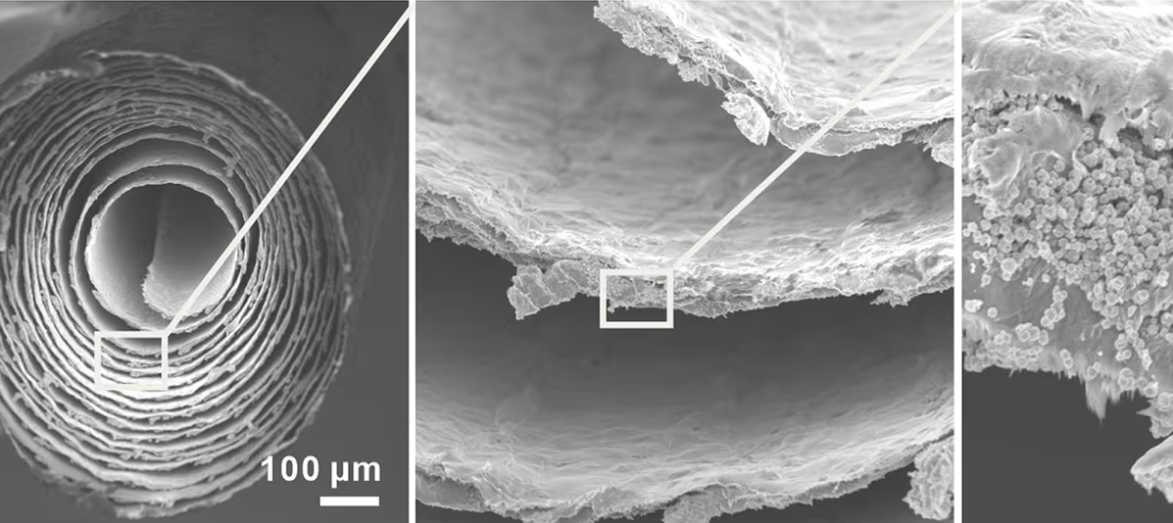
en.Wedoany.com Reported - Dr. Giacomo Sasso, a postdoctoral researcher at the School of Engineering and Materials Science at Queen Mary University of London, has invented a tactile sensor based on mechanochromic materials that converts invisible mechanical forces into dynamic color patterns, enabling instant high-resolution contact, strain, and pressure mapping. The team has successfully captured fingerprint ridges, demonstrating the sensor's ultra-high resolution capability.
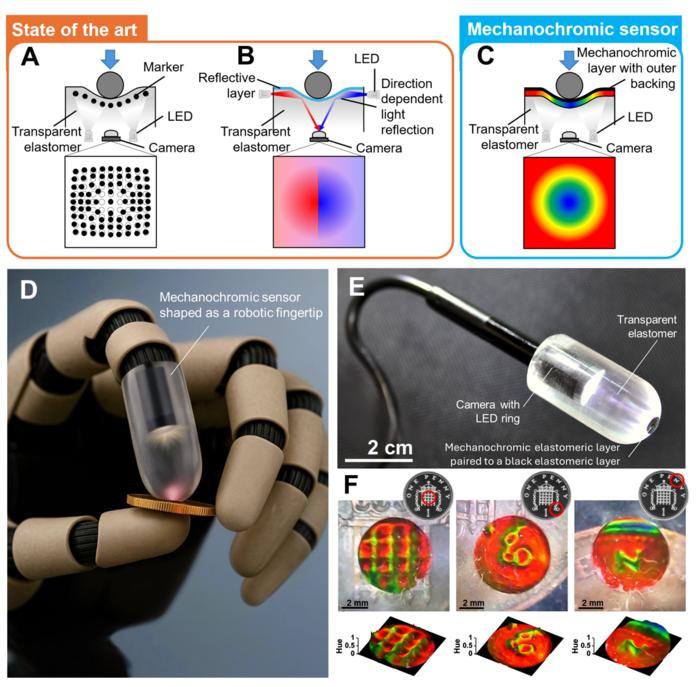
When pressure is applied to the soft sensing surface, the material produces spatially varying structural colors that can be captured in real time using a standard camera, without the need for complex reconstruction algorithms. This technology can be applied in precision manufacturing to develop robotic grippers capable of finely assembling micro-scale components, where every subtle force change is visible in real time. In the medical field, external prosthetics can gain richer tactile perception, and surgical systems can read fine pressure signals through color responses, aiding in distinguishing healthy tissue from abnormal tissue.
Unlike traditional tactile sensors that rely on embedded sensor arrays, the new system integrates the sensing function directly into the material, where mechanical interactions are converted into color fields that can be read using only a low-cost USB camera. The team has demonstrated the first real-time solution in this field. Dr. Giacomo Sasso stated that the human hand has over 10,000 mechanoreceptors, and existing technologies struggle to achieve sensor arrays of equivalent density; this project shifts the sensing function to the material itself, simplifying the system architecture and generating rich pressure maps.
Project co-authors from the University of Florence, the University of Trieste, and the University of Trento agree that the advantage lies in the information already being contained in the light signal, eliminating the need to reconstruct tactile data—it can be observed directly. Professor James Busfield remarked: "You are no longer reconstructing touch; you are directly observing it." The project aims to address the long-standing trade-off in vision-based tactile sensing: high-resolution systems impose a heavy computational burden, while fast systems sacrifice spatial detail. This research merges the fields of soft robotics and materials science, building on the collaboration between Professor Federico Carpi of the University of Florence and Professor Busfield, establishing mechanochromic materials as a new research direction where the material itself serves as the sensing medium, directly encoding mechanical interactions into visible light signals rather than relying on microelectronic components to interpret deformation.
Related Products

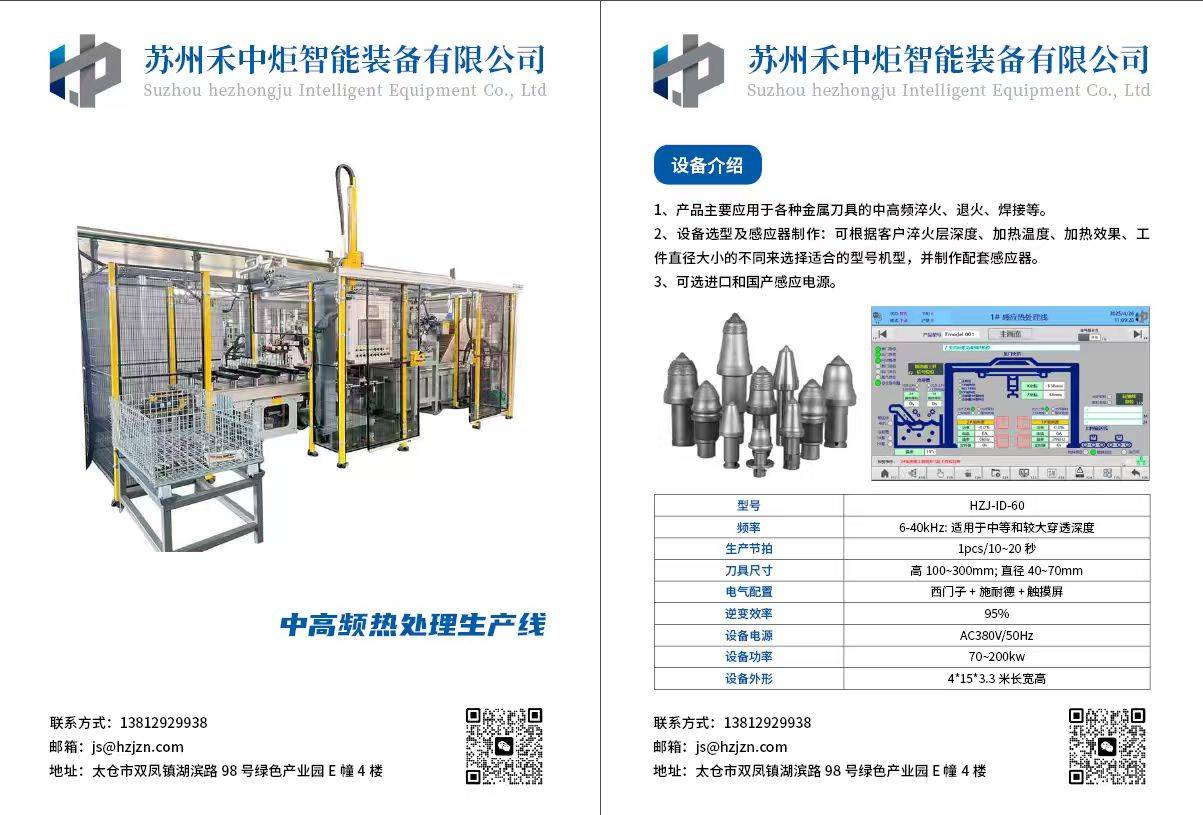
Excavator Bucket Teeth Heat Treatment Production Line
Suzhou Hezhongju Intelligent Equipment Co., Ltd.
CAP1400 main feedwater flow nozzle flowmeter.
Jiangsu Hongda Instrument Technology Co., LTD.

Strip Coating and Plating Production Line Equipment
MCC-SFRE HEAVY INDUSTRY EQUIPMENT CO., LTD.
LBH4000 Batch Environmental Protection Asphalt Mixing Plant | Asphalt Batching Plant | Asphalt Mixing Plant
Jilin Province Road Construction Machinery Co., Ltd.