Swiss Gravis Robotics Secures $200M Series A Funding from SoftBank
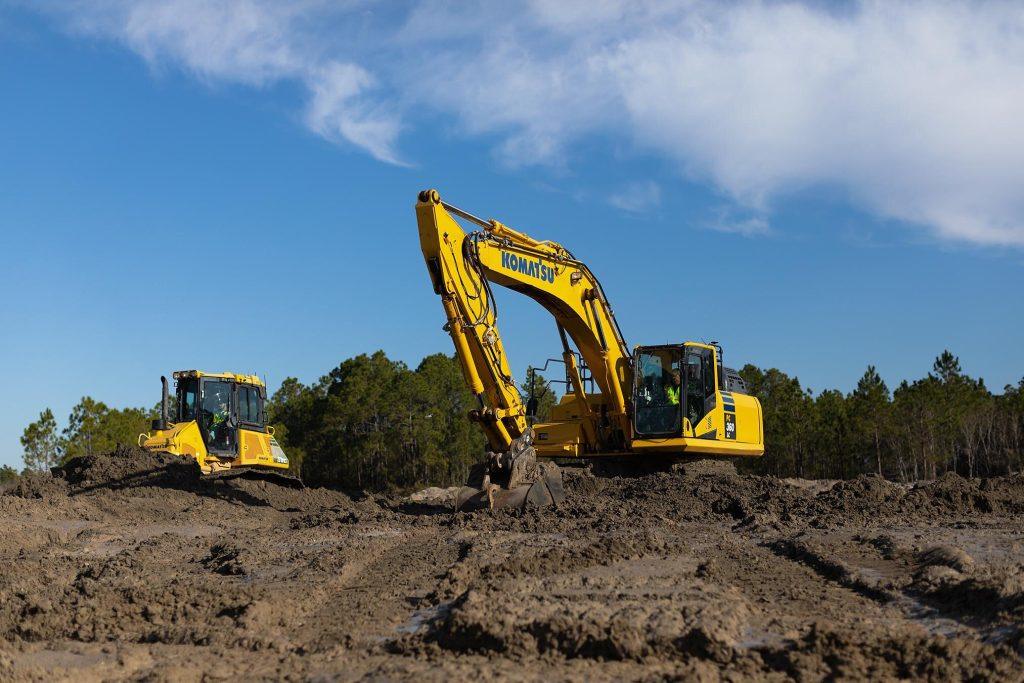
en.Wedoany.com Reported - Gravis Robotics AG has announced a $200 million investment from SoftBank Group Corp., marking the largest Series A funding round ever for a construction robotics startup. The company was spun out of the Swiss Federal Institute of Technology Zurich in 2022 and has developed intelligent software-defined systems for heavy excavators, transforming them into unmanned machines capable of autonomously navigating busy job sites and executing tasks automatically.
Gravis notes that the construction industry faces an urgent need for automation. Beyond the boom in AI infrastructure construction, physical infrastructure is undergoing an equally massive expansion, with strong demand for new housing, roads, transportation networks, bridges, and power grids. However, unlike the AI sector, the construction industry struggles to keep pace with the demand for new infrastructure. Hampered by an aging workforce and labor shortages, construction companies often fail to deliver projects on schedule. Construction is currently one of the least automated industries in the world, still heavily reliant on manual operation of heavy machinery—precisely what Gravis aims to change.
Introducing automation to construction sites is no easy task. Gravis states that this environment presents technical challenges that do not exist in other industries. Existing physical AI systems—such as autonomous vehicles and robotic arms—typically operate in "static environments," where the primary goal is to move without disturbing the surroundings. Heavy machinery like excavators is the exact opposite: their task is to disturb the surrounding terrain, dig through soil and underground rock, and reshape the landscape of the work environment.
To address this challenge, Gravis's AI models are trained in simulated environments that attempt to replicate the full range of subtle feedback an operator receives from an excavator during manual operation. According to co-founder and Chief Technology Officer Dominic Jud, human operators can "read" the soil layer being excavated by listening to engine sounds, sensing machine vibrations, and responding to hydraulic resistance. Jud explains that the AI receives the same physical inputs and fuses them with machine telemetry data to respond at microsecond speeds to constantly changing underground forces and soil mechanics parameters. He states: "We didn't try to simplify the world for the software; we gave it physical intuition so it can perceive the real job site with greater precision than a human operator in the cab."
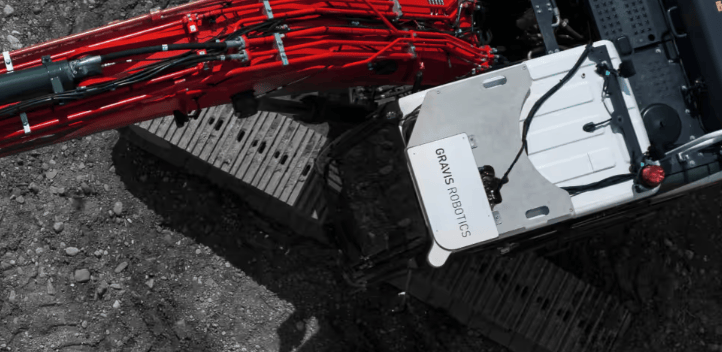
Gravis's AI models power the Gravis Rack system—a retrofittable autonomous control system that can be added to existing equipment, compatible with machines from manufacturers such as Caterpillar Inc., John Deere & Co., JCB International Co. Ltd., and Hitachi Ltd. According to the company, Gravis Rack can increase productivity by 30% compared to manual operation; in addition to fully autonomous operation, the system can also serve as a co-pilot for human operators.
The Gravis Rack is a flat, rectangular computing device mounted on top of the host excavator, integrating chips that run the system's AI software, along with cameras and LiDAR sensors. The kit also includes two rear vehicle masts with additional cameras and LiDAR modules installed. According to Gravis, the rear masts are also equipped with GPS modules alongside the sensors. Since position data transmitted from GPS satellites to the ground can sometimes contain errors, Gravis Rack employs a technology called GNSS RTS to enhance data accuracy.
This technology not only collects GPS measurements but also analyzes the radio signals carrying them, using this information to detect and correct errors in positioning data. In some cases, GNSS RTS can improve GPS signal accuracy to less than one inch. Each excavator is also equipped with a Wi-Fi transmitter for syncing data with Slate, the companion tablet for Gravis Rack. With this tablet, construction professionals can remotely operate earthmoving vehicles: the device displays real-time feeds from the vehicle's sensors and overlays visual cues on the video stream, highlighting water pipes and other infrastructure to avoid, while also displaying geographic information such as elevation data.
Gravis reports that Gravis Rack has been deployed across dozens of job sites worldwide, and the company's current goal is to accelerate the expansion of the platform's adoption. The UK is one of its key markets, where the company recently secured an $8 million contract to retrofit an existing excavator fleet. Co-founder and Chief Executive Officer Ryan Luke Johns emphasizes that excavation is the starting point of every new project—whether building housing, expanding data centers, or modernizing power grids, all construction begins with earthworks. He states: "This foundational work has always been the bottleneck constraining the entire built environment."
Related Products

LBH4000 Batch Environmental Protection Asphalt Mixing Plant | Asphalt Batching Plant | Asphalt Mixing Plant
Jilin Province Road Construction Machinery Co., Ltd.



Industrial and Commercial Point-Type Gas Detector
Jinan Benan Technology Development Co., Ltd.