South Korea's SK Hynix Launches $29.4 Billion Nasdaq ADR Offering to Expand AI Memory Capacity
en.Wedoany.com Reported - SK Hynix has launched a $29.4 billion American Depositary Receipt (ADR) listing on Nasdaq, aiming to raise funds for expanding AI memory production capacity. The world's second-largest memory chip manufacturer hopes this move will provide more direct access to U.S. capital markets' enthusiasm for AI infrastructure investment, thereby reshaping its long-term valuation.

This IPO is regarded as the largest new stock offering by a foreign company in the U.S. market. For a long time, despite SK Hynix and Micron Technology both dominating the high-bandwidth memory (HBM) sector, SK Hynix's stock has traded at a discount compared to Micron. According to IDC data from 2024, SK Hynix, Samsung Electronics, and Micron control nearly the entire DRAM market, with SK Hynix holding a share of approximately 28% to 30% in 2024. Previously, direct investment in SK Hynix by U.S. investors was not straightforward, as purchasing Korean-listed stocks required execution outside regular trading hours, and unsponsored ADRs suffered from poor liquidity.
Currently, the U.S. market has become the core stage for AI semiconductor valuations. Bloomberg reports that chipmakers closely tied to data center accelerators have valuation multiples far exceeding their Asian peers. Nvidia's market performance has reshaped industry expectations, while Micron has become the second-best performing stock in the S&P 500 this year, reportedly gaining 242%.
This Nasdaq listing brings SK Hynix closer to the substantial capital driving AI stock gains. It also provides a more liquid trading platform for U.S. funds constrained by foreign listing regulations or those preferring the ADR structure. A portfolio manager at Thornburg Investment Management commented that this move offers a frictionless way to gain exposure to the most attractive pure-play business in the AI memory cycle. This view is shared by many fund managers, who generally view memory density as a critical resource in data center AI deployments.
However, some investors have doubts about the sustainability of this upcycle. While demand from hyperscalers like Alphabet and Microsoft remains strong, both companies are increasingly relying on debt and equity financing to support their spending plans. The semiconductor memory industry has historically experienced severe volatility; just three years ago, both Micron and SK Hynix posted losses due to price downturns.
The rapid growth of high-bandwidth memory, which connects directly to accelerators, has become a core element in AI server design. The HBM standard established by JEDEC has pushed stacked DRAM into mainstream applications, with SK Hynix supplying HBM3 and HBM3E products for Nvidia's leading accelerators. The company is currently investing heavily in building new capacity, including two major factories in South Korea, and the funds raised on Nasdaq will support these investment plans.
A key concern for traders is the performance of ADRs relative to Seoul-listed shares. Cross-border listings can sometimes generate persistent premiums, especially when conversion restrictions exist. For example, Taiwan Semiconductor's ADRs have traded at an average premium of over 21% over the past year. Some arbitrage funds are analyzing SK Hynix's ADR structure to determine whether the speed of spread narrowing or restrictions will create sustained discrepancies.
Of course, not all investors are ready to jump in immediately. A portfolio manager at Bokeh Capital Partners stated that due to governance issues related to ADRs, he plans to wait and observe, although he expects significant demand from peers. This hesitation appears scattered among long-only fund managers, who want to better understand the ADR's operational mechanics before committing capital.
Despite these considerations, the sheer size and timing of this listing will attract passive fund attention. Once eligible, SK Hynix could be included in U.S. indices such as the Nasdaq 100, and passive inflows from ETFs like QQQ (with assets of $482 billion) could fundamentally alter its stock trading dynamics. The influx of passive demand is expected to bring liquidity benefits to the stock.
Industry forecasts continue to support the broad growth prospects for AI semiconductors. According to Gartner data from 2024, global AI chip revenue is projected to grow from $53 billion in 2023 to approximately $119 billion by 2027. McKinsey estimates that data center spending related to AI workloads could expand at a compound annual growth rate of 15% to 20% by 2030, with memory being one of the fastest-growing budget items. Shares of Sandisk, Western Digital, and Seagate have all risen over the past year, and the Philadelphia Stock Exchange Semiconductor Index has gained 125%.
This U.S. listing could also change investor perceptions of SK Hynix's earnings outlook. Market analysts expect Micron's net profit to surge sharply in its fiscal year ending August 31. Since both companies benefit from the same AI supply trends, once both stocks trade on U.S. exchanges, investors may more closely scrutinize the valuation gap between them.
Currently, market expectations remain high. Some investors, including a senior portfolio manager at Synovus Trust, are waiting for the ADRs to actually trade before making decisions. The convergence of record AI memory demand, expanding data center budgets, and this major cross-market listing creates a rare market combination. Although the semiconductor industry remains cyclical, SK Hynix's move represents a strategic effort to leverage the industry cycle through more direct access to U.S. capital.
Related Products
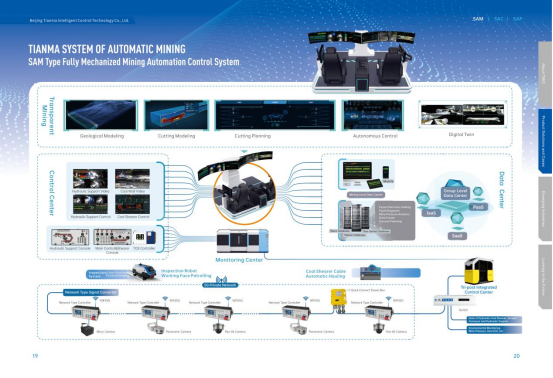

Comprehensive Mining Automation Control System
Beijing Tianma Intelligent Control Technology Co., Ltd.


Mine Explosion-proof and Intrinsically Safe Industrial Ethernet Ring Network (10 Gigabit/Gigabit)
Chongqing Mas Sci&Tech Co., Ltd.

Multi-function Marine Monitoring Low-altitude Detection Radar Sea-air Boundary Ocean Dynamic Environment Measurement
Chengdu Dixin Technology Co., Ltd.

GYTA Type Non-Self-Supporting Aerial/Duct Optical Cable
TONGDING INTERCONNECTION INFORMATION CO., LTD.
G.652.D Wavelength-extended Non-dispersion Shifted Single-mode Optical Fiber
HONGAN GROUP CO., LTD.
Automatic Aiming Laser Remote Obstacle Removal Robot
Pinggao Group Weihai High-Voltage Apparatus Co., Ltd.