Shenzhen Bing RFID Tag produces 280 million RFID tags and 160 million smart cards annually
en.Wedoany.com Reported - Against the backdrop of the accelerated penetration of 5G, big data, and AI technologies, coupled with the continuous growth in demand for vertical scenarios such as smart industry, warehousing and logistics, campuses, healthcare, and new energy, the market demand for RFID/NFC electronic tags and smart cards has been rising year after year. However, the industry has long faced common pain points: insufficient adaptability of standard tags on the market, with recognition failures in special environments such as metal, liquid, high temperature, and washing; limited mass production capabilities of small and medium-sized manufacturers, leading to fluctuating delivery times for bulk orders; high technical barriers for non-standard customization, with most companies only able to provide standardized general-purpose products, unable to meet industrial-grade special requirements; and a lack of customized supporting services such as data encryption and one-item-one-code traceability, resulting in high costs for enterprises to implement digital transformation due to the disconnect between hardware and software.
Shenzhen Bing RFID Tag Co., Ltd. (Bingrfid), as a governing unit of the Shenzhen IoT Industry Association, has established an R&D and sales center in Shenzhen and a manufacturing base in Dongguan. With over a decade of focus on the R&D and production of full-band RFID and NFC sensing hardware, the company leverages its source factory's full-chain self-research and self-production capabilities to provide the industry chain with stable, highly adaptable, and deeply customizable underlying identification carriers, aiming to address the hardware shortcomings of the industry.
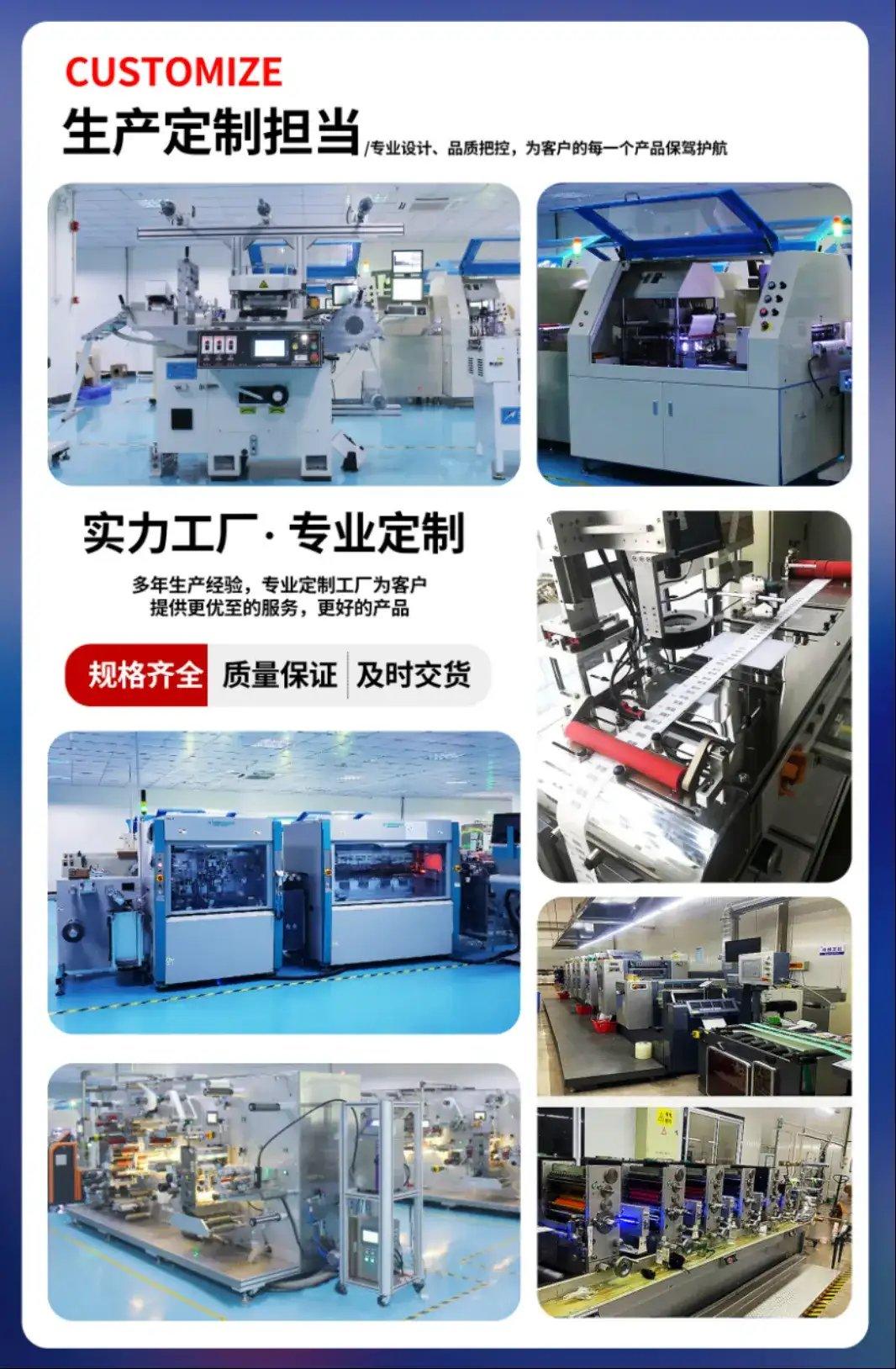
In terms of production capacity, Bing RFID Tag has adopted a dual-layout model with an R&D and sales center in Shenzhen and a standardized dust-free manufacturing base in Dongguan. The factory covers a total area of over 3,000 square meters, equipped with more than 30 automated professional production lines, achieving an annual output of over 280 million RFID tags and over 160 million smart cards. The company has achieved full-process autonomous control from antenna etching, chip bonding, packaging, printing, encoding, to aging testing, eliminating reliance on external OEMs and ensuring stable delivery of large-volume orders.
The company has set up an independent professional laboratory, equipped with a full set of high and low temperature, anti-interference, read/write stability, and accelerated aging testing equipment. All products are subject to the ISO quality management system. Each tag undergoes multiple rounds of rigorous reliability testing before leaving the factory, with recognition stability and data accuracy exceeding industry general standards. Leveraging the advantages of large-scale intelligent manufacturing, Bing RFID Tag adopts a "source factory direct supply" model, reducing multi-tier intermediary markups, thereby achieving cost reduction and efficiency improvement for system integrators, solution providers, and end-manufacturing customers.
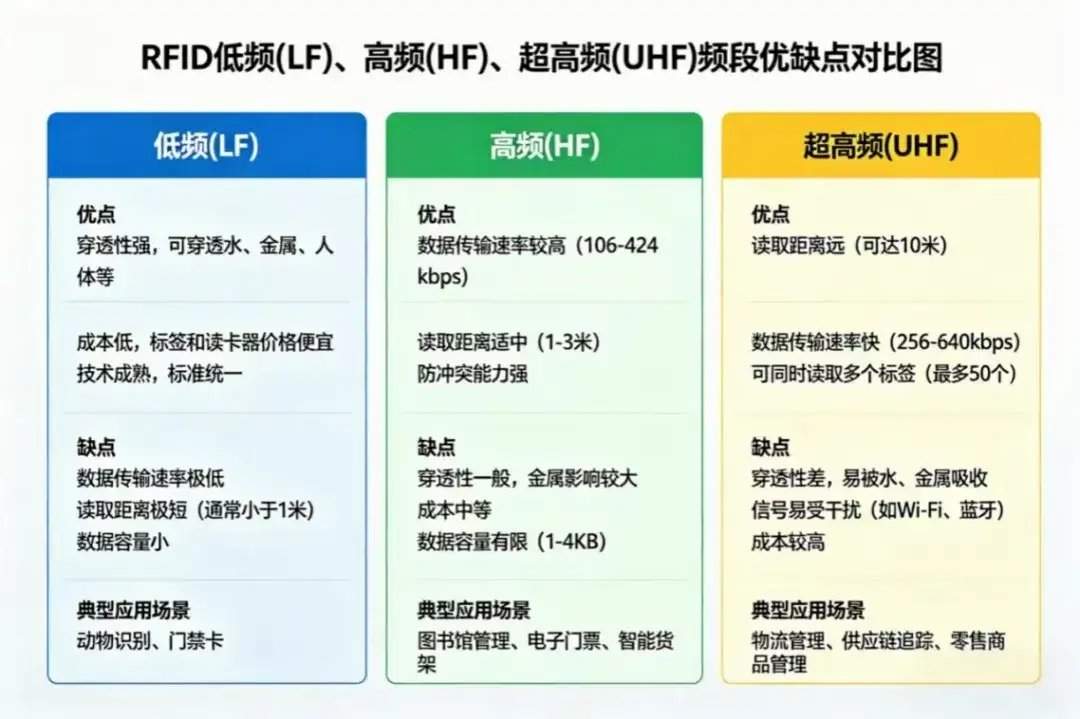
Current RFID technology is divided into three mainstream frequency bands: Low Frequency (LF), High Frequency (HF), and Ultra-High Frequency (UHF), each with significant differences in penetration, read range, and anti-interference capabilities. Most manufacturers focus only on single-band products, requiring customers to source from multiple suppliers to assemble solution hardware. Bing RFID Tag is one of the few source manufacturers in China to achieve full-band, full-category, and integrated hardware-software solutions, with six major product lines covering civil, commercial, and industrial special scenarios.
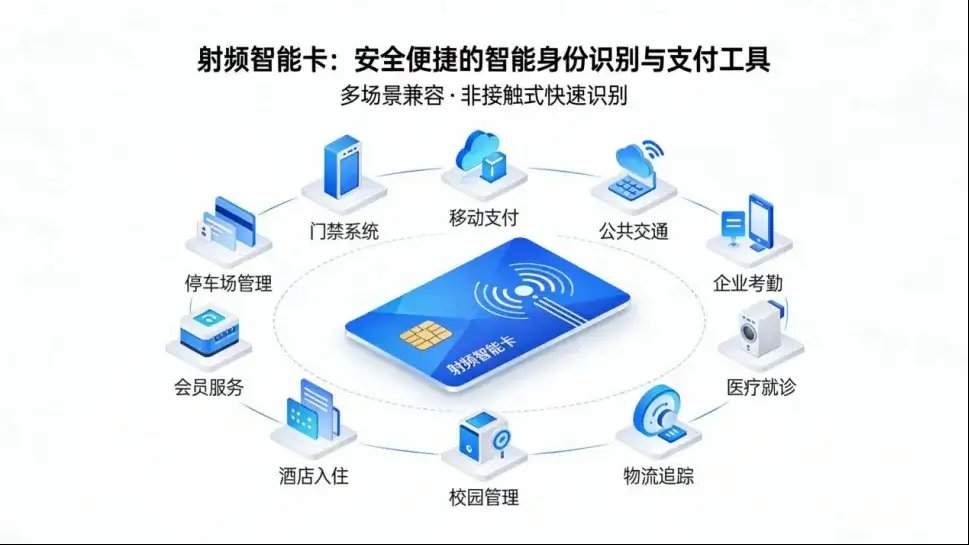
The basic smart card carrier is a standardized identity recognition hardware, covering PVC smart cards such as IC cards, ID cards, access control all-in-one cards, campus ID cards, and hotel key cards. It supports personalized logo printing, serial number encryption, and batch encoding, widely used in scenarios such as campus security, enterprise attendance, campus management, and hotel check-in.
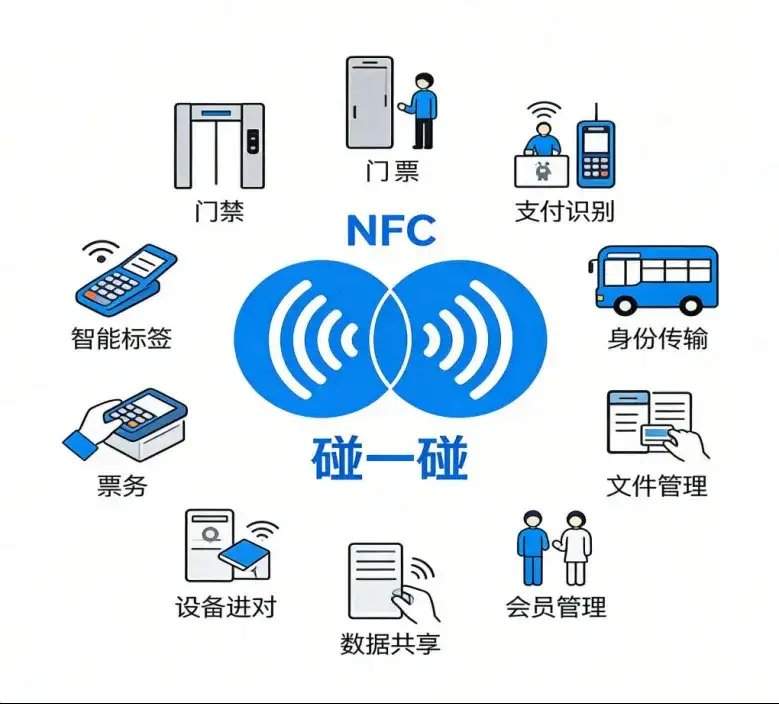
The NFC interaction series focuses on lightweight "tap-to-interact" functionality with smartphones, divided into anti-counterfeiting traceability tags, brand marketing tags, and device interaction tags. Smartphones can directly read the data without the need for dedicated read/write devices, suitable for scenarios such as product anti-counterfeiting, cultural and creative marketing, device pairing, file data sharing, and membership management.
General-purpose RFID adhesive labels are standard configurations for logistics and retail, including UHF adhesive labels, library management tags, and express sorting tags. These products support long-distance batch reading, capable of simultaneously identifying dozens of tags in a single batch, replacing traditional manual scanning and improving the efficiency of warehouse inventory and inbound/outbound operations by dozens of times. They are core carriers for smart warehousing, new retail, and supply chain traceability.
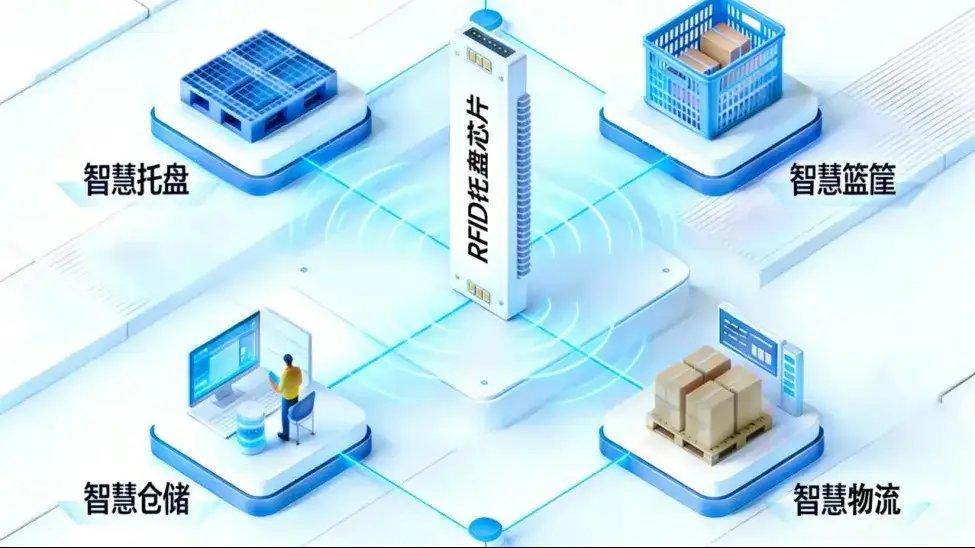
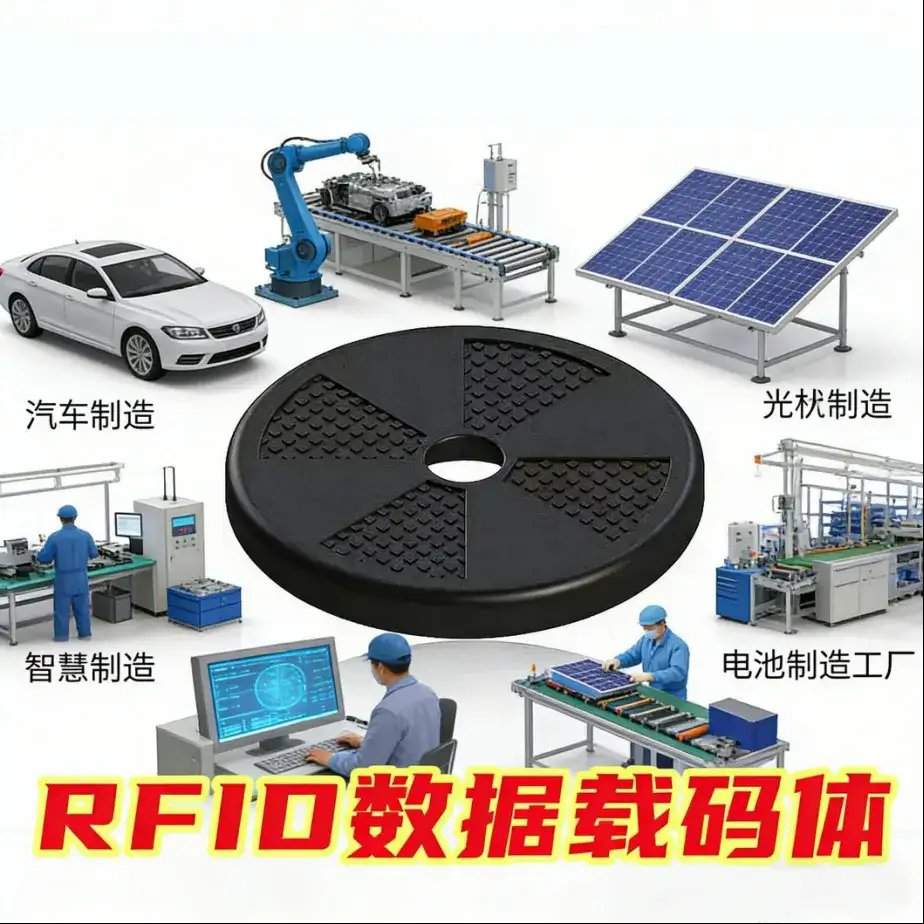
Industrial-grade special tags specifically address recognition failures in scenarios such as metal shielding, liquid absorption, high-temperature washing, and outdoor corrosion. They include anti-metal tags, washable fabric chips, high-temperature resistant data carriers, and dedicated traceability tags for power equipment. Non-standard customized hardware targets industries such as power, healthcare, intelligent manufacturing, and rail transit, supporting irregular PCB tags, high-temperature resistant ABS tags, and anti-transfer fragile anti-counterfeiting tags, with customizable encryption protocols, dedicated UID/EPC codes, and one-item-one-code anti-tampering systems.
Supporting read/write identification equipment includes the company's self-developed full series of RFID readers, handheld identification terminals, and sensing antennas. This series of hardware is deeply adapted to the company's own tags and can be directly integrated with various IoT management systems, providing customers with a complete "tag-device-data adaptation" sensing layer solution, reducing multi-party procurement and hardware-software adaptation debugging costs.
In terms of technical barriers, Bing RFID Tag possesses large-scale mass production capabilities, with an annual output of over 200 million RFID smart cards and electronic tags. The fully automated production lines cover the entire process of SMT, bonding, packaging, printing, encoding, and testing. The company also has capabilities in precise chip data encryption, zero-error batch data writing, complex environment adaptation debugging, and non-standard structure development, capable of undertaking high-difficulty, high-precision, industrial-grade customized orders. All products undergo high and low temperature testing, anti-interference testing, read/write stability testing, and aging testing, and are certified under the ISO quality system.
These products have been applied in dozens of industries, including smart IoT, smart campuses, industrial intelligent manufacturing, power asset management, medical traceability, warehousing and logistics, new retail, security access control, hotel all-in-one cards, and animal identification, serving thousands of domestic and international enterprises and exported to over 100 countries and regions worldwide.
The industry chain empowerment capabilities of Bing RFID Tag are mainly reflected in three aspects: providing sensing layer hardware support for IoT system integrators, solution providers, and technology companies to address industry hardware shortcomings; offering lightweight, highly adaptable, and low-cost intelligent identification solutions for the digital transformation pain points of various industries; and continuously investing in the technological iteration of RFID and NFC products to drive the refinement and scenario-based upgrade of domestic passive sensing hardware. The company also participates in industry summits, technical seminars, and supply-demand matching activities, sharing practical experience in industrial special tags, and collaborating with upstream and downstream industry chain partners to build technical standards and exchange supply and demand resources.
Related Products



Automatic Aiming Laser Remote Obstacle Removal Robot
Pinggao Group Weihai High-Voltage Apparatus Co., Ltd.
Industrial and Commercial Point-Type Gas Detector
Jinan Benan Technology Development Co., Ltd.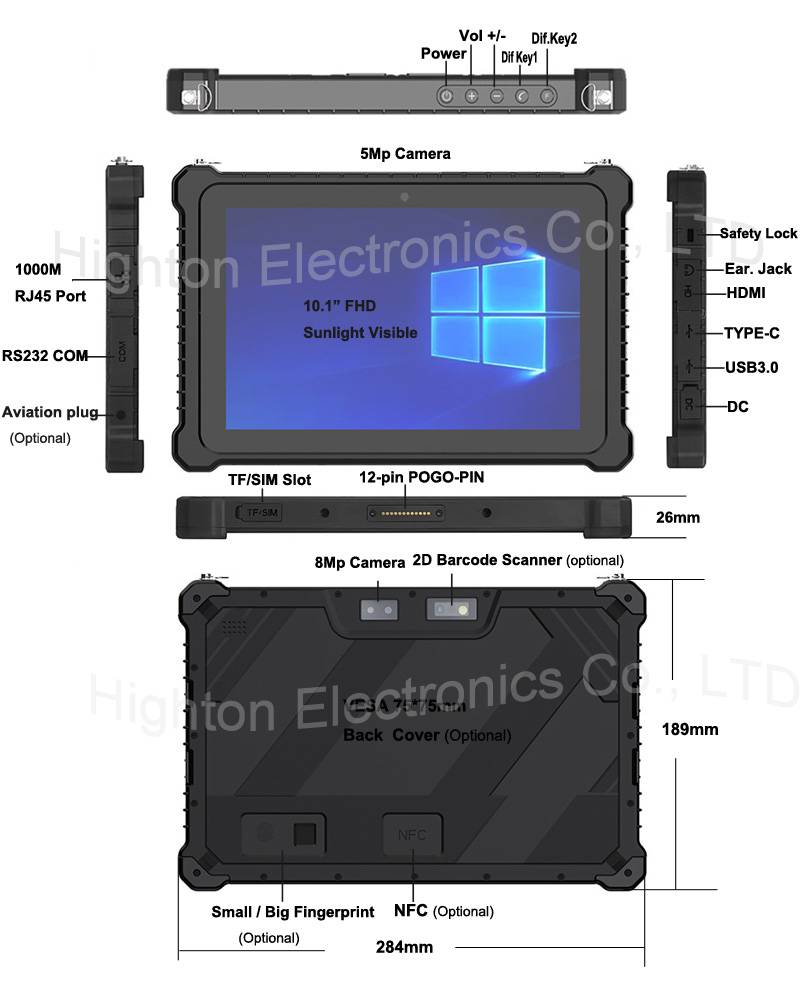
Hot Selling 10 Inch Intel N5100 I5 I7 FHD 8 +128GB 16+256GB Win10 Pro Win11 Pro 4G 5G Rugged Tablet PC Pad with NFC Barcode
Highton Electronics Co., Ltd.

Mine Explosion-proof and Intrinsically Safe Industrial Ethernet Ring Network (10 Gigabit/Gigabit)
Chongqing Mas Sci&Tech Co., Ltd.
MUX Series Communication Interface Device for Security and Stability Control System
Nanjing NR Electric Co., Ltd.
TWP16 P-Band Tropospheric Wind Profile Radar
China Huayun Meteorological Technology Group Co., Ltd.
D12 Humanoid Robot
Automation Research Institute Co., Ltd. of China South Industries Group Corporation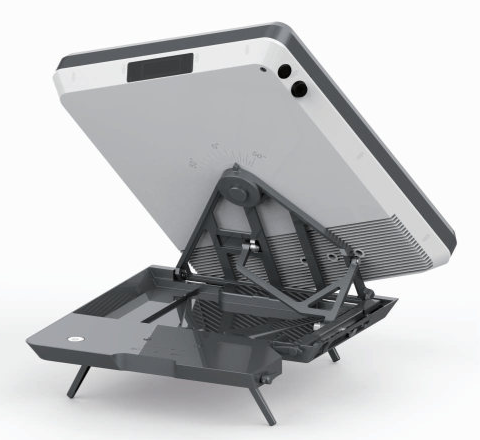
Flat Portable Satellite Terminal 0.35m Aperture Manual Portable Terminal
China Starwin Science & Technology Co., Ltd.