en.Wedoany.com Reported - UCC Holding is constructing a cluster of 3D-printed schools for Qatar's Public Works Authority (Ashghal). To date, it has completed 19,500 square meters of 3D-printed building area, with over 28,000 square meters of printed concrete walls, including internal partitions and external enclosures. Before entering the final printing phase, the project requires one more printer relocation, scheduled for next week.
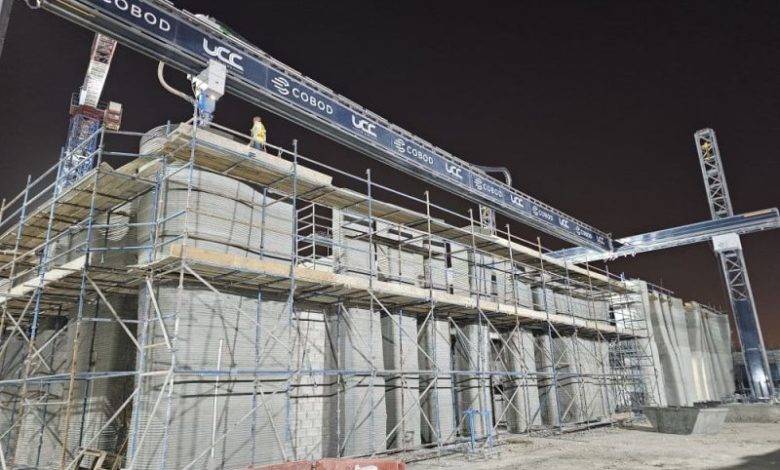
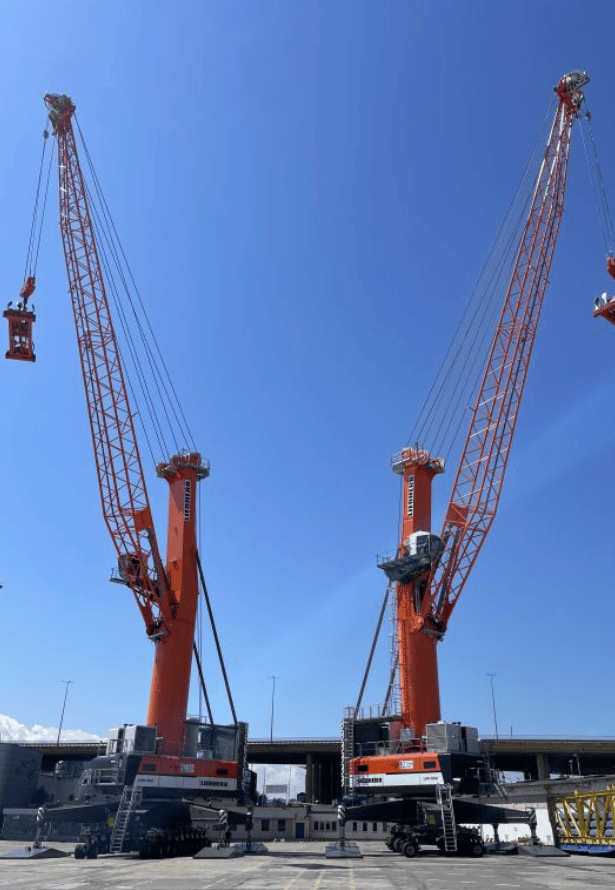
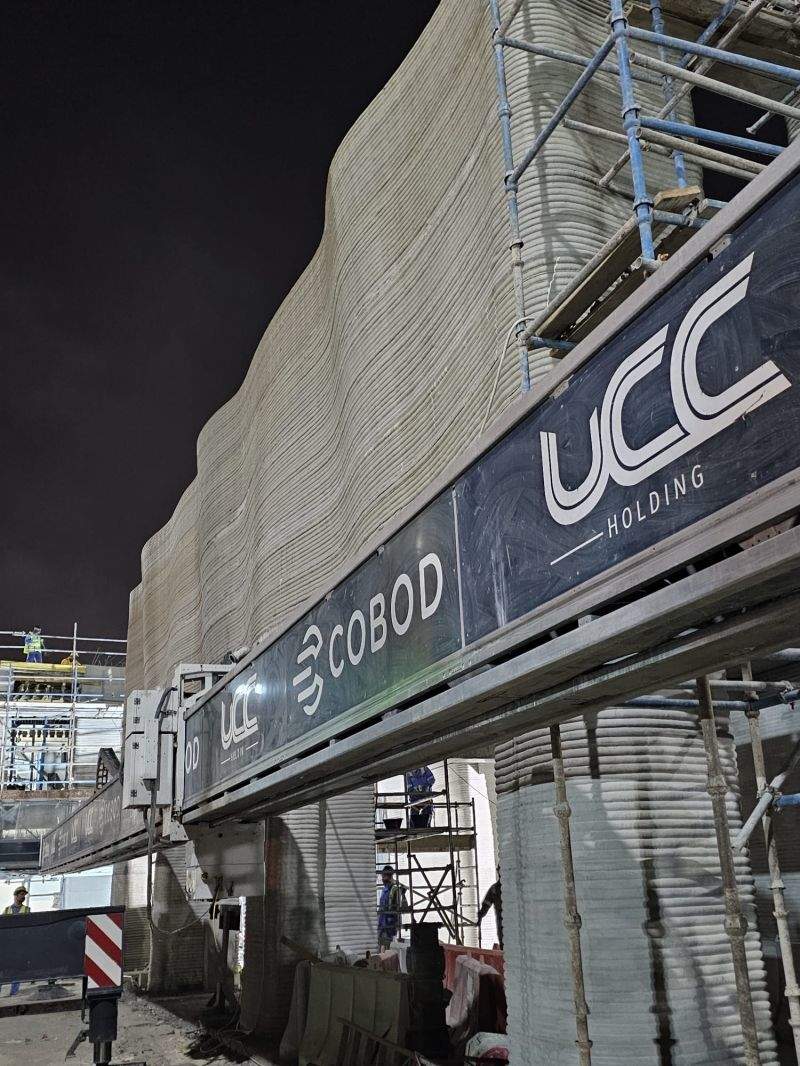
The core equipment for the project consists of two customized BODXL printers, supplied by Denmark's COBOD International under a contract signed in September 2024. Each unit measures 50 meters long, 30 meters wide, and 15 meters high, ranking among the largest construction 3D printers ever built. UCC Holding completed installation at the Doha site in mid-2025, following over 100 full-scale test prints on the smaller BOD2 printer to develop concrete mix designs and verify performance under local conditions.
Moving the printers on-site is not a simple repositioning. Fourteen relocations have been completed, each requiring disassembly and movement of the two BODXL units, along with the supporting material delivery systems, reinstallation of electrical systems and connections, and reestablishment of batching operations, cement silos, and raw material logistics at the new location. Before resuming printing, the cleaning and pumping areas must also be rebuilt, and the equipment recalibrated and tested. UCC Holding describes this process as 15 independent print setup rebuilds—each time construction advances to a new area of the site, the machines, material handling systems, and supporting infrastructure are fully disassembled, transported, and recommissioned.
In May 2025, the team completed intensive training with COBOD engineers, covering printer operation, printing sequences, structural layering strategies, and real-time quality control. This marks a significant step in Qatar's local capability in advanced construction technology, further solidifying its position as a regional hub for innovation and engineering.
Compared to traditional construction methods, 3D printing offers multiple environmental, social, and economic advantages. It significantly reduces raw material waste, lowers concrete usage, and cuts carbon emissions; on-site printing also reduces transportation needs, mitigates supply chain risks, and accelerates project delivery. By scheduling operations at night to avoid high temperatures, the process ensures better concrete performance while reducing dust and noise.
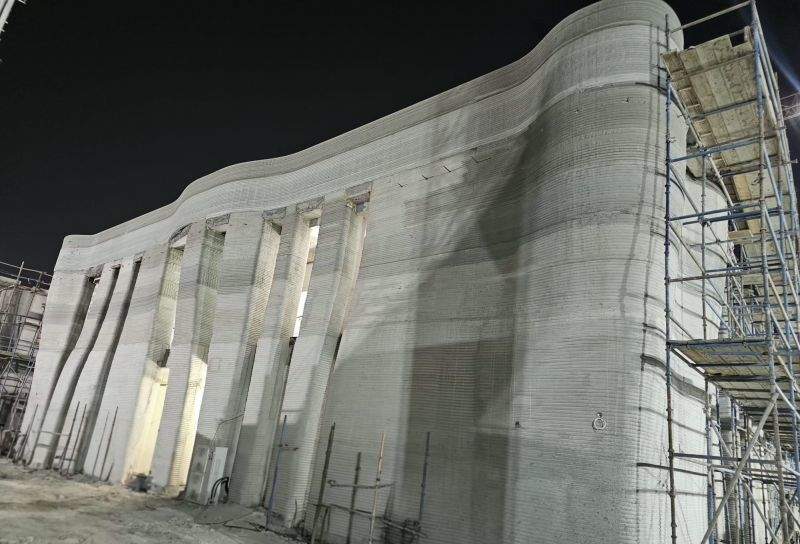
The school design is inspired by Qatar's natural desert landscape, featuring curved, dune-like flowing walls. This organic parametric form is made possible by the geometric freedom offered by 3D printing, which would be difficult or cost-prohibitive to achieve with traditional construction methods.
The completed work represents the largest 3D-printed building units and the largest 3D concrete printing operation to date. The company plans to apply for a Guinness World Record certification after the final printing is completed.