Argentina's cattle herd expected to increase by 300,000 to 500,000 head by end of 2026
en.Wedoany.com Reported - The liquidation phase of Argentina's livestock cycle is gradually becoming a thing of the past, with the core unknown factor through the end of 2026 being the specific magnitude of the increase in cattle herd size.
According to reports, due to reduced slaughter volumes and increased retention of cows, the country's cattle herd could increase by 300,000 to 500,000 head by the end of 2026. The report notes that a significant decline in slaughter numbers has created conditions for herd recovery growth.
In June 2026, the proportion of cows in total slaughter fell to 45.5%, the lowest level in nearly five years. This ratio is on par with the average for the period from 2002 to June 2025 and ranks 12th in the historical ranking for that period.
According to forecasts, the number of weaned calves in Argentina in 2026 is expected to be 14.3 million, slightly lower than the levels of the previous two years. Total annual slaughter is projected to be between 12.2 million and 12.4 million head, a 9% decline from 2025. In terms of production, Argentina's total beef output is expected to reach 2.9 million tons. Of this, approximately 870,000 tons are destined for export, projected to generate $4.6 billion in revenue. Domestic beef consumption is expected to remain at 42 to 43 kilograms per person per year. Continuing the trend from the first half of 2026, analysts estimate that annual cow slaughter will decrease by 10%, heifer slaughter by 10.5%, steer slaughter by 5.5%, and young bull slaughter by 7%.
Specifically, in the first half of 2026, total cattle slaughter in Argentina was approximately 6 million head, a 9% decline year-on-year. During the same period, due to an increase in average slaughter weight to a record 238 kilograms, the decline in domestic beef production was smaller than the drop in slaughter volume, estimated at 6.8%.
The report states that the number of calves has decreased, but the number of fattened steers has increased. The animal rearing cycle has lengthened, with animals spending more time in feedlots, resulting in carcass weights for all current categories (calves, cows, heifers, steers, and young bulls) being 8 to 15 kilograms higher than two years ago. Local analysts expect that average slaughter weights may continue to increase in the coming months, but at a slower pace than last year; meanwhile, the weaning rate (calf-to-cow ratio) is also expected to improve slightly.
Related Products



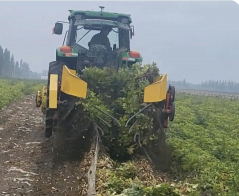
4HS-8 High-efficiency Peanut Inverted-laying Harvester
Hebei Yongfa Hongtian Agricultural Machinery Manufacturing Co., Ltd.
Industrial and Commercial Point-Type Gas Detector
Jinan Benan Technology Development Co., Ltd.
714CD Series C-Band Weather Radar
Chengdu Zhongdian Jinjiang Information Industry Co., Ltd.