en.Wedoany.com Reported - The U.S. Department of Energy's Argonne National Laboratory recently released an open-source framework called ChemGraph, which leverages artificial intelligence to automate workflows in computational chemistry and materials science. The framework aims to lower the barrier to advanced materials simulation, accelerating research and development in areas such as next-generation batteries, clean fuels, and critical materials.
Designing new materials at the atomic level has long been the domain of experts, as building precise models of material behavior requires deep knowledge of computational chemistry and the ability to operate complex scientific software. Argonne's ChemGraph framework seeks to change this by combining natural language instruction processing, graph neural network foundation models, and mature simulation tools. The system allows users to describe research problems in natural language, and the framework automatically maps them to corresponding simulation tasks, execution tools, and data analysis workflows. Its underlying architecture consists of multiple specialized agents responsible for planning, execution, and data aggregation. In published evaluations, the team tested the framework on thirteen benchmark tasks using open-source and proprietary models from vendors such as Alibaba, OpenAI, and Anthropic, finding that smaller models handled simple workflows well, while more complex problems benefited from larger models.
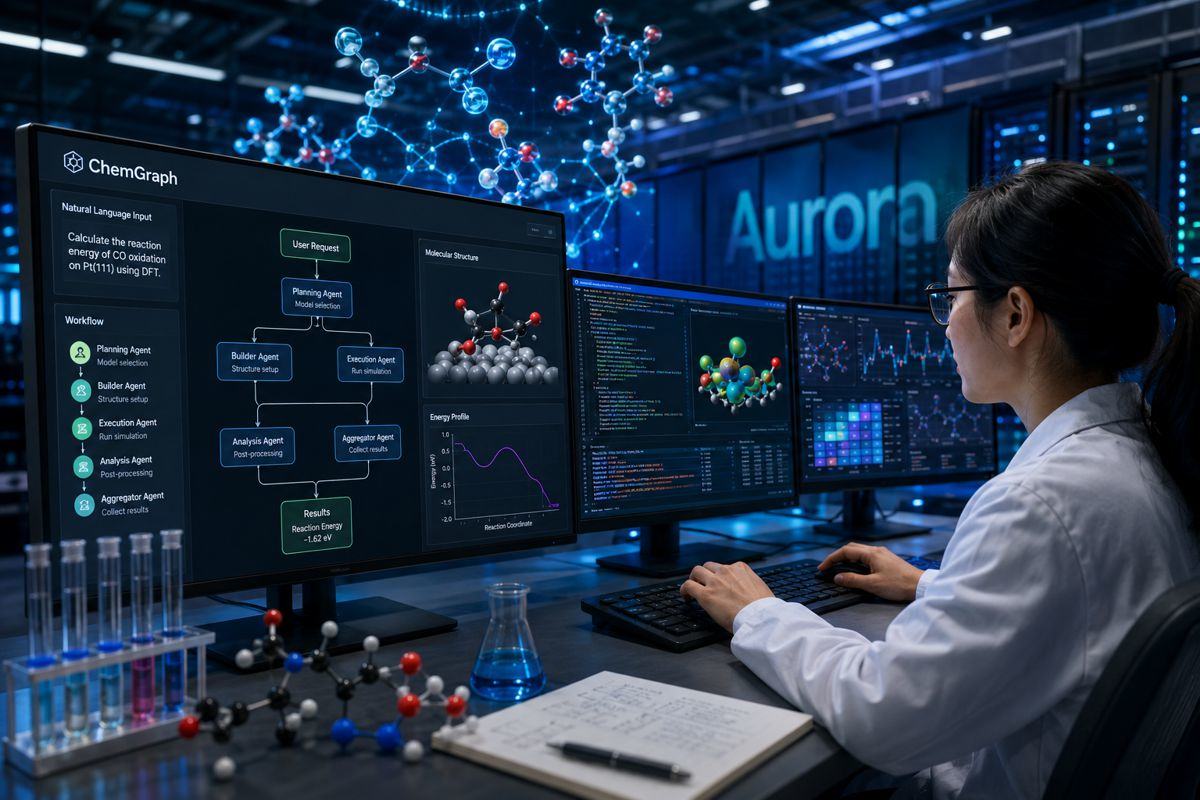
ChemGraph's development is based on the Aurora exascale supercomputer at the Argonne Leadership Computing Facility (ALCF). ALCF Director Michael Papka stated that the team is "excited to see Aurora join the exascale club." The machine performs over one exaflop per second on standard benchmarks, providing the computational power needed to run computationally intensive quantum chemistry simulations. The ALCF inference service allows researchers to access large language models on the facility's own systems, an arrangement that helps keep sensitive data within a controlled environment and reduces the cost of calling models. The framework's design emphasizes generating new data based on physical simulations rather than model memory, aiming to reduce the risk of AI producing fabricated results in scientific applications.
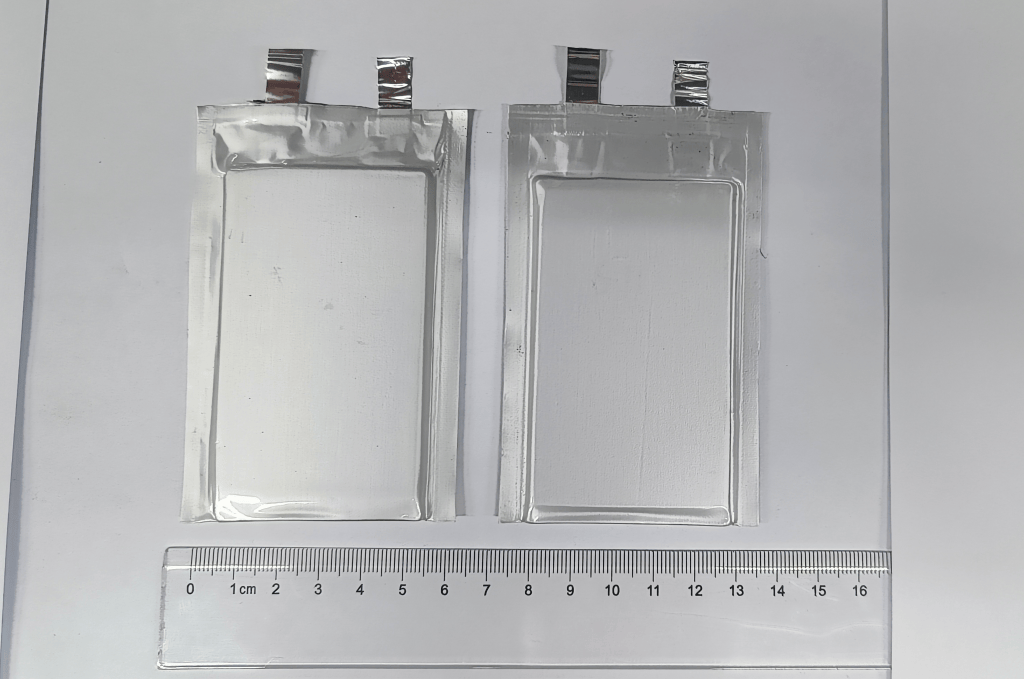
Argonne National Laboratory noted that the framework's application areas cover key dependencies for infrastructure materials. These include next-generation battery technologies, whose development pace directly impacts electrified fleets and grid-scale energy storage; more efficient combustion technologies aimed at cleaner engines and fuels; and critical materials development, which directly relates to the supply chain resilience of materials such as magnets and specialty alloys that rely on concentrated supply sources. Example workflows shared with the framework also include modeling porous framework materials for carbon dioxide capture, which can be applied to emission reduction in industrial processes such as cement production.
ChemGraph's release comes as the United States is directing political and financial resources toward the same direction. The framework complements the U.S. Department of Energy's "Genesis Mission," launched in November 2025, which aims to roughly double U.S. scientific and engineering productivity within about a decade by integrating national laboratories, supercomputers, and scientific datasets. Released as an open-source framework, ChemGraph allows research teams to customize and integrate it to suit their respective research missions. Argonne's goal is to make the system progressively more autonomous, driving materials discovery closer to a continuous, self-guided process.