CAICT Releases "Model-Data Resonance" Technical Verification Service System
en.Wedoany.com Reported - He Baohong, Chief Engineer of the China Academy of Information and Communications Technology (CAICT), released a technical verification service system centered on "Model-Data Resonance" at the Data Element Development Forum of the 2026 Global Digital Economy Conference held in Beijing on July 3, 2026. The system aims to drive the artificial intelligence industry to build a "Model-Data-Scenario" flywheel.
Under the guidance of the Ministry of Industry and Information Technology, CAICT has jointly launched the "Model-Data Resonance" special action with multiple organizations since September 2025. In December 2025, eight departments jointly issued the "Implementation Opinions on the 'AI + Manufacturing' Special Action," proposing a path of "using models to guide data, and employing data to empower models" to advance the Model-Data Resonance action. In April 2026, the Ministry of Industry and Information Technology and the National Data Administration jointly issued an action notice, clarifying seven major tasks for Model-Data Resonance, marking the transition of the action from industry consensus to full implementation. CAICT proposed establishing a "One Body, Two Wings, Three Cycles" mechanism, with bidirectional data and model driving and collaborative optimization at its core. By enhancing data quality to drive model iteration and upgrading, while leveraging model capabilities to inversely push for data quality improvement, it aims to unblock the full value chain of "data quality improvement—model efficiency upgrade—scenario application value release," cultivating an integrated full-stack service system for AI data-model integration.
The "Model-Data Resonance" system revolves around three core elements: high-quality datasets, high-efficiency models, and high-value industry applications, establishing an iterative closed-loop mechanism. First, the data-to-model cycle: high-quality datasets run through the entire lifecycle of large models from construction and training to deployment and iteration, while large model benchmark testing feeds back to improve data quality. Second, the model-to-application cycle: as models deeply penetrate specialized, complex, and low-fault-tolerant industry scenarios, targeted customization and fine-tuning are conducted based on high-quality datasets to address the insufficient adaptability between general large models and industry-specific models. Third, the application-to-data cycle: high-quality native data accumulated from various industry scenarios feeds back to drive model iteration and optimization, forming a spiraling upward closed loop of "deeper scenario penetration, richer data accumulation, stronger model performance, and higher application value," providing endogenous momentum for the continuous iteration of the AI industry.
Leveraging the technical foundation of the Key Laboratory of AI Large Models and Software/Hardware Evaluation under the Ministry of Industry and Information Technology, CAICT has built an integrated full-stack service system for data-model integration around three core capabilities: data quality control, model evaluation, and application verification. It has independently developed high-quality dataset assessment and evaluation capabilities, the Fangsheng Large Model Benchmark Testing System, and large model service performance and agent monitoring capabilities, focusing on addressing core issues such as data quality control, model performance optimization, and application value verification, thereby unblocking pain points across the entire process from large model training to deployment.
Facing the new development stage of the AI industry, CAICT stated that it will continue to collaborate with industry, academia, research, and application entities to deepen the construction and engineering practice of the "Model-Data Resonance" system, unblock the collaborative chain of high-quality dataset supply, high-efficiency large model iteration, and high-value industry scenario deployment, strengthen the integrated full-stack service system for AI data-model integration, and provide foundational support for the high-quality and sustainable development of the AI industry.
Related Products



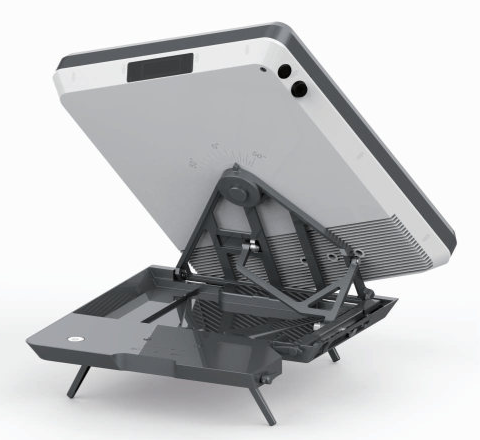
Flat Portable Satellite Terminal 0.35m Aperture Manual Portable Terminal
China Starwin Science & Technology Co., Ltd.
MUX Series Communication Interface Device for Security and Stability Control System
Nanjing NR Electric Co., Ltd.
G.652.D Wavelength-extended Non-dispersion Shifted Single-mode Optical Fiber
HONGAN GROUP CO., LTD.
Automatic Aiming Laser Remote Obstacle Removal Robot
Pinggao Group Weihai High-Voltage Apparatus Co., Ltd.
TWP16 P-Band Tropospheric Wind Profile Radar
China Huayun Meteorological Technology Group Co., Ltd.



Industrial and Commercial Point-Type Gas Detector
Jinan Benan Technology Development Co., Ltd.