en.Wedoany.com Reported - Firefly Aerospace (Cedar Park, Texas, USA) has secured a $13 million subcontract from NASA's Jet Propulsion Laboratory (JPL) to manufacture, test, and deliver an atmospheric decelerator for the SkyFall Mars mission. Scheduled for launch in late 2028 and managed by JPL, the mission will deploy three proven Mars helicopters to conduct scientific tasks and demonstrate airborne subsurface mapping and resource exploration, supporting future U.S. astronaut landings on Mars.
Firefly's Chief Technology Officer, Shea Ferring, stated that this contract is the first project undertaken by the company's newly established Gloworks innovation lab and demonstrates its ability to develop cutting-edge space technologies without disrupting existing production lines. He noted that the company's expertise in large composite structures for spacecraft and rockets enables it to support critical planetary missions like SkyFall, and that it is further innovating core processes through Gloworks to expand the boundaries of solar system exploration.
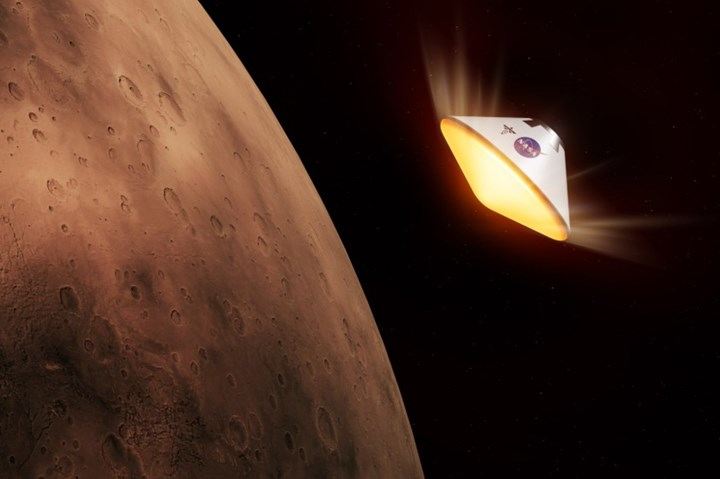
The SkyFall atmospheric decelerator, consisting of a backshell and heat shield, will be developed at the Gloworks innovation lab and manufactured at the company's "Rocket Ranch" facility in Briggs, Texas. Firefly will use carbon fiber composite materials, with the same material system as its Blue Ghost lunar lander, Elytra orbiter, and Alpha and Eclipse launch vehicles.
Upon completion, Firefly will conduct rigorous structural qualification and flight acceptance testing to ensure the decelerator meets all mission requirements for launch, cruise, and Mars entry, descent, and landing phases. The decelerator will then be delivered to JPL for additional environmental testing and integration with the SkyFall helicopters and deployment system.
Based on NASA's Ingenuity Mars Helicopter, the SkyFall helicopters are deployed using an innovative aerial release technique known as the "SkyFall maneuver"—the entry vehicle releases three helicopters during descent without requiring a landing platform. The helicopters then fly to the ground, capturing high-resolution surface images and subsurface radar data to help understand the terrain and natural processes shaping the landing site, as well as to detect water ice.
Firefly is also making progress on multiple lunar missions, including four upcoming lunar missions as part of NASA's Commercial Lunar Payload Services (CLPS) program. Additionally, the company recently secured another JPL subcontract to deploy four drones over the lunar south pole using its Elytra spacecraft, supporting NASA's MoonFall mission.
The company is continuously increasing its spacecraft production capacity, recently doubling the size of its central Texas facility and expanding its spacecraft cleanroom to enable assembly-line production of lunar landers and orbiters, supporting multiple lunar and deep-space missions annually.