Ireland's Smurfit Westrock invests 1 billion reais in Brazil to expand capacity
en.Wedoany.com Reported - Over the past two years, Smurfit Westrock, one of the world's largest paper and packaging manufacturers, has completed an investment of 1 billion reais in Brazil to expand capacity, accelerate innovation, and increase market share.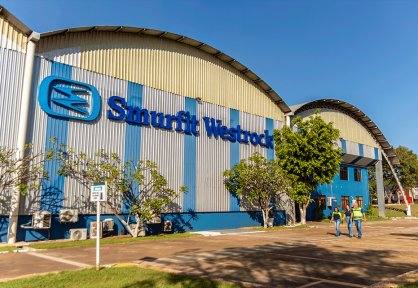
Manuel Alcalá, CEO of the Brazilian operations, stated in an interview with CNN Brasil that this investment plan is part of the company's global strategy to achieve growth at a pace exceeding the market rate in the future. He noted that Brazil is a country worth investing in for development, with the goal of achieving faster growth than the market.
The funds are primarily allocated to factory capacity expansion, industrial automation, artificial intelligence, and the development of new solutions. Alcalá stated that amid heightened global supply chain volatility, this move aims to enhance operational efficiency and customer service reliability. He explained that the world is in a period of uncertainty and rising costs, and preparations must be made for essential packaging.
Smurfit Westrock was formed in 2024 through the merger of Smurfit Kappa and WestRock, operating in approximately 40 countries with around 500 production units. Its global annual paper production is about 21 million tons, equivalent to the output of the entire Western Europe. In 2025, the company reported a net profit of $699 million and revenue of $31.1 billion, with adjusted EBITDA reaching $4.9 billion, driven by strengthened industrial activity and global scale advantages.
In Brazil, the company has been operating since 2016, with facilities extending from the Northeast to the South, and forestry operations in the state of Santa Catarina. The company owns approximately 54,000 hectares of land in the region, of which about 25,000 hectares are used for planting pine and eucalyptus to supply production. Alcalá stated that the integration of virgin and recycled fibers can maintain packaging quality without compromising the circular economy model.
Alcalá believes that factors such as geopolitical stability, accessibility to natural resources, agricultural productivity, and the scale of the consumer market make Brazil one of the group's primary investment destinations. He noted that Brazil possesses unique characteristics, making it a highly attractive country for investment due to its stability, highly productive agriculture, natural resources, and talent quality.
All of Brazil's production is supplied to the domestic market, but the company is also expanding its operations across Latin America. Alcalá pointed out that high domestic demand has facilitated investment approvals and growth prospects. Packaging produced in Brazil is entirely for the Brazilian market, and many customers, especially agribusinesses, export products such as meat and fruit, with the packaging being exported along with them.
In Latin America, the company has integrated operations in countries including Colombia, Argentina, Peru, Ecuador, Costa Rica, the Dominican Republic, and El Salvador. It utilizes the regional network to supply paper when necessary. In 2025, the company's revenue in the region was $2.1 billion, with adjusted EBITDA of $485 million, benefiting from volume growth, improved margins, and regional integration following the acquisition in Ecuador.
The cardboard packaging industry serves multiple economic sectors, including food, beverages, pharmaceuticals, chemicals, and industrial goods. Alcalá stated that packaging proved to be an essential service during the pandemic, covering almost the entire economy, with each sector requiring specific solutions. The company develops customized packaging for different production chains; export products require higher-strength packaging using a higher proportion of virgin fibers to withstand long cold chains and international transport, while products with lower structural requirements use a higher proportion of recycled fibers.
The company has over 1,600 developers connected through a global innovation platform, adjusting packaging based on customer logistics needs. Sustainability remains a pillar of the company. Globally, Smurfit Westrock recycles approximately 16 million tons of materials annually and invests in industrial improvements and more efficient packaging to reduce carbon emissions.