en.Wedoany.com Reported - The Dutch quantum research center QuTech (a joint venture between Delft University of Technology and the Netherlands Organization for Applied Scientific Research) has recently deployed its next-generation superconducting quantum computer, Tuna-17, making it accessible to global users via the Quantum Inspire public cloud platform. This processor provides researchers, engineers, and educators with unlimited access to real physical quantum hardware. This release marks the third system version within a 12-month development cycle, following the deployment of the Tuna-5 and Tuna-9 processors. A larger 28-qubit variant, Tuna-28, is planned for future release, with the current version aimed at establishing a highly standardized operational baseline.
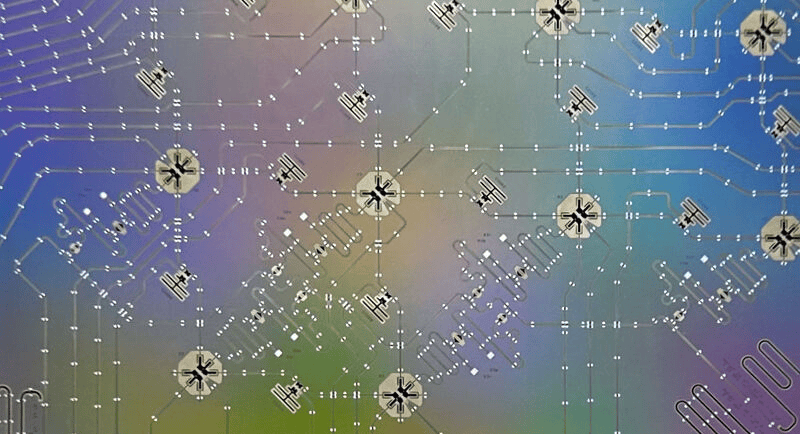
The Tuna-17 processor features a planar layout integrating 17 superconducting qubits and 24 tunable couplers. This hardware design, developed by QuTech's DiCarlo lab, is specifically engineered for executing multi-qubit quantum error correction (QEC) protocols and surface code logic gates. By integrating tunable couplers, the system can dynamically adjust the coupling frequencies between qubits, suppressing parasitic spectator effects and residual crosstalk during parallel gate operations. This hardware optimization strategy is detailed in the team's paper published in Physical Review Letters, titled "Optimizing frequency positioning of tunable couplers in circuit QED processors to mitigate spectator effects on quantum operations."
Unlike closed commercial quantum computing stacks, the Tuna platform enforces open architecture standards across the entire European value chain, with all components sourced from the 100% European Open Architecture Alliance anchored in Delft. The processor supports a universal gate set, automated self-calibration routines, real-time performance logging, and mid-circuit measurement capabilities—critical hardware features required for active error mitigation, conditional logic routing, and low-depth factorization algorithms. The cloud interface integrates open-source software packages such as Qiskit and PennyLane. Users can access the hardware for free via Quantum Inspire, with up to 100,000 shots per batch, and deploy hybrid noisy intermediate-scale quantum (NISQ) algorithms without modifying existing codebases.
The assembly and operation of Tuna-17 were supported by multiple institutions within the Delft quantum technology cluster. QuTech and TU Delft are responsible for the foundational quantum processing unit (QPU) architecture design, cleanroom lithography fabrication, and public cloud SDK management; TNO provides micro-compilation infrastructure and co-designs the baseline QPU geometry; Orange Quantum Systems supplies the dedicated quantum operating system and automated calibration software; Qblox manufactures high-density microwave control electronics and pulse generation hardware; Delft Circuits installs low thermal load, high-density cryogenic radio-frequency cable arrays; QuantWare provides specialized traveling wave parametric amplifiers and sub-Kelvin cryogenic packaging modules.
This device is partially funded by the HectoQubit Alliance (under the Quantum Delta NL Phase 2 CAT-1 framework) and serves as an operational hardware demonstrator for the EU's OpenSuperQPlus flagship project. By establishing an open architecture system integration division in Delft, the alliance aims to transform laboratory prototypes into industry-standard multi-vendor components. This approach ensures European technological sovereignty in semiconductor-related manufacturing while cultivating professional talent in quantum information technology by deploying this hardware in TU Delft's graduate programs.