Nanjing Metro in China Establishes Five-Level Suspension Mechanism and 9,000-Person Emergency Network
en.Wedoany.com Reported - During the flood season, Nanjing Metro in China has developed a flood prevention system centered on "establishing mechanisms, strengthening teams, and optimizing equipment." Based on risk-stratified decision-making, it has formulated a five-level suspension and graded response plan, and assembled an emergency network consisting of four specialized rescue teams and over 9,000 part-time personnel, achieving a full-chain defense from early warning to response.
To address risks such as entrance water accumulation, station flooding, track area waterlogging, and line operation disruptions caused by heavy rainfall, urban waterlogging, and typhoons, Nanjing Metro has established a five-level graded suspension mechanism: "entrance closure—station closure—section suspension—line suspension—network suspension." This mechanism primarily uses criteria such as the extent of water accumulation, scope of impact, emergency evacuation capability, track area traffic safety conditions, power supply and vehicle base dispatch capacity, proportion of closed stations on a line, and unified requirements from the Municipal Flood Control and Drought Relief Headquarters to define response measures at different levels, including stations, the Operation Control Center (OCC), and the Network Control Center (NCC). When localized risks like entrance water accumulation occur, stations prioritize closing entrances or the station itself to contain the risk within the smallest area. If track area waterlogging affects traffic safety, section suspension is implemented promptly; when risks escalate to the entire line or network level, line or network suspension is initiated according to standards, ensuring operational organization matches the risk level.
In terms of rescue network construction, Nanjing Metro has established an integrated operation model for flood prevention, control, and emergency response, requiring rescue forces to arrive at the scene within 30 minutes. The network consists of four specialized rescue teams with a total of 61 personnel, stationed at four bases: Xiaoxing, Majiayuan, Mozhou, and Dachang East, forming a coverage circle spanning "east, south, west, and north." It also coordinates 656 part-time rescue teams, totaling over 9,000 people.
The rescue teams operate under quasi-military management, maintaining 24-hour combat readiness. Upon receiving a rescue order, teams must be dressed within 60 seconds and dispatched within 3 minutes. Nanjing Metro annually develops a specialized flood prevention drill plan, conducting full-process, full-element practical exercises covering incident reporting, personnel assembly, equipment deployment, and on-site response. Some drills are conducted in a double-blind format to simulate real scenarios.
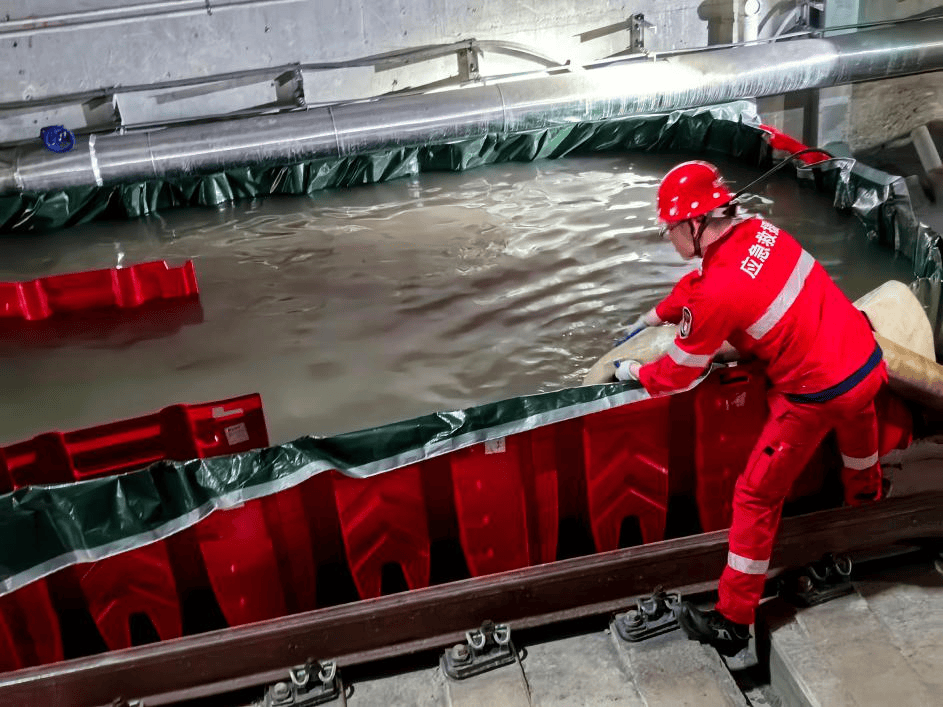
To meet rescue needs, Nanjing Metro is equipped with four flood prevention rescue vehicles, each carrying one diesel generator set and two drainage pumps, with a total drainage capacity of up to 2,000 cubic meters per hour, meeting high-lift drainage requirements for stations and tunnel sections. Additionally, it is equipped with four sets of modular flood barriers, 35 inflatable boats, over 6,900 pumps, 144,000 flood prevention sandbags, more than 7,900 flood barriers, and over 1,900 flood gates. During heavy rainfall, a "five-in-one" multi-dimensional sensing network, utilizing rain gauges, anemometers, section water level markers, flood monitoring instruments, and video surveillance, enables timely early warning and emergency response to potential risks.
Related Products
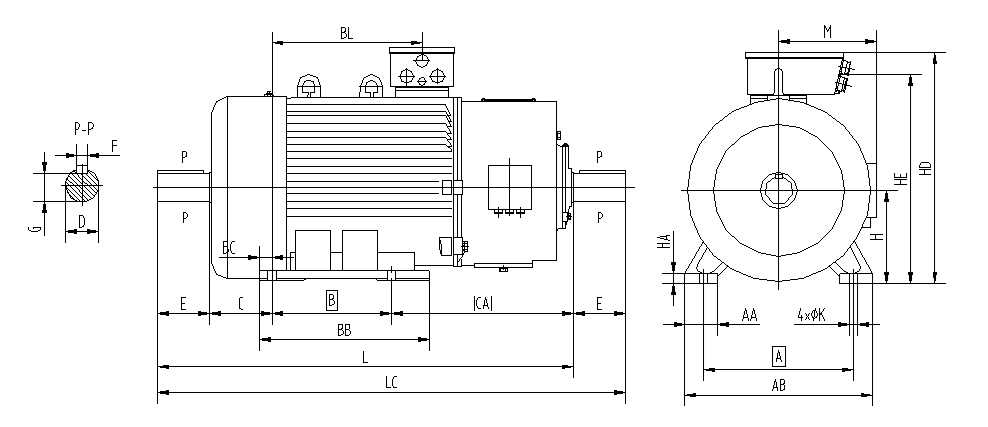

YZR (450-560) Series Wound Rotor Three-Phase Asynchronous Motors for Crane and Metallurgical Applications
Jiamusi Electric Machine Co., Ltd.
300mm Segment Type Countdown Traffic Light (Core Type)
Yangzhou FAMA Intelligent Equipment Co., Ltd.
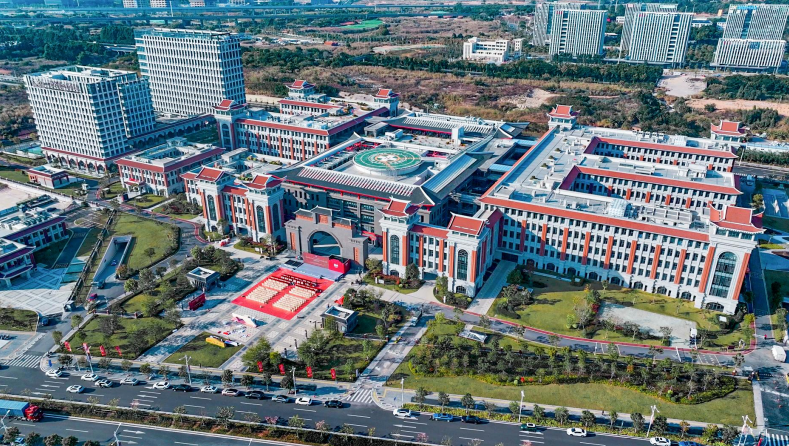
West China Xiamen Hospital of Sichuan University
Wuhan Huakang Century Clean Technology Co., Ltd.