Russia's Rostov Region Launches First Hectare-Scale Cherry Greenhouse Complex
en.Wedoany.com Reported - Russia's Rostov Region has launched its first cherry-growing greenhouse complex, covering 0.2 hectares, designed to reduce weather impact and enable early market entry. Experts from the Russian Agricultural Bank's Industry Assessment Center (ЦОЭ РСХБ) noted that protected cultivation reduces dependence on weather, allows for earlier harvests, and enables sales during favorable pricing periods. Oleg Knyazikov, Deputy Director of the center, stated that in the medium term, cherry production will continue to grow, driven primarily by the expansion of industrial orchard areas, the construction of modern intensive plantations, and the introduction of new cultivation technologies.
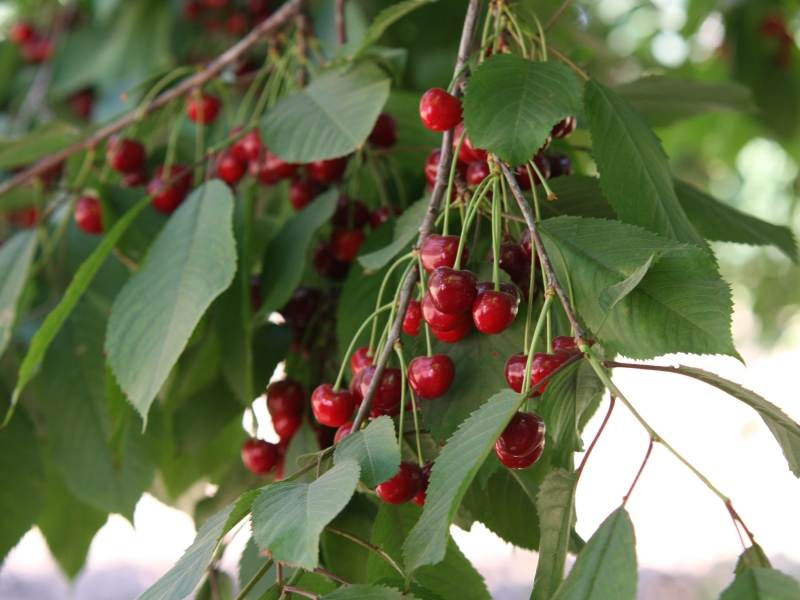
In 2024, the magazine "Agroinvestor" reported that the agricultural company "Donetsk Valley" planned to build a cherry production greenhouse complex, originally scheduled to construct a 1-hectare complex in 2026. Vasily Indlo, Deputy General Director of the company, told the magazine "Southern Expert" that this is the first project of its kind in Russia, unique for its method of large-scale industrial cherry cultivation in greenhouses, which has no precedent in Russia but has been developed in the EU, Argentina, and Chile. Advantages of greenhouse cultivation include protecting the fruit from external factors such as frost, as the microclimate can be regulated. Disadvantages include high costs, with the construction of a 1-hectare nursery costing approximately 150 million rubles, covering gas heating, electricity, supplemental lighting, fertilizers, and chemicals, with an estimated payback period of five to six years.
The "Donetsk Valley" project requires support from high-end buyers, such as upscale restaurants or groups willing to pay premium prices. Irina Kozy, head of the "Berry Academy" project, previously told "Agroinvestor" that the yield per hectare is relatively small, around several tens of tons, and the price would need to reach 2,000-3,000 rubles per kilogram to cover the payback period. Tamara Reshetnikova, General Director of "Growth Technologies," added that if the harvest occurs in April, prices would be higher than in May-June, but supplemental lighting and heating are needed to alter the natural cycle. However, by May, large quantities of Uzbek cherries are already imported, with their early flowering and cheap labor creating competitive pressure.
The Russian Agricultural Bank's Industry Assessment Center predicts that by 2030, cherry production in the organized sector could increase approximately fourfold to 20,000 tons. Unfavorable weather in 2025 led to lower yields per unit area, but total production still rose to 54,800 tons, a 2.5% increase year-on-year. In 2026, production is expected to further increase to 60,300 tons. Currently, about 90% of Russia's cherries are produced by personal subsidiary plots and farms, with a similar proportion coming from the top five producing regions: Stavropol Krai (25,500 tons), the Republic of Dagestan (13,500 tons), Krasnodar Krai (3,500 tons), the Kabardino-Balkar Republic (2,500 tons), and Rostov Region (over 2,300 tons).
Related Products



4HS-8 High-efficiency Peanut Inverted-laying Harvester
Hebei Yongfa Hongtian Agricultural Machinery Manufacturing Co., Ltd.

Industrial and Commercial Point-Type Gas Detector
Jinan Benan Technology Development Co., Ltd.


714CD Series C-Band Weather Radar
Chengdu Zhongdian Jinjiang Information Industry Co., Ltd.
MH220E Two-Row Hybrid Packaged Cotton Picker
CHINA RAILWAY CONSTRUCTION HEAVY NDUSTRY XINJIANG CO., LTD.