South Korea's tax revenue may exceed 500 trillion won in 2027, government establishes fund to invest in AI semiconductors and data centers
en.Wedoany.com Reported - The South Korean government, based on national tax revenue expected to surpass 500 trillion won for the first time in 2027 (previously forecast at 412 trillion won), has established a new "Future Response Fund" to focus investment on three major super-projects: artificial intelligence (AI) semiconductors, AI data centers (AIDC), and physical AI, while also covering four key areas: the younger generation, growth drivers, regional development, and talent. On July 13, Deputy Prime Minister and Minister of Science and ICT Bae Kyung-hoon attended the "2026 National Fiscal Strategy Meeting" chaired by President Lee Jae-myung at the Cheong Wa Dae Guesthouse, where he announced the above AI data center and physical AI support plan.
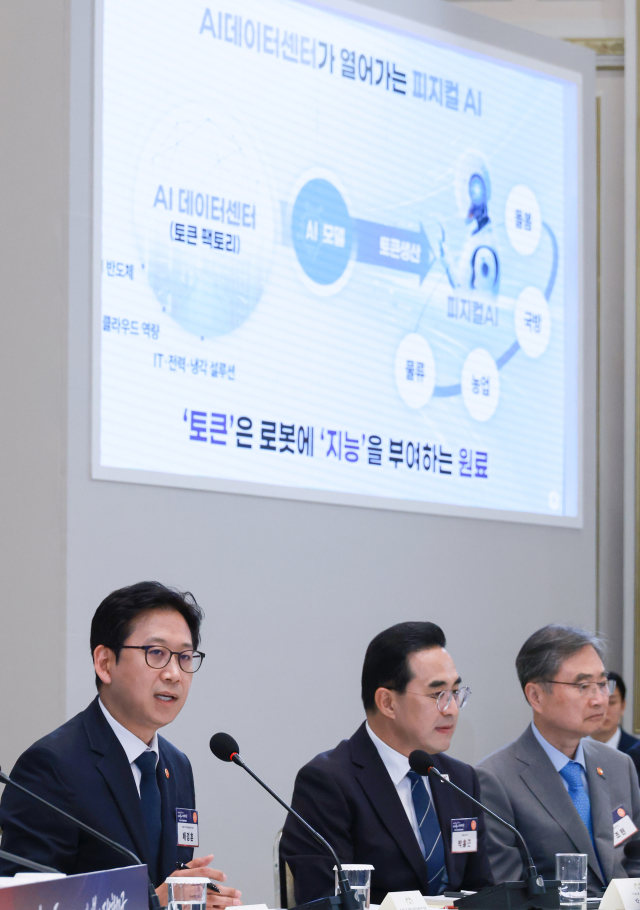
Bae Kyung-hoon defined AIDC as "a facility integrating AI semiconductors, power, and cooling solutions, serving as the space for AI model operation," and explained that it is "the core infrastructure for generating tokens that enhance AI service performance." Through the national report meeting on the three major super-projects, the government set a target of securing 8.4 gigawatts (GW) of AIDC investment by 2029 and 18.4 GW by 2035. Currently, projects in Sejong, Donghae, and Ulsan have been confirmed and are underway, with "three or four" additional candidate sites under review. Building a 1 GW-scale AIDC requires land equivalent to 140 football fields (over 300,000 pyeong) and stable power infrastructure. Bae Kyung-hoon stated that a cross-departmental comprehensive support task force will be established to fully support land acquisition, power supply, and permit approvals. Additionally, the government plans to promote the localization of core technologies such as AI semiconductors, cloud computing, and cooling power solutions, establish an "AI Data Center Alliance" industry-academia-research cooperation system, and simultaneously advance large-scale empirical testing platforms along with talent, tax, and fund package support.
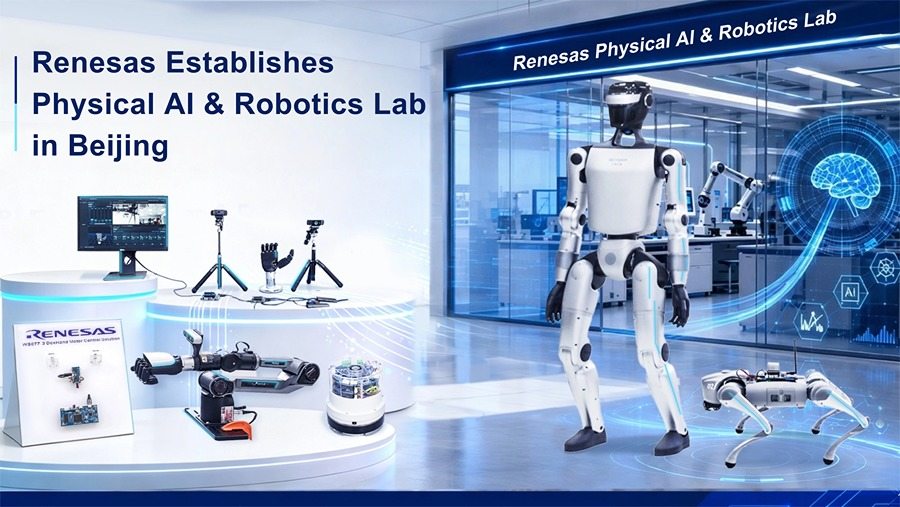
Bae Kyung-hoon defined physical AI as the next-generation growth driver. Citing Morgan Stanley's analysis, he noted that the potential market size of physical AI is $60 trillion, equivalent to approximately 8,000 trillion won, close to half of the current global GDP. Bae Kyung-hoon predicted that its application scope will expand from manufacturing robots to defense, logistics, agriculture, and even daily areas such as nursing and housework, stating that "countries that secure a universal platform will dominate future industrial competitiveness." Starting this year, the government will begin developing original "world model" technologies to mass-produce high-quality synthetic data, while completing a general-purpose physical AI foundational model through industry-academia-research development in the Jeonbuk and Gyeongnam regions. Based on a domestic full-stack platform, this will be integrated with AI semiconductors and robotic equipment to achieve "factory export" industrialization.
Bae Kyung-hoon stated that the government will formally launch three major public-private cooperation systems: a cross-departmental task force, the AI Data Center Alliance, and a dedicated support team for resolving corporate difficulties, with the government and private sector working as one team to advance the super-projects.
Related Products


Comprehensive Mining Automation Control System
Beijing Tianma Intelligent Control Technology Co., Ltd.
G.652.D Wavelength-extended Non-dispersion Shifted Single-mode Optical Fiber
HONGAN GROUP CO., LTD.
Flat Portable Satellite Terminal 0.35m Aperture Manual Portable Terminal
China Starwin Science & Technology Co., Ltd.
20 Inch 1600*900 Full HD 60Hz TFT LED Monitor with VGA and DP Interfaces for Desktop Computers-Business Use
Guangzhou Zanying Optoelectronics Technology Co., Ltd.


GYTA Type Non-Self-Supporting Aerial/Duct Optical Cable
TONGDING INTERCONNECTION INFORMATION CO., LTD.
TWP16 P-Band Tropospheric Wind Profile Radar
China Huayun Meteorological Technology Group Co., Ltd.
Conveyor Belt Intelligent Monitoring System
LUO YANG WIRE ROPE INSPECTION TECHNOLOGY CO., LTD.