Trinidad and Tobago Plans 800 MW Data Center with Ernst & Young and Others, Targeting 2028 Operations
en.Wedoany.com Reported - The Government of Trinidad and Tobago has signed Memorandums of Understanding (MoUs) with Ernst & Young (EY) and Hummingbird AI Holdings to develop a total of 800 megawatts of data center capacity in the twin-island nation.
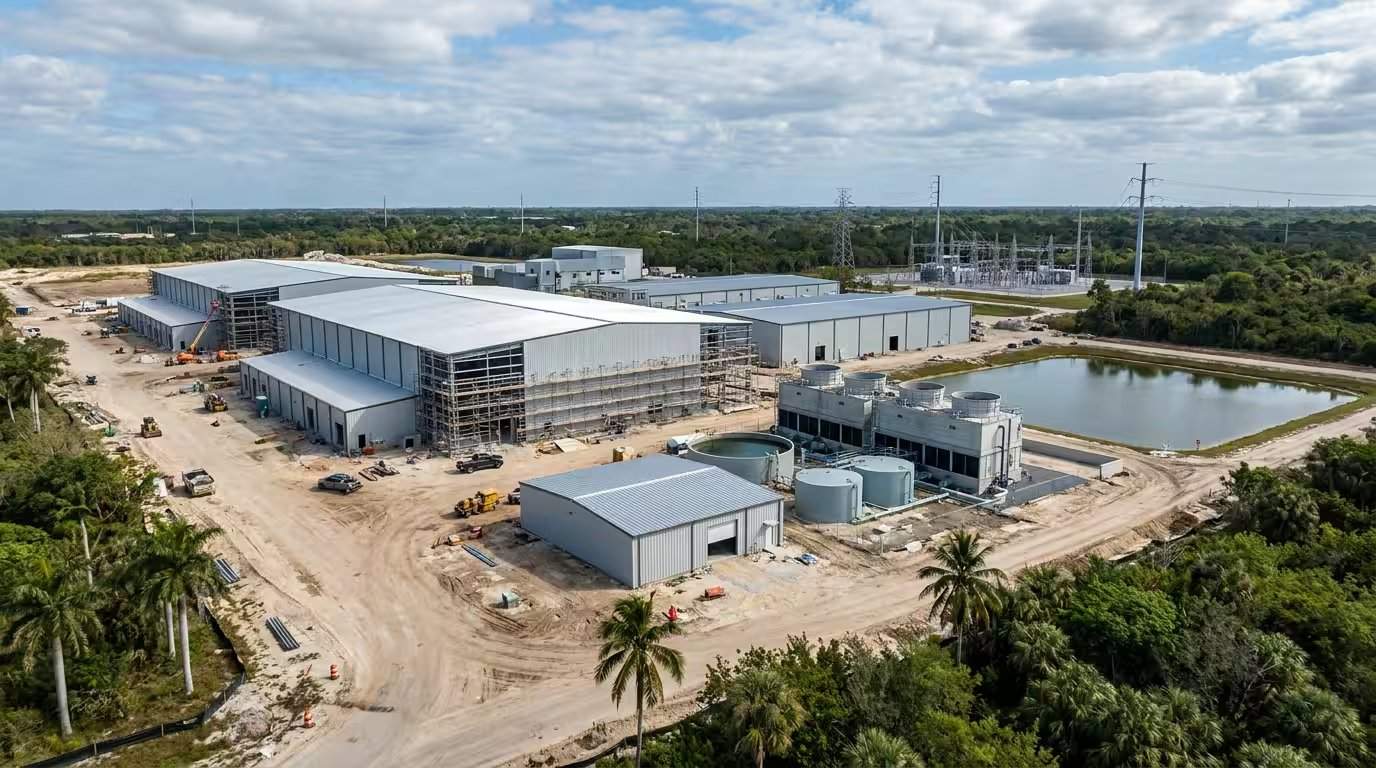
These initial digital infrastructure development agreements were signed by Prime Minister Kamla Persad-Bissessar and include proposals from two U.S. companies, EY and Hummingbird AI Holdings. The aforementioned projects, along with a plan to revamp a steel plant in Point Lisas, are expected to attract a total investment of $5 billion and create over 5,000 jobs in the coming years.
Under the agreement with EY, the company will collaborate with a third-party developer to build a 300 MW data center, while also establishing a framework for cooperation on large-scale data centers and their supporting infrastructure. The second MoU, with Hummingbird AI Holdings, proposes the construction of a 150 MW artificial intelligence data center, with the capacity expected to increase to 500 MW in the long term. This project follows an accelerated timeline, with the first phase of commercial operations targeted for the first quarter of 2028.
The announcement has raised concerns about water supply capacity. Trinidad and Tobago frequently experiences water supply interruptions due to aging infrastructure and reduced supply by the Water and Sewerage Authority (WASA) during dry periods. According to the Trinidad and Tobago Guardian, Public Utilities Minister Barry Padarath responded by stating that the data centers will not negatively impact the country's water security. He noted that Debe is being considered as a special economic zone for digital infrastructure. Initially, the data centers will be supplied with water from artificial ponds, but ultimately, a desalination plant will need to be built to ensure water security for the data centers, as well as for residential and commercial users. Padarath explained that a hybrid system will be adopted, prioritizing the use of existing ponds and activating the desalination plant when necessary, and that the water demand from these data centers will never affect WASA's water supply services to commercial and residential users.
In terms of electricity, Trinidad and Tobago's solar energy market is expected to grow rapidly. According to market research firm Research and Markets, the country had installed 8.37 MW of solar power capacity as of 2024, which is projected to increase to 336.24 MW by 2029. The potential for low-carbon energy may attract data center operators, but with the first facility planned to begin operations in 2028, the main challenge remains whether the necessary water and power infrastructure can be built quickly enough to support the planned market expansion.
Related Products

Conveyor Belt Intelligent Monitoring System
LUO YANG WIRE ROPE INSPECTION TECHNOLOGY CO., LTD.



G.652.D Wavelength-extended Non-dispersion Shifted Single-mode Optical Fiber
HONGAN GROUP CO., LTD.
Industrial and Commercial Point-Type Gas Detector
Jinan Benan Technology Development Co., Ltd.