TrendForce estimates that the companion humanoid robot market will reach $1.1 billion by 2030
en.Wedoany.com Reported - According to the latest robotics industry research report released by TrendForce, companion robots are evolving from early-stage elderly care and therapeutic functions toward more human-like interaction and emotional companionship. Driven by global trends such as an aging population, declining birth rates, and an increase in people living alone, the market demand for companion humanoid robots continues to grow, supported by the rapidly emerging "companion economy." The report predicts that the output value of this sector will reach $1.1 billion (approximately RMB 7.456 billion at the current exchange rate) by 2030.
The report indicates that in recent years, Chinese companion robots have seen increased R&D investment in bionic appearance, emotional expression, and natural interaction, aiming to enhance the sense of human-like engagement. Most manufacturers are developing products with companionship as a core premise, offering partial humanoid designs. For example, Songyan Power's desktop companion robot "Xiaoyue" emphasizes synchronized voice and movement for family companionship; Chunshuitang focuses on highly realistic human-like appearance, tactile feedback, and body temperature simulation to enhance the immersive experience of companionship. UBTECH's U1 robot features high-fidelity silicone skin and 88 degrees of freedom, and is equipped with a large model for nurturing emotional connections, capable of recognizing multiple emotional states. Its target market is primarily in consumer sectors such as family interaction and psychological support.
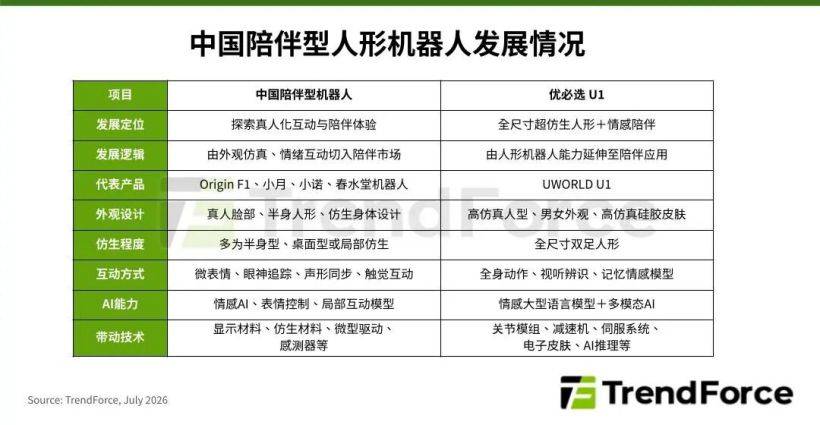
However, the companion humanoid robot industry still faces numerous challenges. In addition to the widely noted issue of battery life, difficulties remain in achieving natural emotional interaction, maintaining personality memory, ensuring functional safety and privacy protection, and balancing product cost with pricing range.
Emotional companion robots, due to their more frequent interaction with users, are expected to drive related manufacturers toward deeper integration across hardware, AI models, ecosystems, and content services.

Related Products
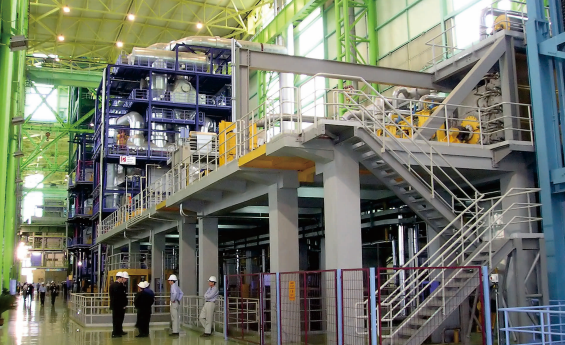

Strip Coating and Plating Production Line Equipment
MCC-SFRE HEAVY INDUSTRY EQUIPMENT CO., LTD.

LBH4000 Batch Environmental Protection Asphalt Mixing Plant | Asphalt Batching Plant | Asphalt Mixing Plant
Jilin Province Road Construction Machinery Co., Ltd.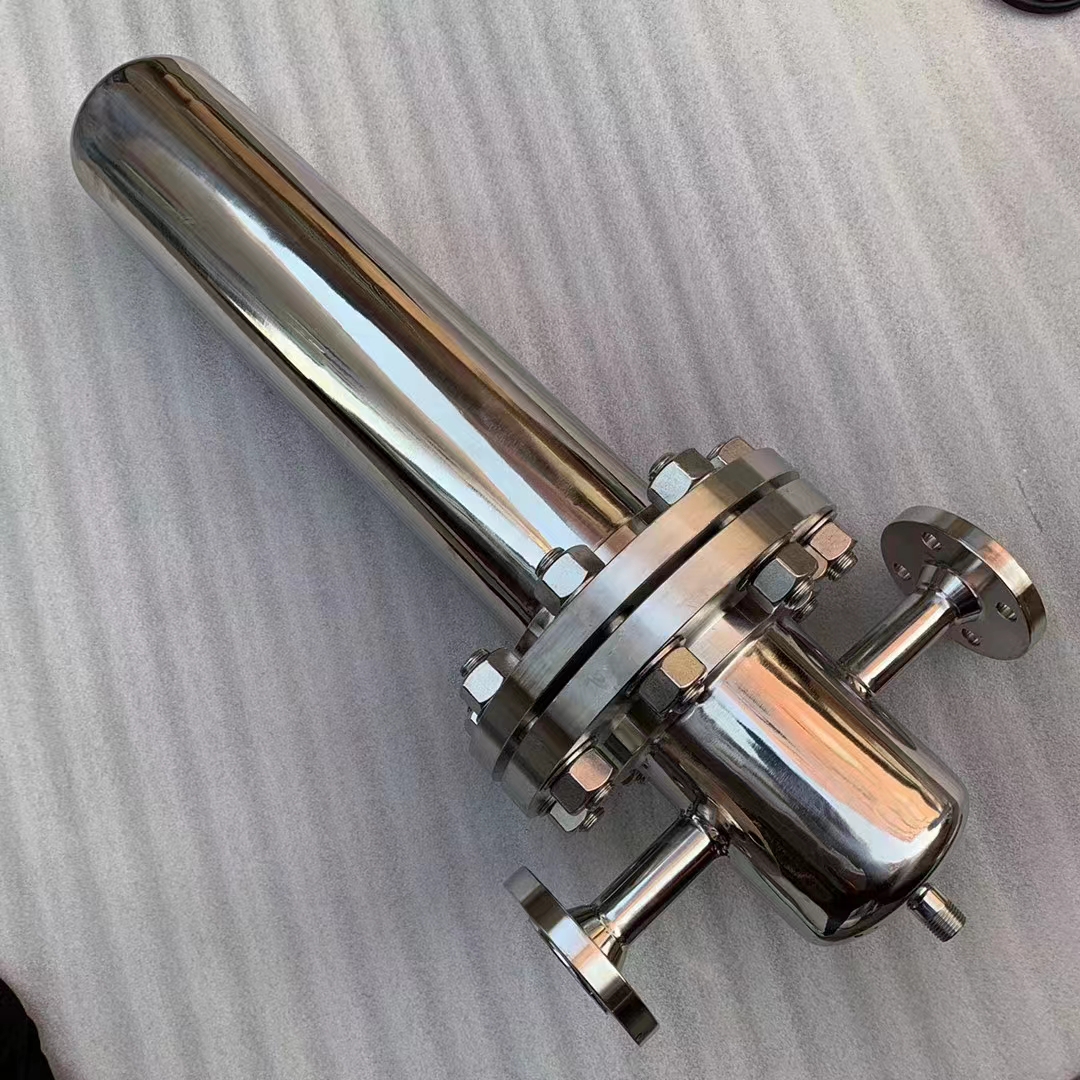


Industrial and Commercial Point-Type Gas Detector
Jinan Benan Technology Development Co., Ltd.


CAP1400 main feedwater flow nozzle flowmeter.
Jiangsu Hongda Instrument Technology Co., LTD.