NIST Launches Textile Fiber Sorting Reference Material RGTM
en.Wedoany.com Reported - The National Institute of Standards and Technology (NIST) has introduced a textile fiber sorting reference material, designated as Research Grade Test Material (RGTM) 10279, designed to provide a comparable physical benchmark for laboratories and sorting facilities. The test kit includes five four-inch square fabric samples, each made from different fibers, covering both dyed and undyed states.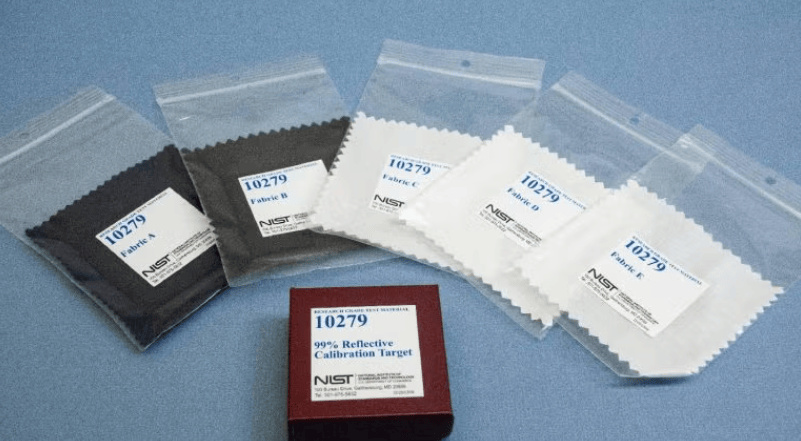
As a standardized tool, RGTM helps laboratories verify and compare the accuracy of various fiber sorting technologies, or develop new fiber identification methods. This standard is expected to improve textile sorting efficiency, reduce processing costs, and increase the total amount of recyclable and reusable textiles. For quality control in production processes, especially given the growing prevalence of blended fabrics composed of multiple difficult-to-distinguish fibers on the market, this reference material also holds evaluation value.
Amanda Forster, a NIST materials research engineer, stated that this textile material helps validate sorting methods and makes measurements from different sorting centers comparable. She further noted that this lays the foundation for expanding the supply chain and enhancing the economic recovery value of textiles and apparel in the United States, while also providing a means to detect unlabeled fiber components, which is crucial for the recycling process.
Currently, NIST has invited textile sorting facilities, laboratories, manufacturers, and other relevant organizations to participate in a study to validate the effectiveness of RGTM in real industrial environments. Participants are required to analyze RGTM samples with confidential fiber compositions using their own fiber identification technologies and provide feedback. NIST will use this data to develop an improved version of the reference material for industry use.
Katarina Goodge, a NIST guest researcher, added that RGTM can also help brands verify material composition. For example, brands can use this standard to confirm whether purchased fabric is the claimed pure cotton or if it contains other fibers such as polyester. Although NIST researchers have not yet explored this application, the material may also be used for luxury goods authentication in the future.
The trial involving RGTM will run until July 30, 2026. Participants can obtain the material through the NIST store and are entitled to receive the reference kit free of charge after providing feedback. The entire study is expected to conclude on September 30, 2026, at which point NIST will further refine the standard based on anonymous feedback from industry participants.