German RecyTube Project Develops Furniture Fabric with Approximately Two-Thirds Recycled Content
en.Wedoany.com Reported - The RecyTube project, funded by the Bavarian Ministry of Economic Affairs, Regional Development and Energy, in collaboration with partners including Hof University of Applied Sciences, fabric manufacturer Rohleder, and technical textile solutions company BWFprotec, has successfully developed a furniture upholstery fabric material containing approximately two-thirds recycled content, reducing the proportion of virgin fibers to around 33%. The project primarily focuses on the value-added utilization of selvedges, threads, and production waste composed of mixed fiber materials generated during the manufacturing of high-quality furniture upholstery fabrics, which were previously discarded or used for energy recovery.
In the first phase, partners collected and analyzed production waste threads, focusing on longer fibers, which were considered suitable for higher-quality recycling. For example, at Rohleder, material flow analysis showed that the main waste consisted of selvedges from the weaving process, which had previously only been used for insulation materials through downcycling processes. Project manager Melanie Peter stated: "It is entirely reasonable to use as little new fiber as possible and as much recycled fiber as possible."
Rohleder has incorporated this approach into its sustainability strategy and is committed to developing an additive-free material cycle. Sustainability manager Leni Rohleder explained: "The goal is to avoid adding any additives or other substances to the mixture, establishing a material cycle that is as clean and traceable as possible in the long term."
The scientific component was primarily undertaken by Hof University of Applied Sciences, which converted textile waste into reusable new materials through mechanical processes. According to the university, chemical recycling technologies are considered less suitable for the existing mixed material types and are costly. Felix Hacker, research assistant at the Institute of Materials Science, stated: "The material appeared very uniform in initial sampling, and we passed it through the carding machine twice." The research team noted that the results allowed the processing parameters set at this stage to remain largely unchanged, but scaling from research to industrial levels still presents challenges. Melanie Peter pointed out: "Scalability in the project is a key issue—projects are either too small or too large, and there is often no intermediate level for testing."
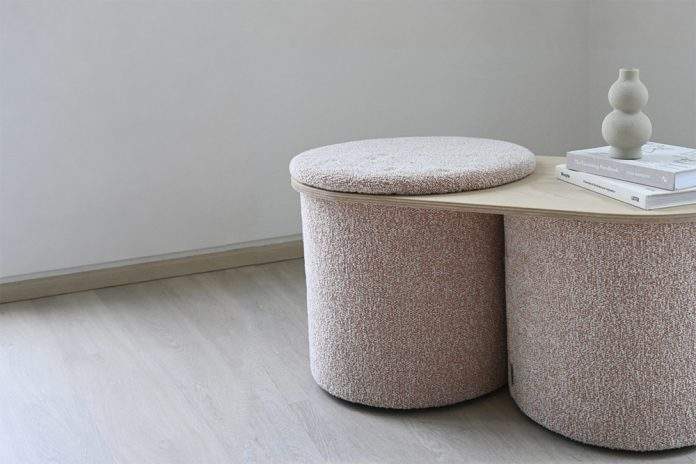
In addition to the technical aspects, the project integrated design application development. RecyTube invited designer Paula Holzhauser, a graduate of Burg Giebichenstein Halle University of Art and Design, to participate, using the new material to propose furniture piece designs, one of which is currently being optimized. Although RecyTube has officially concluded, the partners have announced further progress. The bench designed during the project is still being refined, particularly in terms of cost. Alexandra Luft, scientific coordinator at the Institute of Materials Science, stated: "The cost structure of the bench still needs optimization, but the technical foundation was laid in the final phase of the project, enabling the industrialization of a competitive design within the coming months."