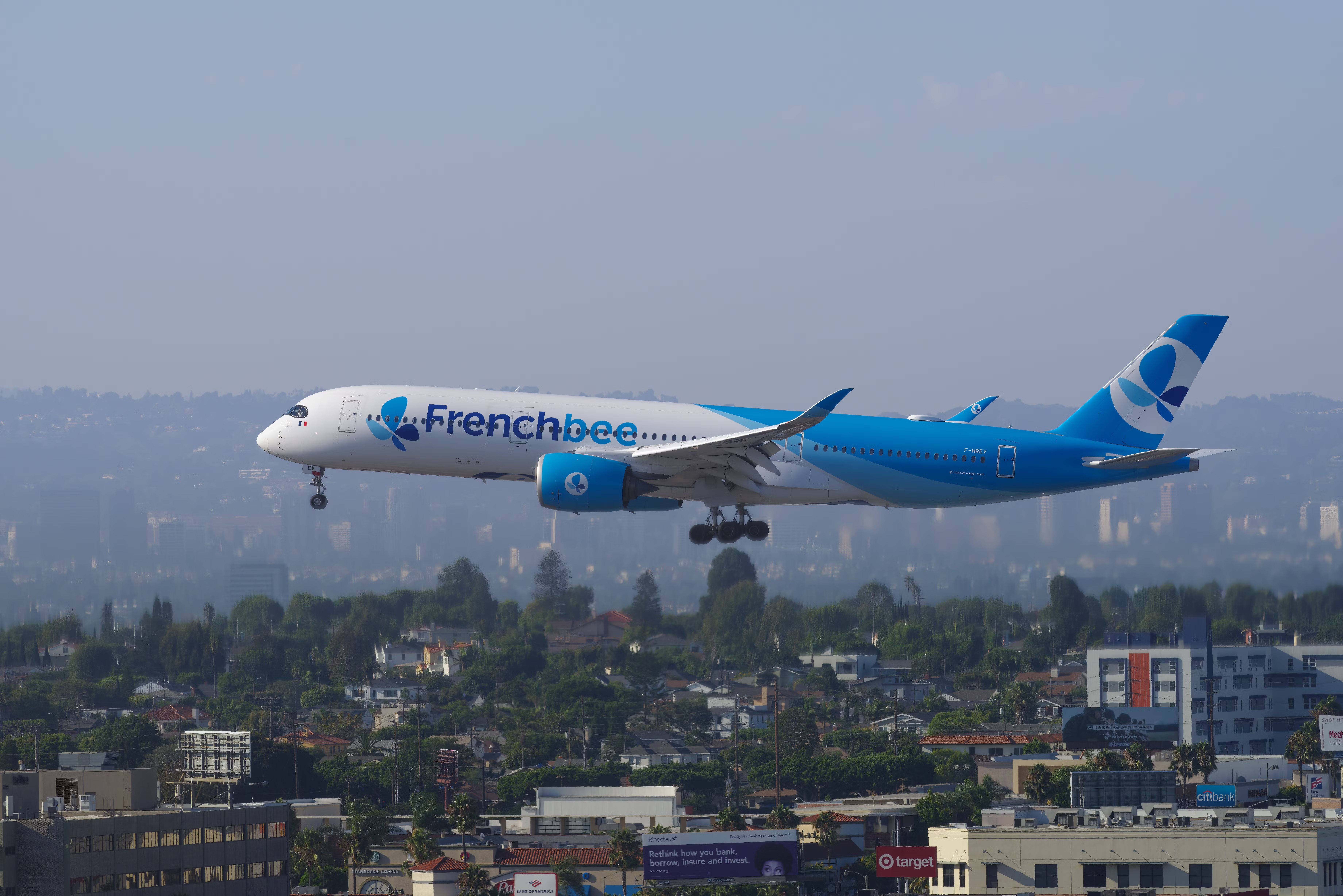
French bee Airbus A350-1000 Economy Class Configured with 440 Seats
en.Wedoany.com Reported - The configuration of high-density economy class presents different characteristics in narrowbody and widebody aircraft. The vast majority of low-cost and ultra-low-cost carriers use the Boeing 737 and Airbus A320 families, which are designed for six seats per row, and the industry sees little variation in the number of seats per row in economy class.
For narrowbody aircraft, economy class density primarily depends on seat pitch. The widebody Airbus A350 differs, as low-cost carriers can add an extra seat per row, squeezing passenger space both laterally and longitudinally. A few Asian airlines still configure the Boeing 777 with nine seats per row in economy class, while Japan Airlines is currently the only carrier that still configures the Boeing 787 Dreamliner with eight seats per row in economy class.
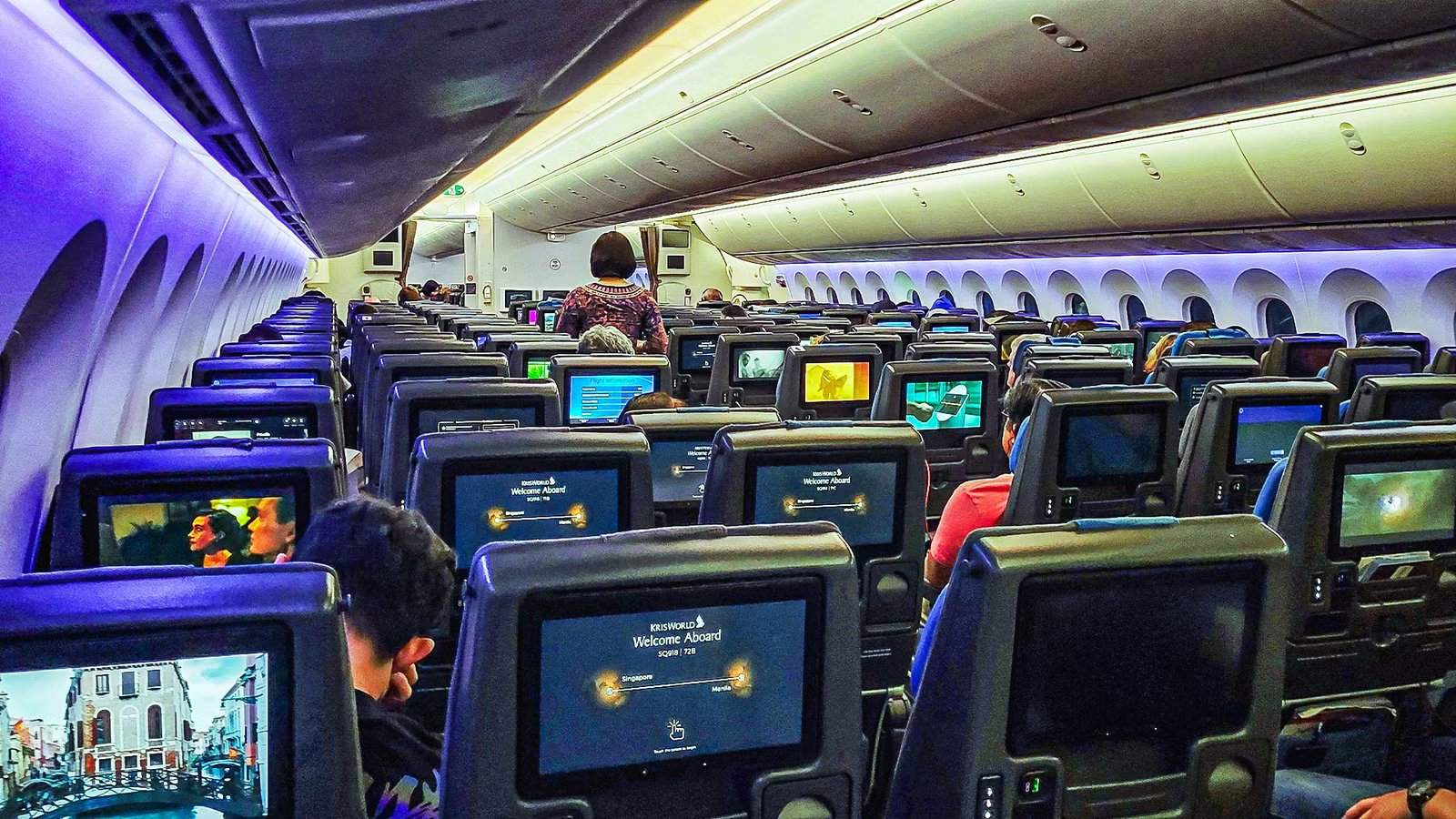
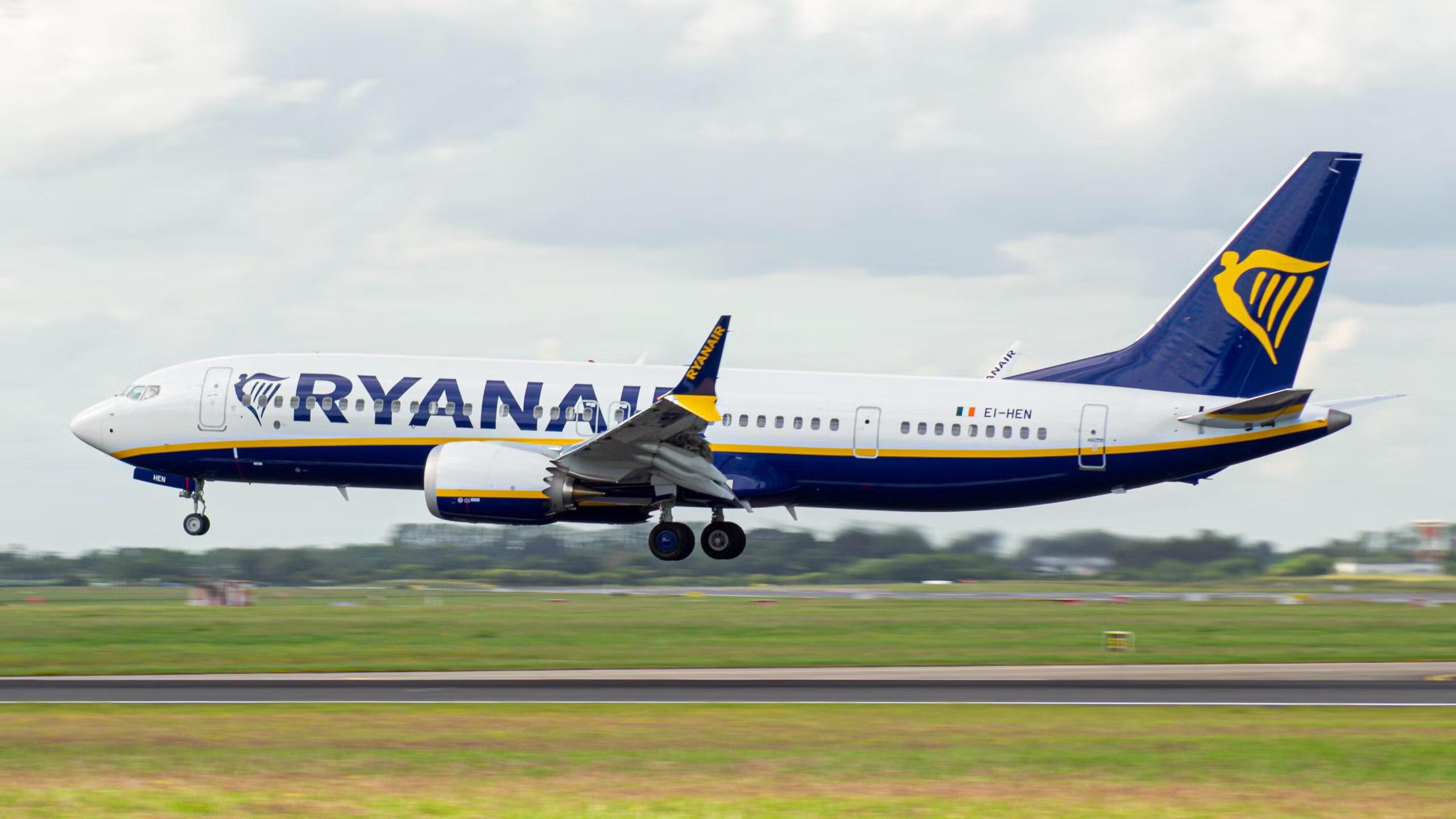
Ryanair has no flexibility in the number of seats per row in economy class. The airline's armrest spacing may be narrower, but this is due to wider armrests and possibly slightly wider aisles. Overall, the shared lateral space is the same compared to mainline carriers like Delta Air Lines and United Airlines, or any airline operating a 737 economy class.
Ryanair's approach is to minimize seat pitch (approximately 28-29 inches) to accommodate more rows of seats. Ryanair does not offer premium seats with more space, which would take up more room. However, on the Boeing 737 MAX 8, due to exit limitations, it is possible to install more low-pitch seats than the aircraft's legally certified capacity.
Aircraft must be capable of evacuation within 90 seconds in an emergency. The solution was Boeing's development of the MAX 8-200 for Ryanair, which has since been adopted by other low-cost carriers globally.
The main difference between the MAX 8-200 and the MAX 8 is the addition of more exits. This allows the aircraft to accommodate more passengers while still meeting the 90-second evacuation requirement in an emergency. Theoretically, the aircraft can carry 210 people (including crew), but in practice, the European Union Aviation Safety Agency (EASA) has not certified that many seats, and Ryanair configures this variant with 197 seats plus 6 to 8 crew members.
The Airbus A350 was originally designed to comfortably accommodate nine passengers per row in economy class, although it can fit ten per row. The wider Boeing 777 was also initially designed for nine passengers per row, but today nearly all 777s have ten seats per row in economy class. This is easier to achieve because the 777 is wider than the A350.
Airbus developed a new production standard that increased the interior cabin width by 4 inches. The cabin width increased from 15 feet 5 inches (5.61 meters) to 18 feet 9 inches (5.71 meters). These extra inches make it easier for airlines to configure the aircraft with ten seats per row. Currently, only three airlines configure their A350-1000 with ten seats per row, two of which use the older production standard.
Airlines are responding to the competitive demands and trends of the aviation industry. One demand is for the lowest possible fares, even at the expense of comfort, which has led to the explosive growth of low-cost and ultra-low-cost carriers. Another trend is comfortable seating without extravagant costs, which has given rise to premium economy class.
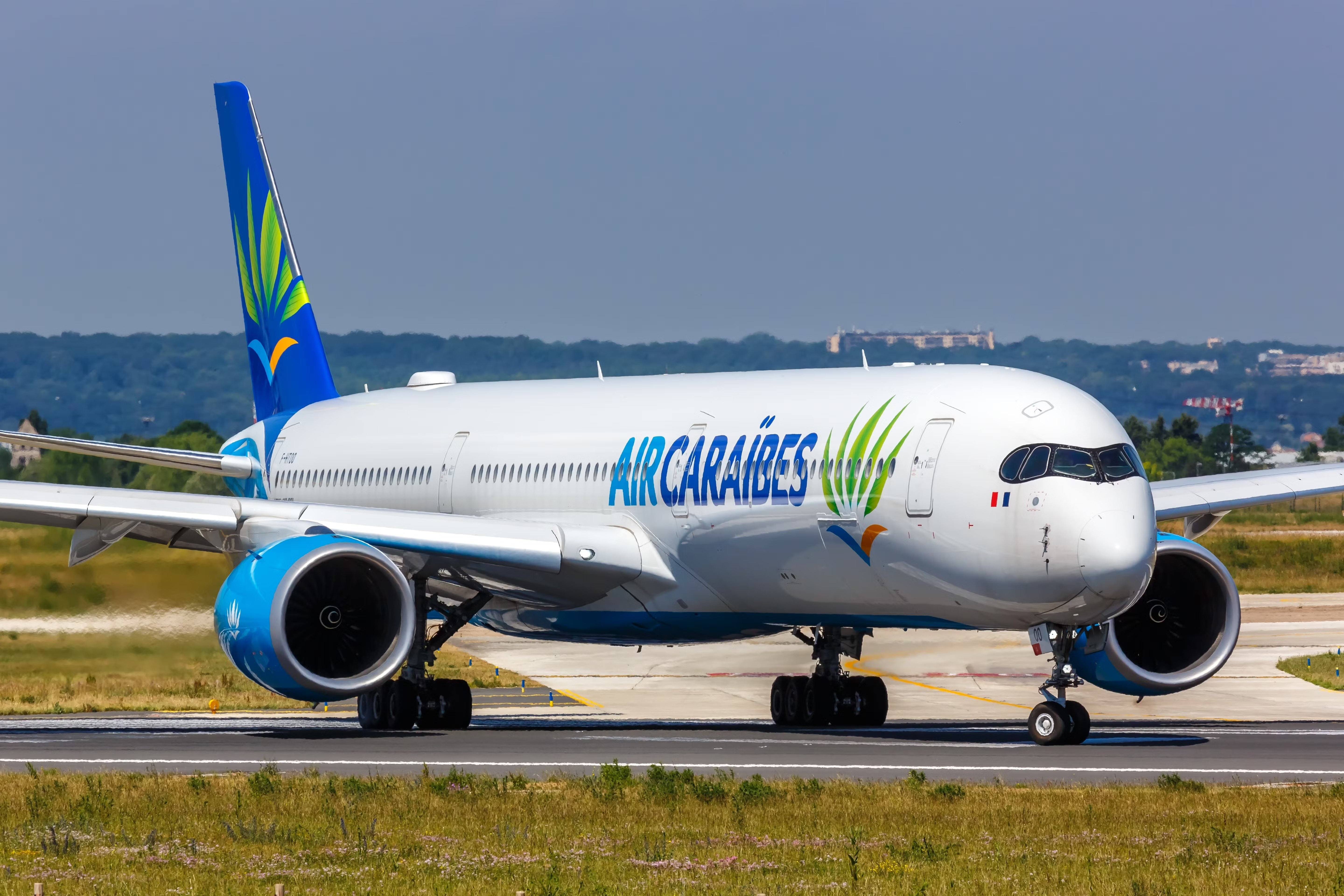
Only two airlines configure their older production standard A350-1000 with ten seats per row: French leisure low-cost carrier French bee and French West Indies leisure low-cost carrier Air Caraïbes. Air Caraïbes is a sister company of French bee, both under the Groupe Dubreuil. These two airlines are also the only ones to configure the shorter but equally wide Airbus A350-900 with ten seats per row in economy class.
These airlines operate transatlantic routes between Paris and the Caribbean, routes across the Pacific to Tahiti, and other long-haul leisure destinations. French bee configures its four A350-900s with a total of 411 seats, including 376 economy class seats and 35 premium economy seats. The maximum certified seat density for the A350-900 is 440 seats.
Air Caraïbes configures its three A350-900s with a total of 389 seats, of which 326 are economy class seats, 45 are premium economy seats, and the remaining 18 are business class seats. These aircraft are from the pre-new production standard era. French bee's A350-1000 is configured with a total of 480 seats, including 440 economy class seats and 40 premium economy seats. Air Caraïbes' four A350-1000s are configured with 360 economy class seats, 45 premium economy seats, and 24 business class seats, totaling 429 seats. French bee's A350-1000 is the only one actually configured at its maximum certified capacity of 480 seats.
It is one thing for leisure low-cost carriers to configure aircraft with ultra-high density; it is another for flag carriers to do so. Philippine Airlines is the only flag carrier to configure its A350-1000 with ten seats per row. The airline also operates a fleet of A350-900s, but these are configured with the standard nine seats per row. These A350-1000s use the new production standard, with an additional 4 inches of width.
Philippine Airlines' A350-1000, first delivered in late 2025, was among the first aircraft to use the new interior. Four inches may not sound like much, but aircraft seating is largely a game of inches. The seat width on French bee and Air Caraïbes is approximately 16-16.7 inches, and the extra space allows Philippine Airlines to offer a seat width of about 17 inches.
The new production standard not only slightly widens the A350 cabin, making ten seats per row more feasible, but also optimizes the cabin layout, allowing the aircraft to accommodate more rows of seats, adding approximately 30 seats in a typical configuration. One reason more A350-900s are not configured with ten seats per row compared to the fewer A350-1000s is that it is shorter, and the capacity gain from switching to ten seats per row is smaller.

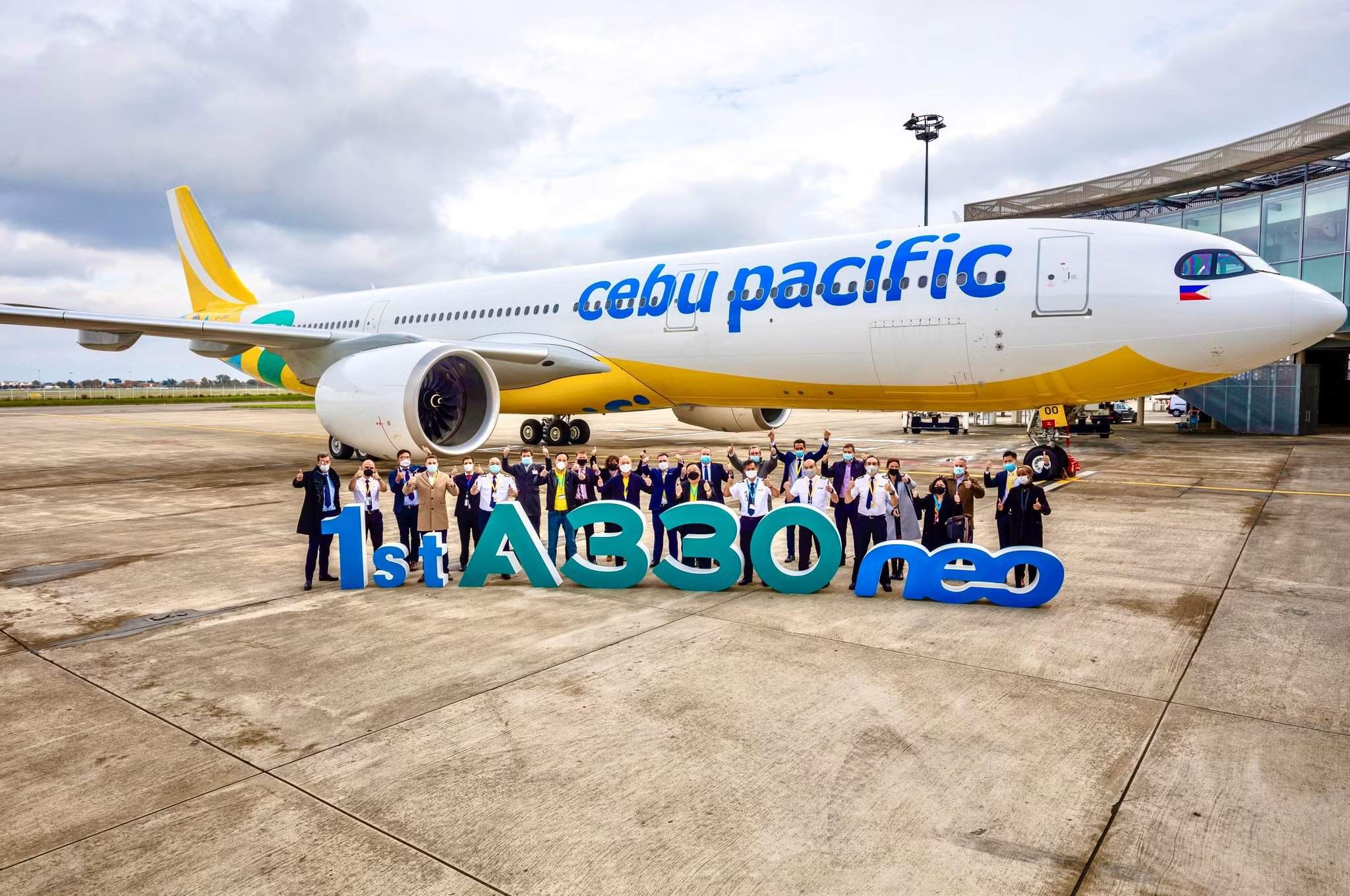
The highest-density A330 in operation comes from Cebu Pacific in the Philippines. Its A330-900, part of its eight A330neo aircraft, features an all-economy class layout with 459 seats. The A330 is narrower than the A350 and cannot accommodate ten seats per row; these aircraft are configured with nine seats per row. Cebu Pacific uses these A330neos for domestic routes and international leisure routes where passengers prioritize low fares over comfort. Cebu's A330neo approaches the maximum certified seat count of 465, even surpassing many A380s in operation.
Other airlines with particularly dense A330s include Lion Air (up to 440 seats), some charter A330-300s (400-430 seats), AirAsia's A330-300s (up to 367 seats), among others. For comparison, Delta Air Lines configures its A330-900 with three classes totaling 281 seats.
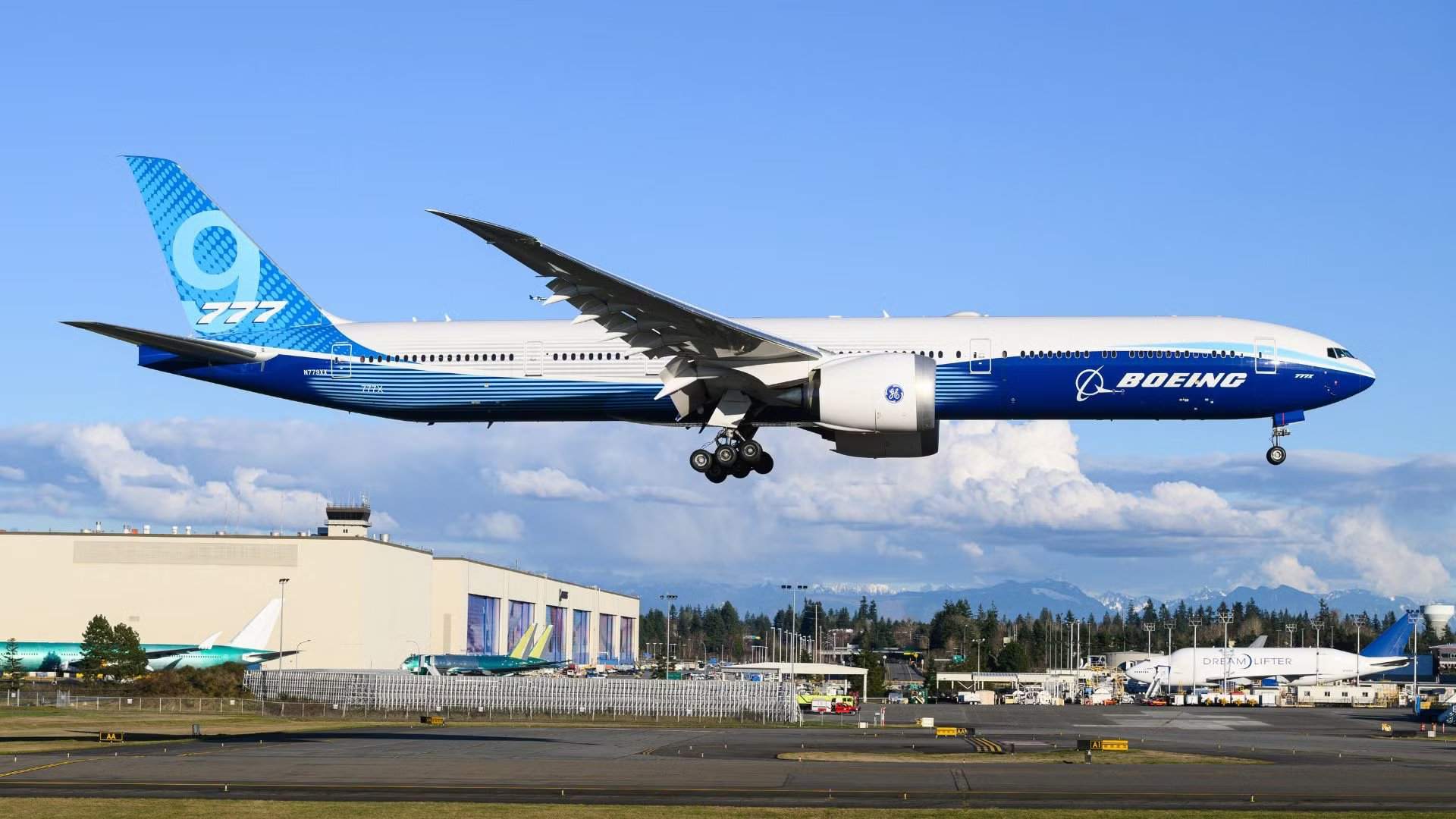
Boeing is building the Boeing 777X to compete with the Airbus A350-1000. The Boeing 777X (specifically the 777-9) will be the largest commercial aircraft on the market, designed for long-haul, high-density, trunk routes for mainline carriers. The A350-1000 is smaller and easier to use on other routes.
Boeing is reducing the number of exits on the Boeing 777-9, which will inevitably lower the aircraft's certified passenger capacity. Compared to the 777-300ER it is replacing, the aircraft is lengthened, and Boeing says this will allow it to carry 34 more passengers in a typical configuration. However, while the 777-300ER has a maximum certified capacity of 550 passengers, the 777-9's maximum certified capacity is estimated to be only around 475 passengers.
The larger 777-9 will have a significantly smaller maximum capacity than the smaller 777-300ER, and possibly even smaller than the much smaller A350-1000. Airbus designed the A350-1000 with flexibility in mind, allowing it to serve as a high-density long-haul aircraft for low-cost carriers, while Boeing designed the 777-9 as a premium aircraft for mainline carriers on trunk routes.
Related Products


CLW5180TXSD6 Dongfeng Tianjin Washing and Sweeping Truck
ChengLi Special Automobile Co., Ltd.
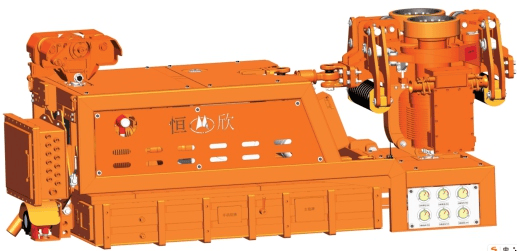
Explosion-proof lithium battery dispatching monorail crane locomotive (permanent magnet frequency conversion integrated machine)
Xiangtan Hengxin Industrial Co., Ltd.
One-Stop Steward Service for the Entire Logistics System Integration Chain
Zhongding Intelligent (Wuxi) Technology Co., Ltd.