en.Wedoany.com Reported - During WAIC, China Lynxi Technologies released its self-developed brain-inspired supernode cluster product LynAInfra (Lingli), which delivers nearly 100P computing power at 30kW power consumption, targeting the two major pain points of energy consumption and latency in AI inference.
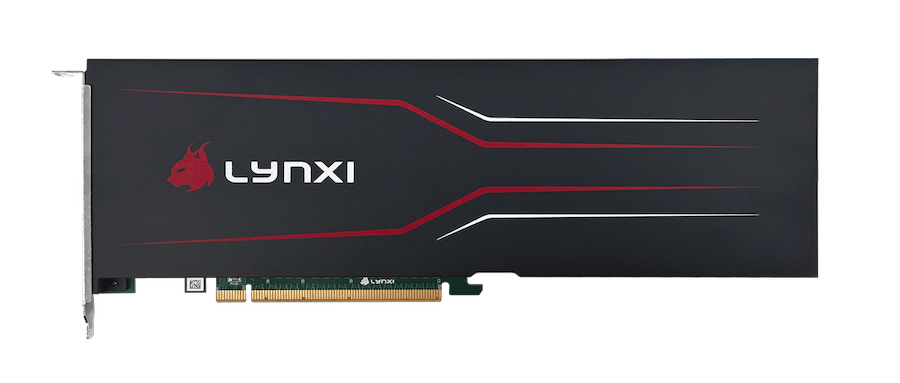
The large-scale deployment of AI inference services currently faces dual bottlenecks of high energy consumption and high inference latency. Even with continuous iterations of GPU products, the underlying limitations of traditional chip architectures remain unbroken. Meanwhile, market demands for inference latency and cost efficiency are increasingly stringent, particularly in high-value scenarios such as AI programming acceleration, AI video generation, and multi-agent collaboration. NVIDIA's investment in Groq to accelerate the high-speed inference track also confirms the industry's urgent search for innovative inference architectures. Leveraging the characteristics of its self-developed brain-inspired chips—integrating storage and computation, event-driven processing, and many-core parallelism—Lynxi Technologies has launched the LynAInfra brain-inspired high-performance supernode for high-speed inference scenarios. Its inference energy efficiency ratio is 3 to 10 times higher than traditional GPU solutions, with first-token latency compressed to tens to hundreds of milliseconds.
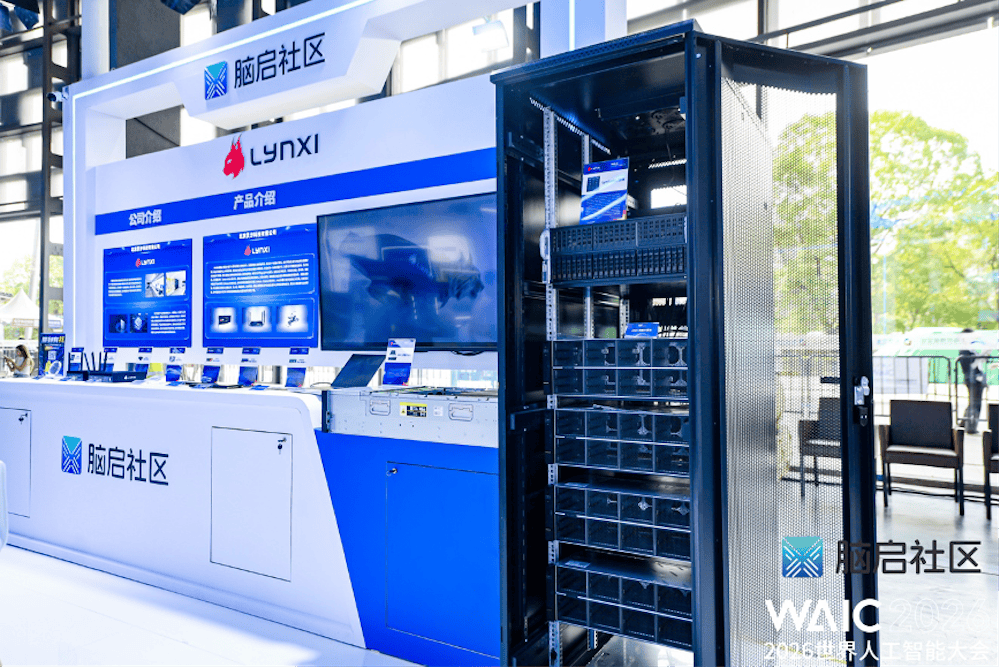
The LynAInfra supernode cluster is built on brain-inspired chips that have achieved large-scale commercial deployment in China. Its LynAInfra128 computing cabinet houses 128 HP640 series boards, cascading thousands of brain-inspired chips per cabinet, delivering nearly 100P@FP16 computing power while keeping total power consumption within 30kW. The product adopts the self-developed LynxLink high-speed interconnect protocol and unified memory address compilation technology, supporting single-cabinet computing power scaling (Scale up) and multi-cabinet horizontal expansion (Scale out). The equipment uses air cooling and modular design, compatible with existing intelligent computing center cabinets, power supplies, and network facilities, reducing customer deployment and modification costs.

LynAInfra achieves full-chain innovation from chip architecture to cluster interconnection, enabling seamless cascading between multiple cabinets to handle ultra-large model inference tasks. Leveraging its architectural energy-saving advantages, the product delivers nearly 100P computing power at 30kW power consumption, helping reduce carbon emissions during computing usage and supporting China's dual-carbon strategy. For enterprise customers, it lowers the unit computing cost of large model inference, facilitating the deployment of large models in scenarios such as industrial digitalization, urban governance, and frontier scientific research. The entire solution adheres to a domestic independent innovation path, aiming to strengthen the security of China's computing supply chain.