NVIDIA Releases 40B-Parameter Edge AI Model and Synthetic Video Detector
en.Wedoany.com Reported - At the 2026 SIGGRAPH conference, NVIDIA announced multiple technology updates covering AI integration in creative tools, synthetic video detection, edge physical AI, and desktop supercomputers.
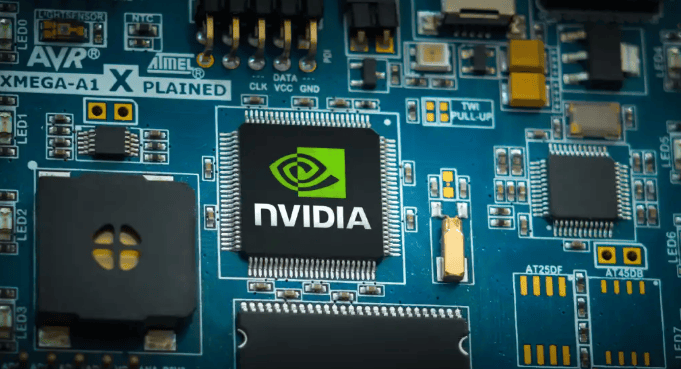
Major creative applications are adopting the Model Context Protocol (MCP), enabling AI agents to work directly within scenes, shots, timelines, assets, and editing tools while creators retain control. NVIDIA's advanced technologies have long accelerated DCC tools for artists and studios, including GPU-accelerated viewports, CUDA-accelerated effects, RTX PRO ray tracing, AI denoising, neural rendering, and real-time simulation. The introduction of MCP marks a new phase where applications are not only faster but also capable of supporting AI agents.
With MCP tools, artists or technical directors can have agents automatically check scenes for missing textures, flag color management issues, prepare export variants, generate daily previews, or verify shot compliance, while all creative decisions remain under human control. NVIDIA RTX PRO workstations, DGX Spark, and DGX Station systems bring AI performance closer to local pipelines. The NVIDIA Agent Toolkit provides MCP clients for connecting to remote servers and MCP servers for publishing tools to clients.
Adobe is integrating creative agents into Firefly, Express, and Creative Cloud, orchestrating multi-step workflows through AI assistants while bringing its professional tools to third-party AI platforms via Adobe connectors. Adobe also offers the Express Developer MCP Server, enabling AI coding assistants to build plugins using official documentation and APIs. Affinity by Canva has launched an AI connector for Claude, using MCP for natural language automation, helping designers rename layers and artboards, adjust asset sizes and formats, apply batch edits, optimize vector paths, prepare delivery files, and generate reusable scripts. Blender provides a lightweight MCP server through Blender Lab, offering a natural language interface for Blender's Python API, documentation, and complex settings. Boris FX Silhouette's MCP server enables AI assistants to inspect projects, build node trees, edit shapes and keyframes, and render frames, with a preferences panel simplifying MCP installation, client configuration generation, and connection testing, supporting both interactive online mode and offline headless instances.
Foundry Griptape natively supports MCP, providing AI orchestration for professional VFX pipelines, securely managing multiple models and agents, and integrating with Blender and Foundry Nuke to automate repetitive tasks such as cleanup, rotoscoping, and quality control. SideFX introduces MCP support for Houdini 22 through APEX Script workflows, allowing AI assistants to access APEX Script syntax, functions, documentation, and examples to assist in generating character rigging code. Unreal Engine enables AI clients to connect to Unreal Editor via MCP, opening up assistants capable of reasoning about scenes and projects for game developers, virtual production, and real-time artists.
NVIDIA also released the synthetic video detector NVIDIA NIM microservice, part of the AI for Media platform. This service analyzes video frame by frame and outputs classifier scores, helping editing teams prioritize review, flag, or isolate suspicious clips. The model remains effective after compression, resizing, and cropping, achieving 92% accuracy on uncompressed video, 87% at 15% compression, and 82% at 50% compression. Processing 1080p video takes only 22 milliseconds on RTX systems and approximately 30 milliseconds on L40 GPUs. Organizations can deploy it in local, edge, hybrid, or isolated environments. Wowza integrates this microservice into live workflows through the Wowza Video Intelligence Framework, serving over 35,000 deployments across more than 170 countries.
The edge world foundation model NVIDIA Cosmos 3 Edge is now available. This 40-billion-parameter model is optimized for efficient deployment on Jetson, RTX PRO, DGX systems, and GeForce RTX GPUs. As a compact version of Cosmos 3, the model can understand and generate text, images, video, environmental sounds, and actions. Its hybrid transformer architecture supports physics-based real-time analysis and on-device robot actions. Cosmos 3 Edge ranks first in its parameter class on the VANTAGE-Bench visual analysis benchmark and can achieve advanced robot learning through post-training. Agile Robots, Doosan Robotics, Siemens, and Skild AI are evaluating it for robotic workflows. In autonomous driving, the model supports road scene understanding, traffic reasoning, and policy distillation. In smart infrastructure, it achieves best-in-class throughput on Jetson Thor for applications in traffic monitoring, public safety, logistics, and industrial inspection. Centific, Vaidio, and YUAN are evaluating its ability to accelerate edge vision agents. The Cosmos platform offers three scales: Edge (4B), Nano (16B), and Super (64B).
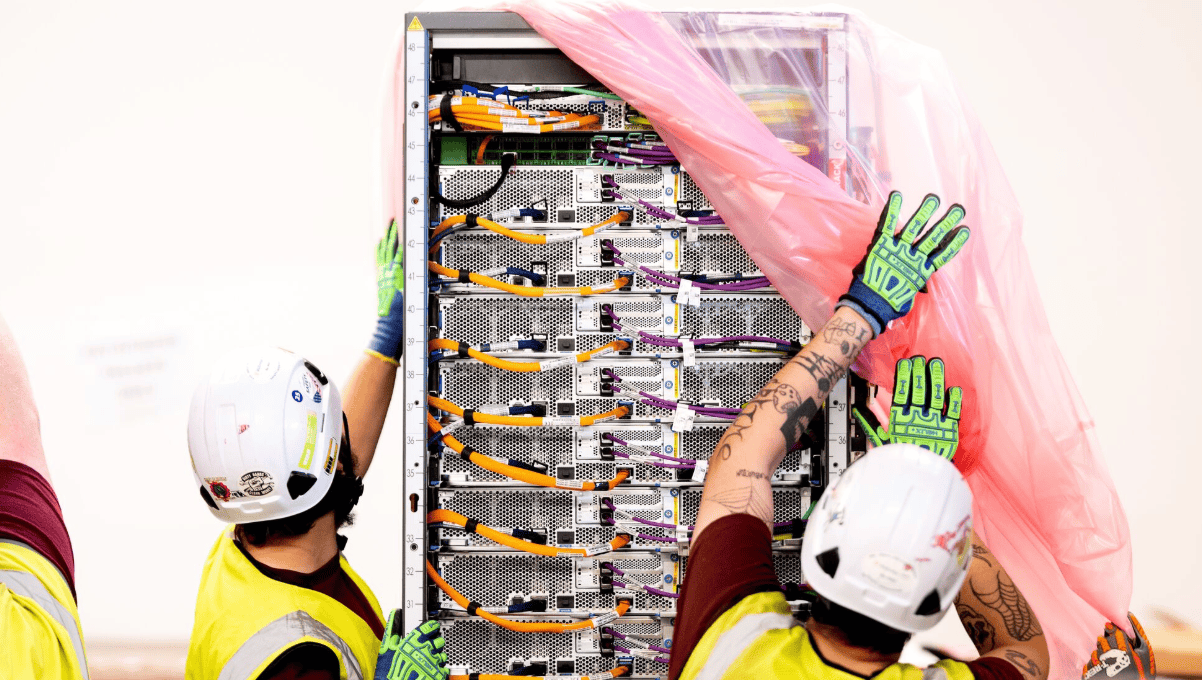
The NVIDIA DGX Station desktop AI supercomputer can be set up in three steps using the Agent Toolkit and runs in approximately 30 minutes. The stack includes the NVIDIA NemoClaw open agent blueprint, the 550-billion-parameter Nemotron 3 Ultra model, Omniverse libraries for physics simulation and 3D asset workflows, the OpenShell secure runtime, the GB300 Grace Blackwell Ultra Desktop Superchip (20 petaflops FP4 compute, 748GB memory), and the ConnectX-8 SuperNIC providing 800GB/s bandwidth. The system does not charge per token and can connect to multiple expansions. NVIDIA has announced the integration of Omniverse libraries into Blender's blueprint. LangChain has tuned the Deep Agents framework for Nemotron 3 Ultra, and Nous Research has fine-tuned the Hermes Agent framework with Blender MCP support. DGX Station can be ordered from ASUS, Dell Technologies, Exxact, GIGABYTE, HP, MSI, and Supermicro.
In technical research, NVIDIA has 21 papers accepted at this year's SIGGRAPH. MotionBricks is a real-time motion model trained on over 350,000 motion clips, capable of guiding character actions at game engine speed and driving the Unitree G1 humanoid robot. GPC is a pre-trained generative motion controller framework that can transfer motion skills. ArtiFixer converts real-world 3D captures into clean virtual scenes and can predict global illumination directly from geometry. New solvers enable materials like snow, sand, and elastic solids to be simulated in the NVIDIA Newton physics engine. The VideoNeuMat pipeline extracts relightable materials from video models, and the ARDY autoregressive diffusion model allows real-time guidance of 3D character motion through text prompts.
Related Products


Conveyor Belt Intelligent Monitoring System
LUO YANG WIRE ROPE INSPECTION TECHNOLOGY CO., LTD.
Multi-function Marine Monitoring Low-altitude Detection Radar Sea-air Boundary Ocean Dynamic Environment Measurement
Chengdu Dixin Technology Co., Ltd.
MUX Series Communication Interface Device for Security and Stability Control System
Nanjing NR Electric Co., Ltd.


TWP16 P-Band Tropospheric Wind Profile Radar
China Huayun Meteorological Technology Group Co., Ltd.

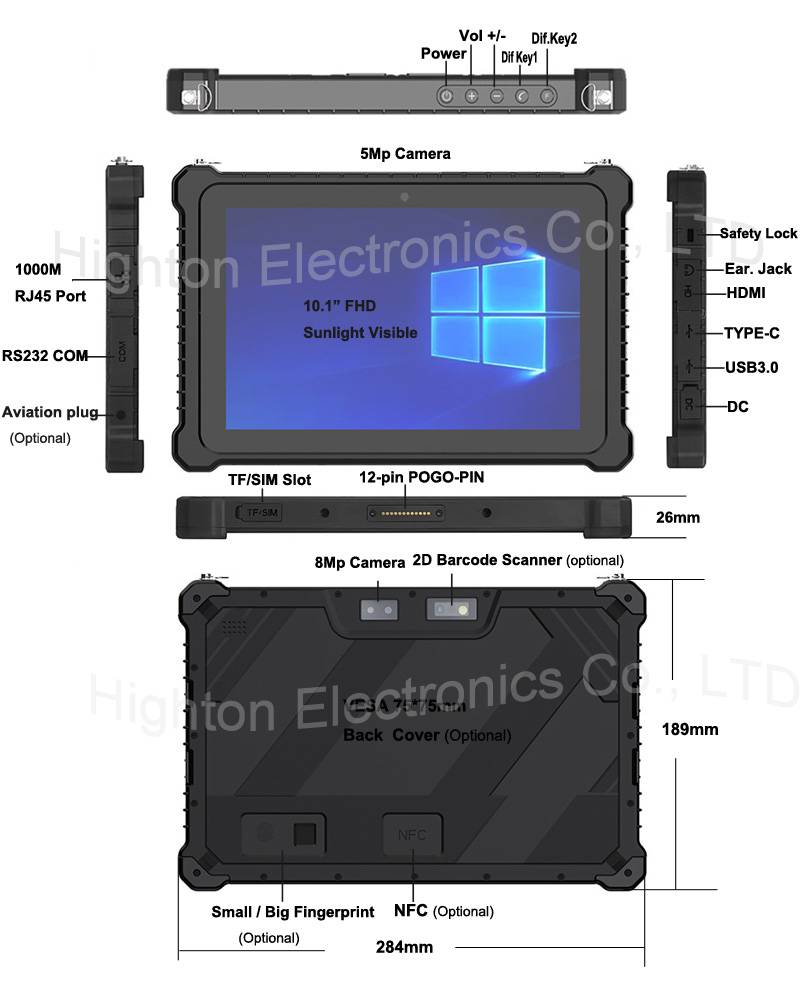
Hot Selling 10 Inch Intel N5100 I5 I7 FHD 8 +128GB 16+256GB Win10 Pro Win11 Pro 4G 5G Rugged Tablet PC Pad with NFC Barcode
Highton Electronics Co., Ltd.
G.652.D Wavelength-extended Non-dispersion Shifted Single-mode Optical Fiber
HONGAN GROUP CO., LTD.