South Korea's SK Telecom invests $65 million to accelerate quantum security
en.Wedoany.com Reported - Quantum-safe networking is moving from laboratories to the strategic agendas of telecom operators. Market research firm Analysys Mason points out that quantum computing is progressing faster than expected, potentially undermining the foundations of current digital security. Cybercriminals have already adopted a "harvest now, decrypt later" strategy, collecting encrypted data now to decrypt it when quantum computers mature in the future. Even if the technology is not yet fully mature, sensitive information faces the risk of exposure.
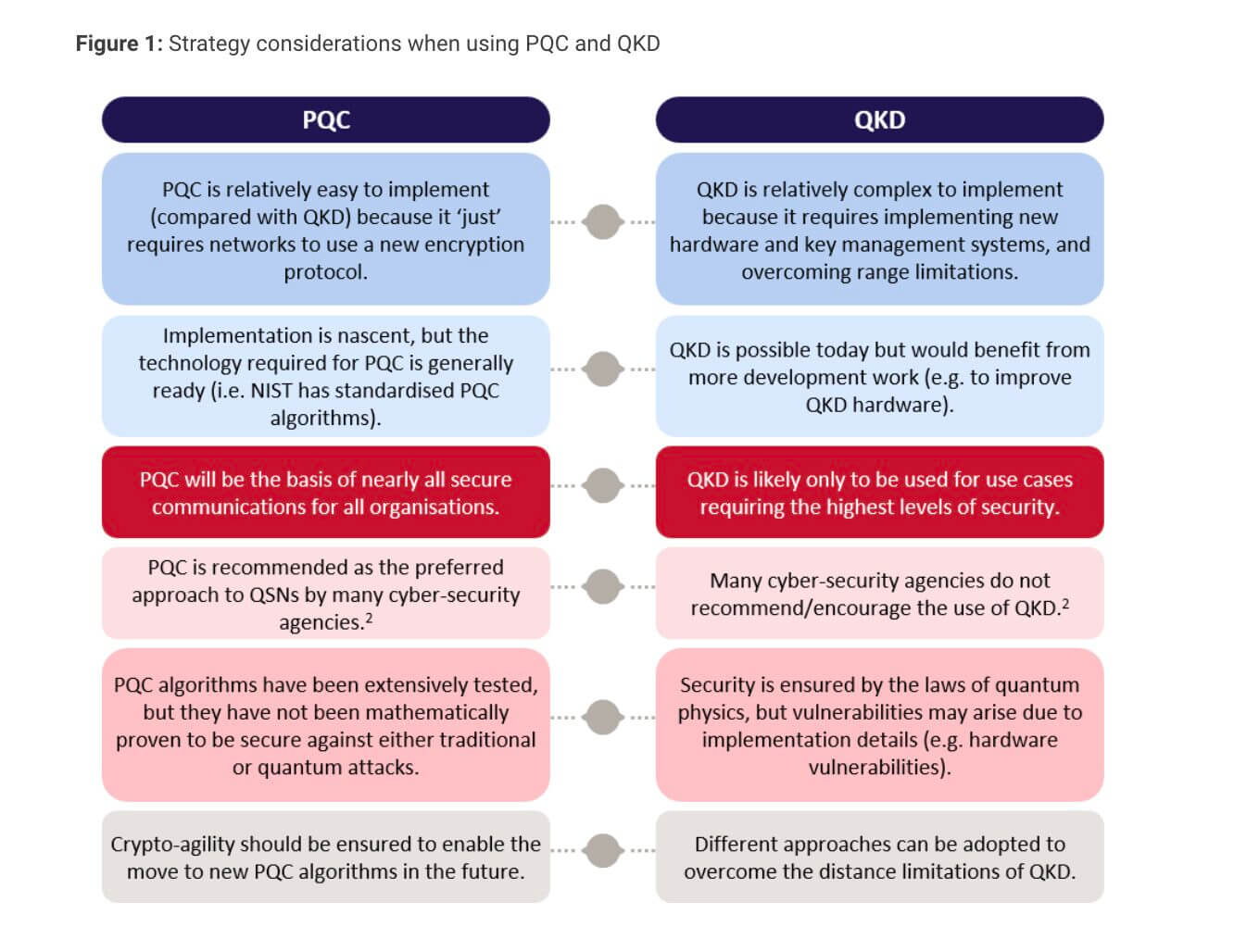
Faced with this situation, telecom operators are accelerating investments in new security architectures to protect their own systems and develop services for enterprises and public administration. This transformation revolves around two complementary approaches: Post-Quantum Cryptography (PQC) introduces new encryption algorithms resistant to quantum computer attacks, aiming to replace public-key encryption systems such as RSA and ECC that could be compromised; Quantum Key Distribution (QKD) uses the principles of quantum mechanics to distribute keys over optical fibers, where any eavesdropping attempt alters the quantum state of photons and is immediately detected. PQC is currently seen as a more scalable solution, relying mainly on software updates without significant changes to infrastructure; QKD offers a higher level of protection but requires new equipment, substantial investment, and technological advances in transmission distance and interoperability. The most advanced operators are experimenting with hybrid architectures: PQC protects the overall network, while QKD is used for links transmitting particularly critical information.
According to Analysys Mason, quantum-safe networking is becoming a business opportunity. Operators are beginning to transform post-quantum security into high-value managed services targeting the enterprise market, currently including quantum-safe VPNs (Vpn quantum-safe), which integrate PQC algorithms into managed firewalls and virtual private networks, and data center secure connectivity services, which protect the most sensitive workloads through a combination of PQC and QKD. Consumer market initiatives remain limited.
The quantum-safe networking industry chain involves quantum technology experts, optical equipment suppliers, cybersecurity companies, hyperscale cloud service providers, and system integrators. Active participants include specialized companies such as Id Quantique, QuantumCtek, and Toshiba, as well as infrastructure manufacturers like Nokia, Huawei, Cisco, Hpe Juniper Networking, Ciena, and Adtran. In the security field, Palo Alto Networks, Fortinet, and Thales are integrating post-quantum algorithms, while Microsoft, Google, AWS, and IBM are gradually introducing post-quantum encryption into cloud services and key management tools. The diversity of solutions makes the role of system integrators crucial.
The pace of adoption varies by region, but the market is entering a phase of actual deployment. In Asia, China Telecom has built a quantum communication network covering 16 metropolitan areas and plans to establish an integrated space-ground national network by 2030; SK Telecom uses QKD on its 5G backbone network spanning over 330 kilometers; Singtel offers managed services combining PQC and QKD for enterprises. In Europe, BT has transformed government-funded experiments into commercial quantum-safe VPNs; Colt has completed 100 Gbit/s transatlantic transmission using PQC algorithms; Deutsche Telekom leads the European quantum infrastructure project EuroQci; Vodafone UK is gradually integrating PQC into end-user security services. In the United States, AT&T has extended post-quantum protection to enterprise services and the public safety network FirstNet; Verizon participates in international standardization organizations; Telus is investing in the development of quantum data centers and encrypted networks.
Operators are also consolidating their competitive positions through acquisitions. SK Telecom invested $65 million in Id Quantique, China Telecom acquired over 21% of QuantumCtek's shares, and Telus took a stake in Canadian company Photonic. Analysys Mason analysis indicates that these transactions allow operators to exert greater control over technology roadmaps and reduce dependence on external suppliers.
Regulatory frameworks are accelerating progress. In 2024, the U.S. National Institute of Standards and Technology (NIST) released the final standards for the first batch of post-quantum encryption algorithms, outlining a roadmap to phase out traditional encryption in federal agencies by 2035. The Internet Engineering Task Force (IETF) is updating major internet protocols, and the 3rd Generation Partnership Project (3GPP) will introduce support for PQC in 5G networks Release 20, with future 6G networks incorporating built-in quantum security mechanisms. Europe and the UK have also set specific migration deadlines.
According to Analysys Mason analysis, the core challenge for telecom operators is not choosing between PQC and QKD, but developing a strategy that can support technological evolution over many years. Scalability, cryptographic agility, interoperability, and the ability to update algorithms without redesigning infrastructure have become decisive factors. Operators that can integrate technology in a timely manner, participate in standard-setting, and build strong partner ecosystems will be able to transform security obligations into new competitive advantages.
Related Products



MUX Series Communication Interface Device for Security and Stability Control System
Nanjing NR Electric Co., Ltd.
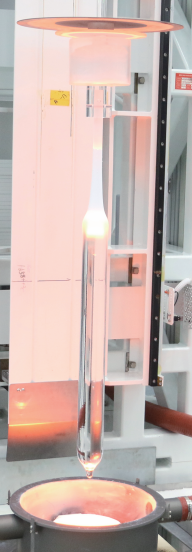
G.652.D Wavelength-extended Non-dispersion Shifted Single-mode Optical Fiber
HONGAN GROUP CO., LTD.
Industrial and Commercial Point-Type Gas Detector
Jinan Benan Technology Development Co., Ltd.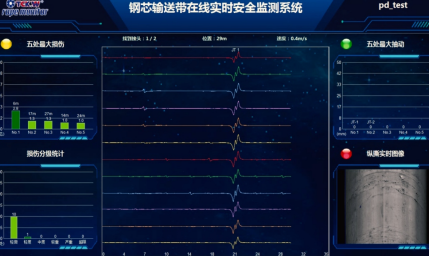
Conveyor Belt Intelligent Monitoring System
LUO YANG WIRE ROPE INSPECTION TECHNOLOGY CO., LTD.

Automatic Aiming Laser Remote Obstacle Removal Robot
Pinggao Group Weihai High-Voltage Apparatus Co., Ltd.