en.Wedoany.com Reported - A research team from the College of Engineering at Seoul National University has developed a programmable photonic integrated chip capable of controlling the speed of light on demand, offering a new pathway to solve the "optical buffering" challenge in optical computing.
Led by Professor Namkyoo Park and Professor Sunkyu Yu from the Department of Electrical and Computer Engineering at Seoul National University, in collaboration with Professor Xianji Piao from the same department, the team published their findings in the journal Advanced Science. The research aims to address the surging demand for computational power driven by the development of generative artificial intelligence and large-scale models, as well as the bottlenecks of traditional electronic semiconductors in terms of power consumption and data transmission rates. Due to the fixed speed of light, achieving on-chip buffering and storage of optical signals has been a fundamental and long-standing challenge in optical computing technology.
The team proposed a programmable photonic integrated chip solution that can freely control the propagation speed and waveform of optical signals. Based on this solution, the team achieved "slow light" control with a higher degree of freedom compared to existing approaches.
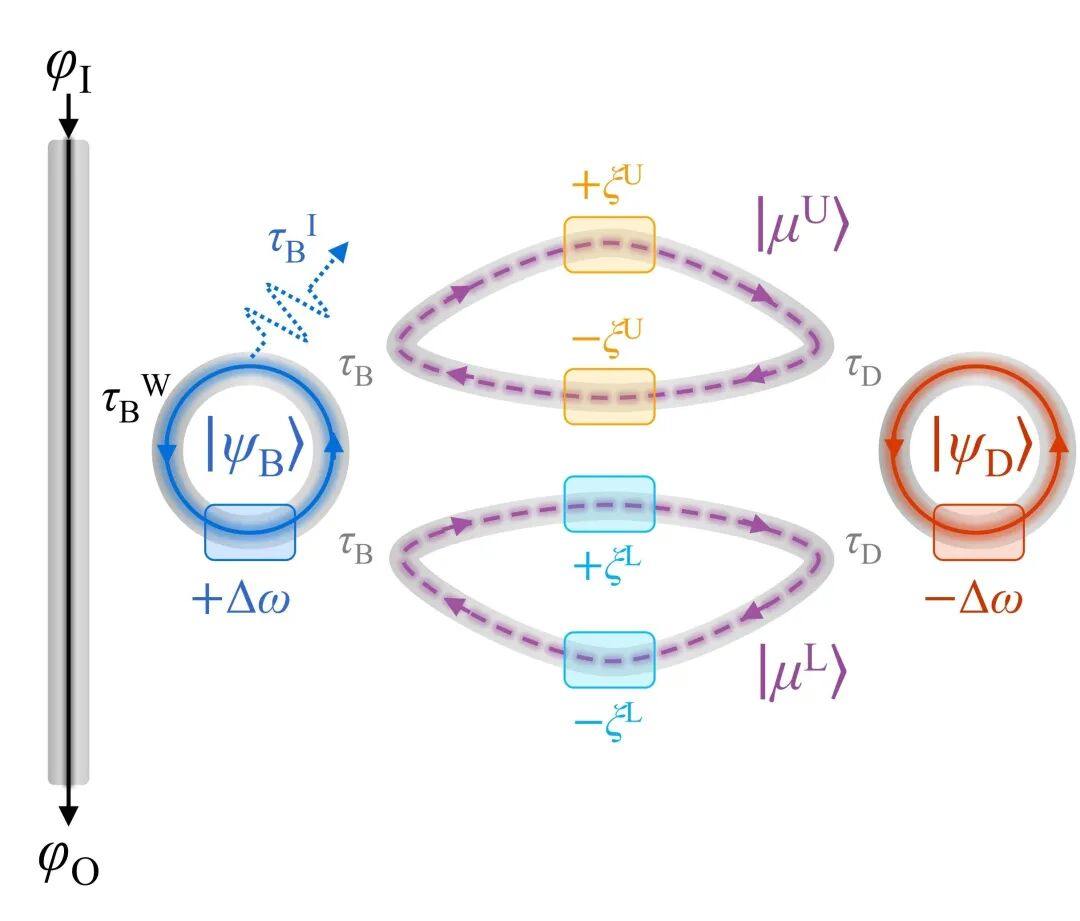
Conventional coupled-resonator-induced transparency (CRIT) devices have fixed operating characteristics after fabrication and cannot be reconfigured to achieve different delays or operating frequency bands. To overcome this limitation, the research team unified the bright mode and dark mode in the CRIT system into a single controllable degree of freedom and introduced two sets of controllable ring couplers, establishing a new design principle for programmable photonic integrated chips. Using this structure, the team achieved on-demand delay control of optical paths and confirmed that the interference effect between bright and dark modes can serve as a unified integrated design parameter, significantly enhancing design flexibility.
The research team confirmed that, with the dual ring couplers, the passband bandwidth, waveform, signal delay, and transmission characteristics can be independently controlled theoretically. Numerical simulation results also showed that the chip can dynamically adjust the propagation speed of optical pulses in real time during operation, freely control optical signal delay without sacrificing signal processing performance, and perform optical spectrum conversion. The team also verified through three-dimensional electromagnetic simulations that the CRIT device can be fabricated on a silicon nitride (Si₃N₄) photonic integrated chip platform and can operate stably even when considering practical interference factors such as material loss, resonator quality factor deviations, backscattering, coupling coefficient fluctuations, ring coupler phase errors, and thermal crosstalk.
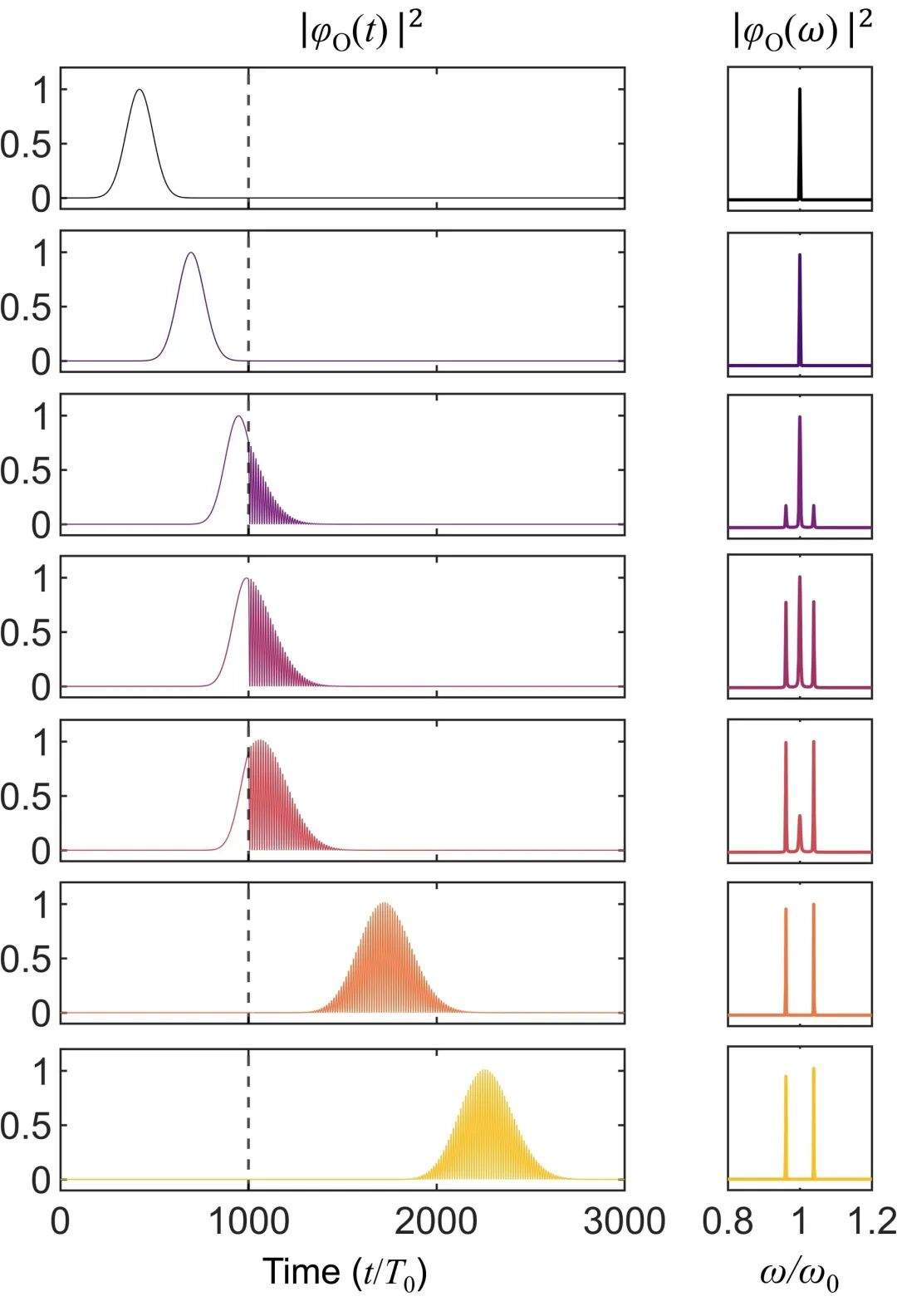
The programmable photonic integrated chip platform introduced in this study can integrate core functions such as signal timing synchronization, variable delay lines, optical buffering, and spectrum conversion within a single chip architecture. This design approach is not limited to the CRIT system and can be extended to all resonator-based photonic circuits, potentially serving as a fundamental core technology for next-generation flexible control of optical transmission in optical signal processing. If commercialized, this chip is expected to reduce power consumption in data centers and AI servers while improving data processing efficiency.
Professor Namkyoo Park, co-corresponding author of the paper, stated that the team will subsequently expand this solution to large-scale programmable photonic integrated chips based on silicon photonics and photonic AI technologies. Co-first author Dr. Seungkyun Park and doctoral student Beomjoon Chae added that this research made them realize that reinterpreting traditional photonic resonance physics from a different perspective can unlock new functionalities for photonic integrated chips, and they will proceed with further work to complete the fabrication and experimental validation of physical devices.