McKinsey predicts global data center capacity will reach 219 GW by 2030
en.Wedoany.com Reported - McKinsey released a projection earlier this year showing that global data center capacity will increase from 82 gigawatts (GW) in 2025 to 219 GW in 2030, roughly 2.7 times the current level. The United States will account for about 45% of this, or approximately 90 to 95 GW. Nvidia CEO Jensen Huang recently estimated that the cost of building a new gigawatt of computing power based on Nvidia's architecture could soon reach $80 billion to $100 billion, and capital expenditures for new capacity additions globally over the next five years could reach the trillion-dollar level.
Alongside the scale of investment, skepticism about the capital expenditures of major cloud providers is also heating up. As a leading indicator for the global chip sector, the Philadelphia Semiconductor Index (SOX) has fallen 13.38% over the past month. Pat Tschosik, Chief Thematic Strategist at U.S. investment analysis firm NDR, stated at a recent seminar that the physical expansion of data center construction will not slow down immediately due to skepticism. Physical layer construction, such as power equipment, transformers, and cooling systems, is already locked in due to delivery cycles of two to five years. He believes "the super cycle is not over yet," but tolerance for capital expenditures in the training layer is entering a more cautious phase. When responding to a question about depreciation, Tschosik said that even factoring in depreciation costs, the conclusion remains unchanged. "What really matters is the growth in cloud sales figures." He believes that once the growth rate of capital expenditures consistently outpaces the growth rate of cloud computing revenue, "capex vigilantes" will emerge, sending signals to the market through sell-offs.
Currently, the two-year excess return of the Philadelphia Semiconductor Index (SOX) relative to the S&P 500 rose to the 125% to 150% range in June this year. NDR considers this a "bubble watch zone," last seen in February 2021, with the relative strength of the SOX peaking in December of that year. However, based on pre-leasing rates, demand for data centers remains real. According to JLL data, the vacancy rate for data centers in North America is approximately 1%, a level maintained since the end of 2024. Of the capacity under construction in the U.S., 92% has already been pre-leased, compared to 82% in Europe. Tschosik believes these figures indicate that demand itself still exists, and developers are willing to continue investing. However, approval processes and grid connection speeds pose hard constraints, with this bottleneck being more pronounced in Europe.
Analysts at Bank of America also believe that the U.S. will need over 230 GW of new power generation capacity over the next five years, but regulated utility companies are expected to add only about 93 GW of qualified supply, leaving a power gap of over 100 GW. The report indicates that during this period, data centers alone could increase U.S. power load by approximately 125 GW, pushing overall electricity demand growth to a compound annual growth rate of 4.1% from 2026 to 2030. From a more granular perspective, Tschosik believes capacity construction overall is in the "middle innings," but capacity specifically for model training has entered the "later innings." Starting in 2027, new capacity additions will flow more toward inference demand rather than training demand. "Training and inference have different demand curves for infrastructure. When training demand peaks, the capital expenditure logic built around training capacity will be the first to face scrutiny," he explained. He added that the question worth repeatedly asking is, "Will this capacity actually be used? Will inference demand really materialize?"
Another variable Tschosik raised is the time lag in realizing productivity gains. His team's calculations show that there is a lag of approximately 20 quarters, or about five years, between changes in technology spending as a share of U.S. GDP and improvements in productivity. Based on this, the massive investments currently being made in model training will not yield corresponding productivity returns for several years. This means that even if the entire super cycle is not over, the next wave of growth driven by inference demand will still arrive, but data center capital expenditures may still undergo a period of adjustment before productivity gains are realized. Tschosik roughly sets this adjustment window at about two years, faster than the historical lag of 20 quarters. The logic is that once cloud vendor sales growth slows down first, the market will not wait for productivity data to materialize before reacting. "My base case is that data centers will undergo a period of adjustment until the inference side truly starts to gain momentum," he said.
According to S&P Global Market Intelligence data, data center merger and acquisition (M&A) transaction value in 2025 reached approximately $50 billion, more than double the previous year. Tschosik suggests that the current data center boom could end in one of three historical scenarios: oversupply, demand decline, or financing exhaustion, corresponding to the lessons of 1999, 2022, and 2008, respectively. He provides a set of real-time trackable indicators for each scenario. Oversupply is the lesson from the 1999 internet bubble, with observation indicators including the data center construction cycle, vacancy rates, and GPU leasing prices. Currently, the construction cycle still requires two to five years, with no signs of shortening; vacancy rates remain low at around 1%; data from JLL and CBRE show no signals of oversupply. Demand decline is what he calls the "most relevant comparison" from the 2022 lesson, when companies cut cloud computing spending, cloud vendor sales growth slowed, and capital expenditures continued to accelerate, with Amazon and Nvidia shares both falling over 50% that year. Tschosik's judgment threshold is: when the growth rate of capital expenditures exceeds 1.5 times the sales growth rate, the market typically reacts negatively, a relationship that also holds true for Microsoft. "If I had to pick just one or two indicators, the first would be the cloud business growth rate of hyperscale cloud providers, and the second would be their capital expenditure guidance," he said. "Once these companies start lowering their guidance, it often indicates they have already detected problems on the demand side." Financing exhaustion corresponds to the lesson from the 2008 financial crisis. The core variable Tschosik focuses on is the ratio of capital expenditures to operating cash flow. This ratio is close to 100% for Amazon and around 70% for hyperscale cloud providers like Amazon, Microsoft, and Google combined. "I believe that once this ratio approaches or even exceeds 100%, the market's attitude toward these companies' financing will not be as friendly as it is now," Tschosik mentioned. Google has recently started issuing bonds to support expansion. Additionally, the spread on high-yield bonds in the tech sector, the stock performance of "new cloud" companies (such as CoreWeave and Oracle), and the future IPO timing of OpenAI and Anthropic are all auxiliary signals for judging whether the financing environment is tightening. "This suggests that the current market environment may already be the best it will be, which is why they are going public," he said.
Regarding the issue that the ratio of capital expenditures to operating cash flow masks the erosion from depreciation, Tschosik acknowledged the validity of this criticism in his response. "Indeed, I can understand this being seen as an aggressive accounting treatment," he said. However, he stated that the more important variable is whether companies will turn to bond financing to avoid depleting operating cash flow. "Let's focus on what really matters," he said. The market will see corporate debt begin to increase, and once the market reacts negatively to new debt, it means "capital discipline" has officially returned, a phenomenon he calls "capex vigilantes." In his view, rather than fixating on the accounting treatment of depreciation, it is better to closely monitor the relative relationship between cloud sales growth and capital expenditure growth, as this is the true variable determining market sentiment. Regarding concerns about whether the depreciation period for GPU assets is underestimated, Tschosik responded that the training phase requires the most powerful chips, while the inference phase has lower demands on computing speed. Older GPUs phased out from training can be repurposed for inference scenarios. Coupled with the existence of a second-hand GPU market, the actual useful life may be longer than the market's pessimistic assumptions. "I don't think this is as serious as some people portray it to be," he said.
Related Products
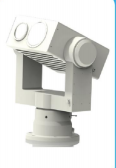

Forest and Grassland Heat Source Infrared Monitor
China Huayun Meteorological Technology Group Co., Ltd.
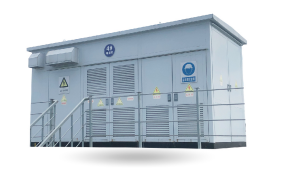
Smart Photovoltaic Prefabricated Substation
Shanghai Jinyou Jinhong Intelligent Electric Co., Ltd.

Yingping Mining Section Open-pit Tailings Backfill Treatment of Goaf Ecological Restoration EPC Project
China Bluestar Lehigh Engineering Corporation
KYN28A-12 Metal Armored Removable Switchgear
Tianjin Ping Gao Intelligent Electric Co., Ltd.
High-voltage Direct Current (HVDC) Transmission System Research and Integrated Design
XI'AN XD POWER SYSTEMS CO., LTD.