Queen's University Belfast develops 3D-printed iron-based flow battery, unit cost around £75
en.Wedoany.com Reported - A research team at Queen's University Belfast has developed an iron-based 3D-printed flow battery unit that can significantly reduce unit costs to around £75 and promote standardization in global research. This achievement is seen as helping to reduce society's dependence on fossil fuels.
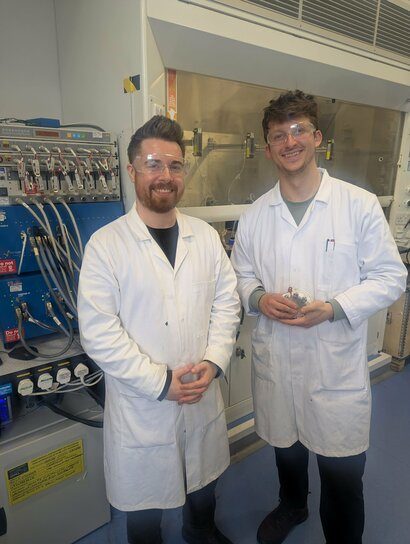
Dr. Josh Bailey and Dr. Hugh O'Connor from the School of Chemistry and Chemical Engineering at Queen's University Belfast stated that society faces a real problem—most of daily life still relies on fossil fuels. Dr. O'Connor noted that tackling climate change is considered one of the main challenges, with the UK and Irish governments setting emission reduction targets. However, the biggest obstacle to renewable energy is the inability to control when the sun shines or the wind blows. Currently, clean energy accounts for only about 16% of total energy use in the UK and Ireland. Until clean energy can be reliably stored and used on demand, fossil fuels will continue to dominate the power system.
Lithium-ion batteries are seen as a potential solution, but they are effective for small-scale applications and unsuitable for long-duration grid-scale energy storage. Compared to flow batteries, lithium-ion batteries are more expensive to scale up and pose fire risks due to their more flammable components. Additionally, there are ethical concerns associated with cobalt mining, though cobalt has gradually been phased out of lithium-ion batteries in recent years. Commercially available flow battery technology uses aqueous chemistry and the element vanadium, which is more abundant than lithium and does not require cobalt. However, vanadium is produced in only a few locations worldwide and experiences significant price volatility. The battery developed at Queen's University is based on the more readily available element iron.
The researchers also sent self-made battery units to research teams around the world to promote standardization in testing. Dr. O'Connor mentioned that during his PhD, he found that purchasing a flow battery unit cost up to £3,000, so he tried 3D printing. After multiple trials and errors, the printed battery performed well, with a single unit costing only about £75. He created "IKEA-style" instructions and distributed them to other research groups. Scientists worldwide are now using the battery units developed at Queen's University to conduct nominally identical tests to understand differences between laboratories.
Dr. Bailey added that by distributing the battery units globally, the team was able to collaborate with the Massachusetts Institute of Technology (MIT) to lead a large international study, bringing together over 35 research groups, including Harvard University and the University of Cambridge. This work is accelerating breakthroughs in long-duration energy storage, driving the transition away from fossil fuels.
Related Products
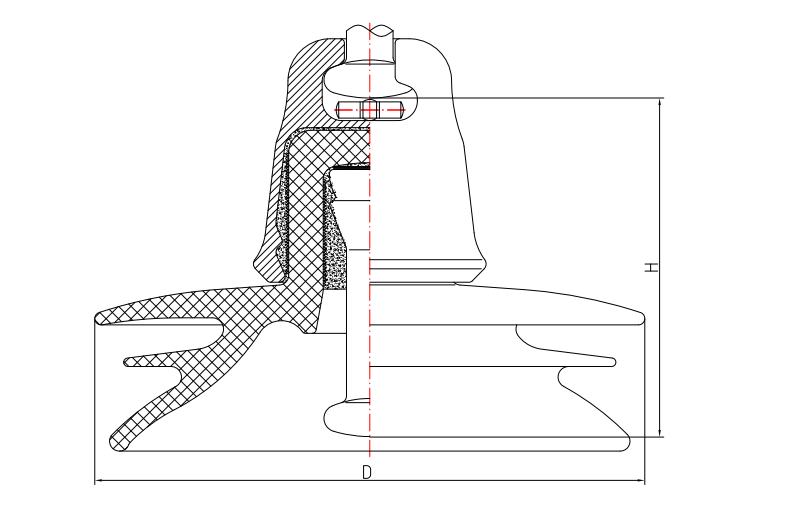

Post-type AC Pollution-resistant Disc Suspension Porcelain Insulator (Triple Umbrella Type)
Shandong High Voltage Insulator Co., Ltd.
Smart Photovoltaic Prefabricated Substation
Shanghai Jinyou Jinhong Intelligent Electric Co., Ltd.
Floating Boat Water Quality Automatic Monitoring System
Hebei Sailhero Environmental Protection High-tech Co., Ltd.

Forest and Grassland Heat Source Infrared Monitor
China Huayun Meteorological Technology Group Co., Ltd.