India's State Support in Chips, AI, and Space Reshapes the Venture Capital Landscape
en.Wedoany.com Reported - India's push for self-reliance in semiconductors, defense, space, and artificial intelligence is giving rise to a new breed of specialized venture capital funds. These funds target startups that benefit from policy incentives, growing strategic demand, and global supply chain shifts.

Several fund management firms say government initiatives such as Semicon 2.0, the India AI Mission, and defense localization programs have changed how private capital assesses risk in strategic technology sectors. Projects once viewed as high-risk, capital-intensive, and dependent on uncertain government contracts are now seen as structurally supported opportunities thanks to policy incentives and assured domestic demand.
Two new funds are particularly representative. Mumbai-based Piper Serica, which manages over 1,400 crore rupees in assets, has launched the Bharat Tech Fund, a Category II Alternative Investment Fund (AIF) with a target size of 600 crore rupees and an additional greenshoe option of 200 crore rupees, aimed at Series A startups that have commercialized their technology and are preparing to scale. New Delhi-based MountTech Growth Fund (MGF Kavachh), a Category II AIF registered with the Securities and Exchange Board of India (SEBI) in 2024, is expected to close its first fund at approximately 500 crore rupees—double its original target. Its investments span defense, aerospace, space, semiconductors, cybersecurity, critical communications, and strategic materials, with a preference for dual-use technologies that serve both commercial and defense markets.
This trend is driven by two forces: policy and geopolitics. Government support now covers the entire chain of semiconductor manufacturing, components, PCB assembly, chip design incentives, outsourced semiconductor assembly and test (OSAT), and packaging. Meanwhile, the Ukraine war, pandemic-era supply chain disruptions, and "China+1" diversification have made technological self-reliance a strategic imperative. Some fund managers note that investors no longer view strategic technology as purely financial speculation but want to back companies that contribute to national long-term resilience. The combination of financial returns and strategic alignment is relatively rare in India's venture capital landscape.
If this trend continues, the funding landscape for deep-tech companies could shift markedly. Such companies—with long R&D cycles, capital-intensive manufacturing, and customers concentrated in government and defense procurement—have historically struggled to secure growth capital in India, where venture capital has favored faster-return models like software, fintech, and consumer internet. Funds dedicated to chips, space, and AI computing represent a structural shift toward patient capital allocation in hardware and deep tech. Fund managers also frame the opportunity in terms of "backward integration": once electronics and defense manufacturing capabilities are established, the next wave of opportunities comes from IP-centric companies in chip design, packaging, sensors, AI computing, photonics, and neuromorphic computing. This could reduce India's dependence on imported components and counter criticism that its electronics manufacturing is "assembly-heavy and innovation-light."
Real constraints remain. Seed and grant funding is relatively abundant, but there is a clear gap between Series A and Series B, when companies need substantial capital to build manufacturing capacity or expand overseas—the point of highest capital intensity and greatest return uncertainty. The sector also requires sustained, predictable order flows rather than one-off government contracts. Whether policy mechanisms can convert pilot projects and incentive schemes into stable market demand signals will determine whether this wave of capital evolves into a self-sustaining ecosystem.
Several fund managers hope India's electronics and semiconductor sectors will replicate the growth path of the automotive industry—starting with assembly and manufacturing, then gradually building indigenous design and component capabilities. The Production Linked Incentive (PLI) scheme and cluster models like the Andhra Pradesh MedTech Zone offer templates for combining government infrastructure with private capital, and the new generation of deep-tech funds is extending this approach to chip design, space, and AI computing. The intent of these funds goes beyond import substitution: using India's scale as a launch market while competing globally, with Europe, Southeast Asia, and the Middle East—which lack indigenous deep-tech capabilities—potentially serving as export markets for Indian technology. If this goal is realized, India's sovereign technology push could evolve from defensive self-reliance to offensive export orientation, becoming a more ambitious version of the "Make in India" narrative—one that has so far been associated more with manufacturing scale than with deep technological IP.
Over the next two to three years, as these funds deploy capital, Series A and B funding rounds will provide a real test of whether the growth-stage funding gap can be bridged. That will determine whether India's deep-tech sector can move from proof-of-concept optimism to a genuinely self-sustaining investment category.
Related Products


Flat Portable Satellite Terminal 0.35m Aperture Manual Portable Terminal
China Starwin Science & Technology Co., Ltd.

Mine Explosion-proof and Intrinsically Safe Industrial Ethernet Ring Network (10 Gigabit/Gigabit)
Chongqing Mas Sci&Tech Co., Ltd.


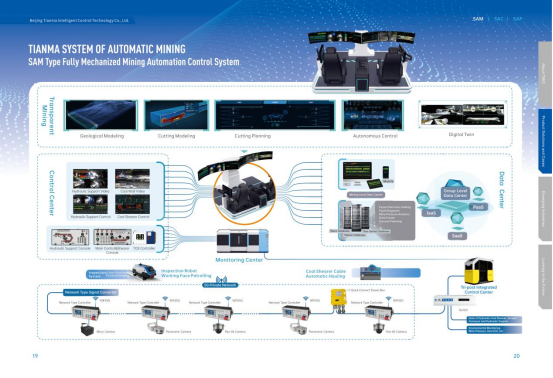
Comprehensive Mining Automation Control System
Beijing Tianma Intelligent Control Technology Co., Ltd.
Automatic Aiming Laser Remote Obstacle Removal Robot
Pinggao Group Weihai High-Voltage Apparatus Co., Ltd.


GYTA Type Non-Self-Supporting Aerial/Duct Optical Cable
TONGDING INTERCONNECTION INFORMATION CO., LTD.
Conveyor Belt Intelligent Monitoring System
LUO YANG WIRE ROPE INSPECTION TECHNOLOGY CO., LTD.