The World's Most Expensive Space Programs: The US Apollo Program Cost $309 Billion
en.Wedoany.com Reported - The list of the world's most expensive space programs has recently drawn attention. Behind each mission lies decades of research, a large number of engineers and scientists, dedicated infrastructure, and the development of new technologies, with total investments often reaching unimaginable scales.
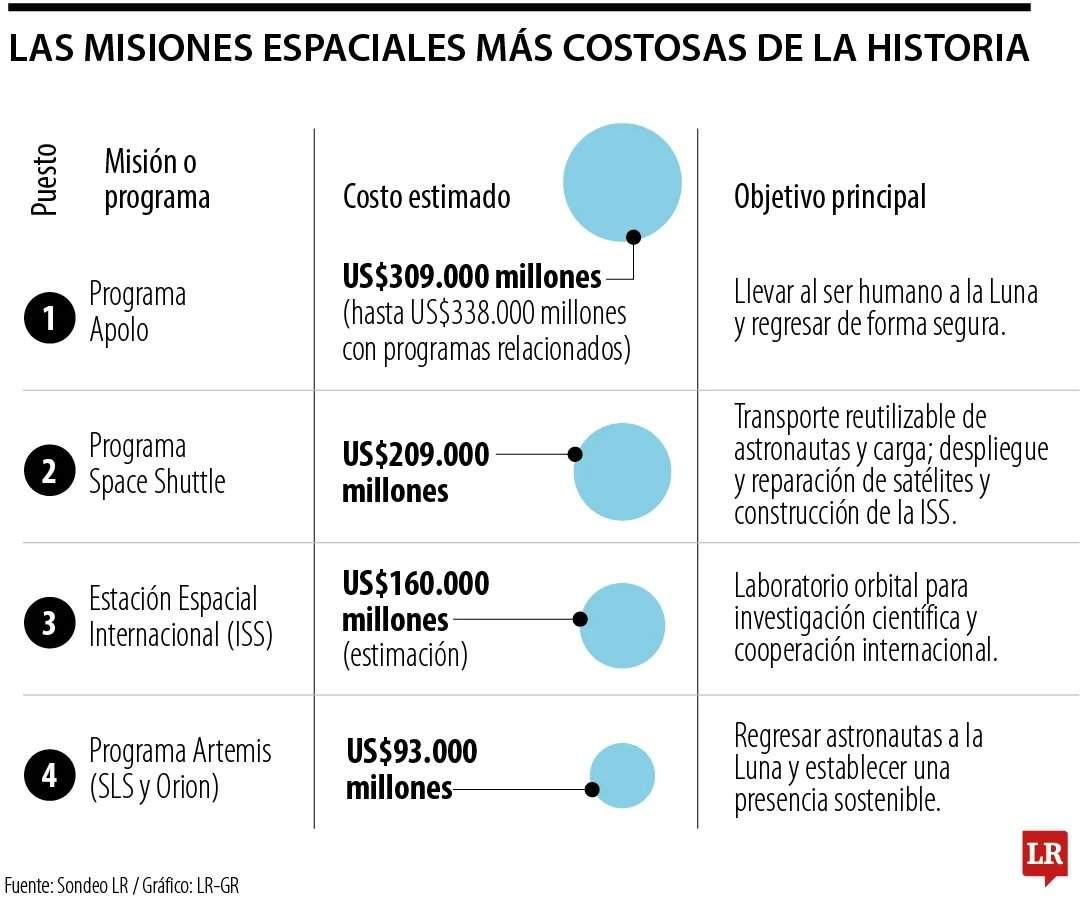
Topping the list is the US Apollo program. Between 1960 and 1973, the US government invested approximately $25.8 billion in the program, equivalent to about $309 billion in 2025 dollars—the cost of achieving the first human lunar landing.
In second place is the Space Shuttle program. This reusable space shuttle system operated from 1981 to 2011 and was initially promised to significantly reduce the cost of space travel. However, due to the complexity of maintenance and operations, it ultimately became one of NASA's most expensive projects, with a total cost of approximately $209 billion and an average cost of about $1.6 billion per launch.
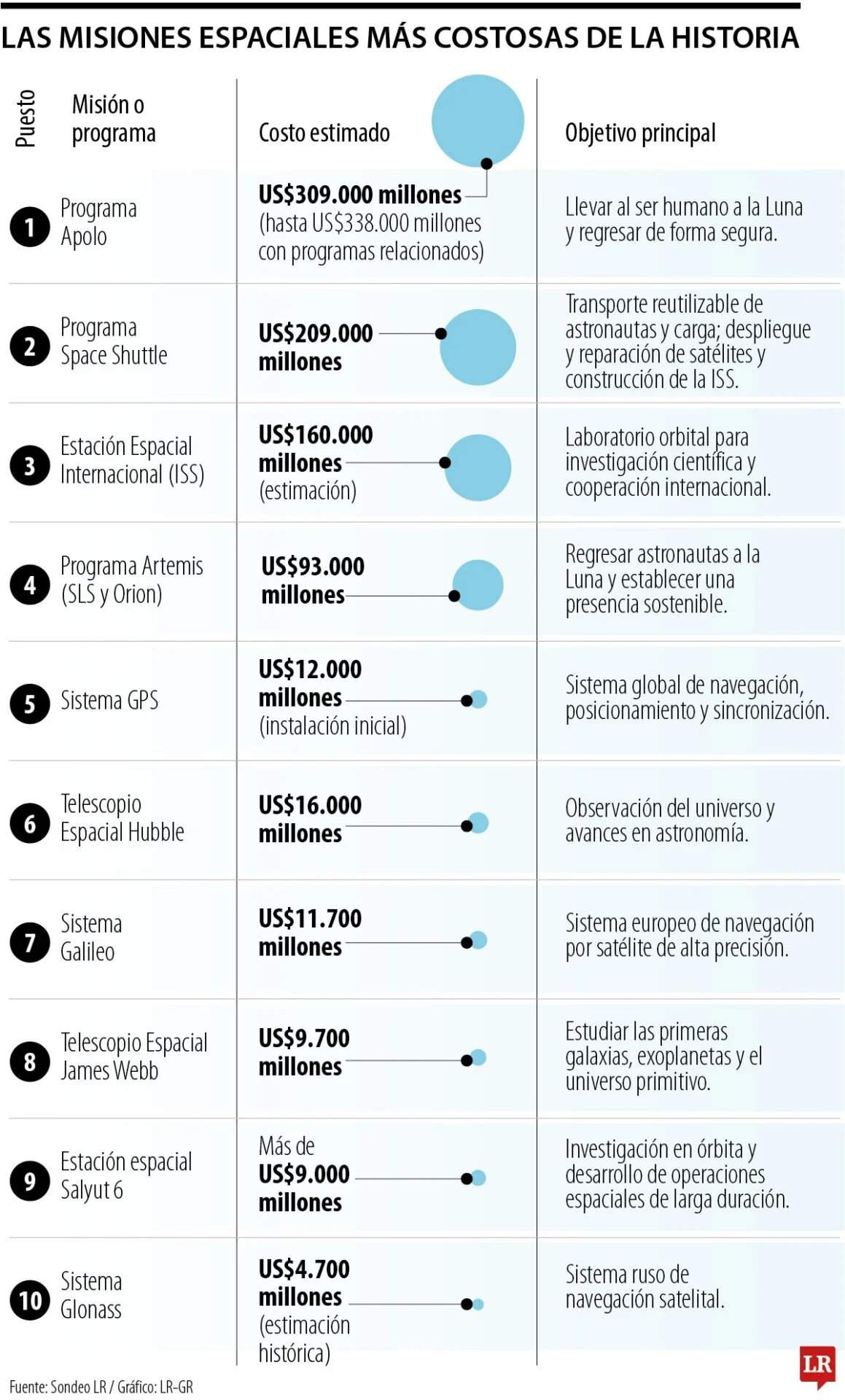
The International Space Station ranks third. This orbital laboratory, jointly developed by the United States, Russia, Europe, Japan, and Canada, has sustained a continuous human presence in space since 2000. Its development and assembly cost approximately $160 billion, with an additional $3 billion needed annually for operations and maintenance.
The Artemis program follows closely behind. NASA plans to use this program to return astronauts to the Moon and establish a long-term presence on and around the lunar surface. According to projections from NASA's Office of Inspector General, the program is expected to cost approximately $93 billion between 2012 and 2025, covering the development of the Space Launch System (SLS) rocket, the Orion spacecraft, and related systems.
The list also includes large-scale technology projects that are widely used in daily life but whose development costs are little known. The initial construction cost of the Global Positioning System (GPS) was approximately $12 billion, with billions more subsequently required for the maintenance and modernization of the satellite constellation.
In addition, the Hubble Space Telescope, Europe's Galileo system, the James Webb Telescope, the Soviet Salyut 6 space station, and Russia's Glonass system also made the list, together forming the ten most expensive space programs to date.
Related Products


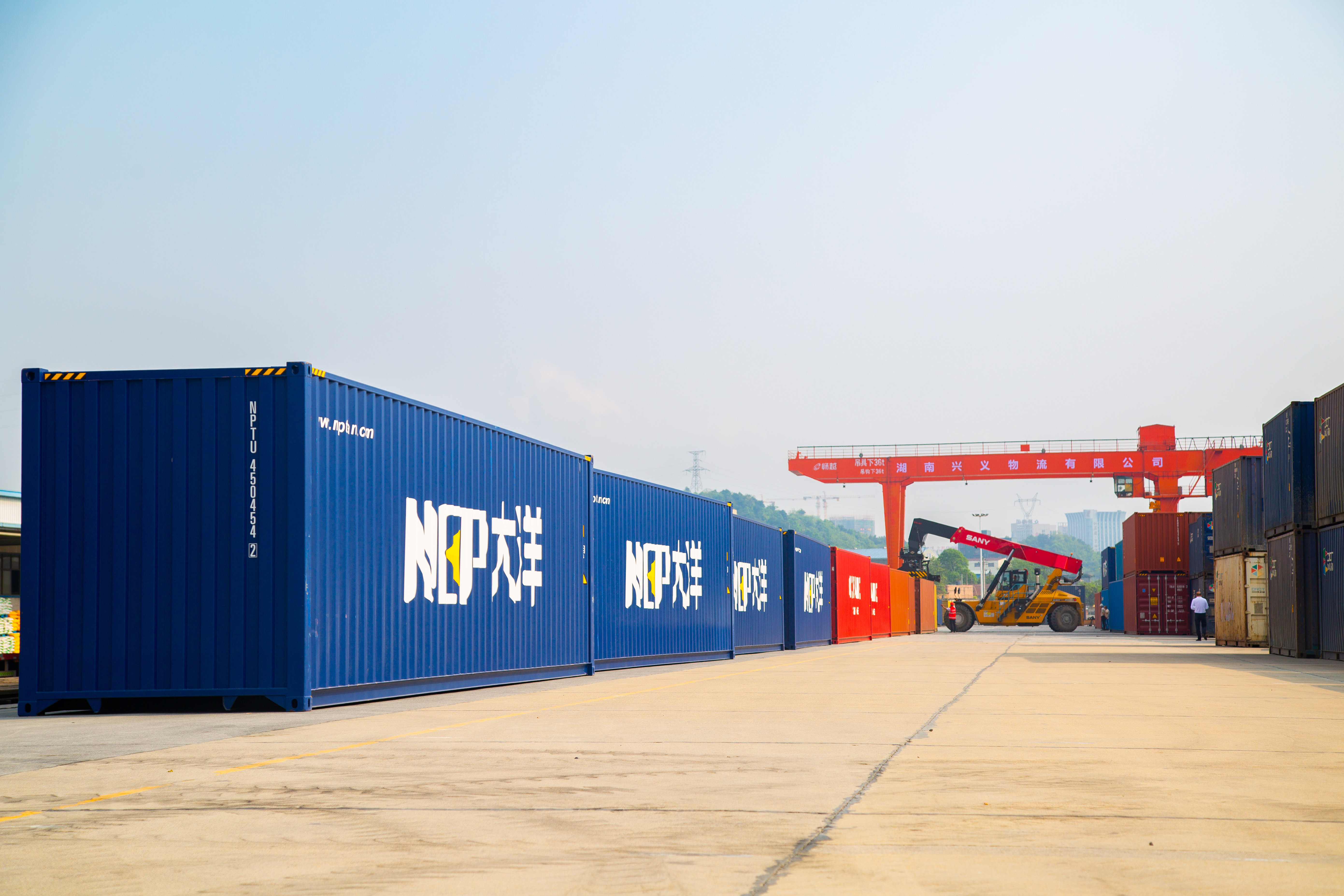
China - Alashankou/Khorgos - Europe Full Range Transportation (Mala/Hamburg/Duisburg/Budapest, etc.)
Shenzhen Neptune Logistics Co., Ltd.





Industrial and Commercial Point-Type Gas Detector
Jinan Benan Technology Development Co., Ltd.
Wheel and Track Technology Business
Beijing Research & Design Institute of Rubber Industry Co., Ltd.