TU Berlin Study: Methanol as Backup Alternative to Hydrogen Costs Only 2.4% More
en.Wedoany.com Reported - A study by the Technical University of Berlin shows that a climate-neutral European energy system can be built primarily on direct electrification. For applications where direct electrification is difficult, such as shipping, parts of the chemical industry, and backup power supply during extended periods of low wind and low sunlight, the researchers advocate using methanol instead of hydrogen, citing its easier transport, storage, and infrastructure development, while total system costs rise only slightly.
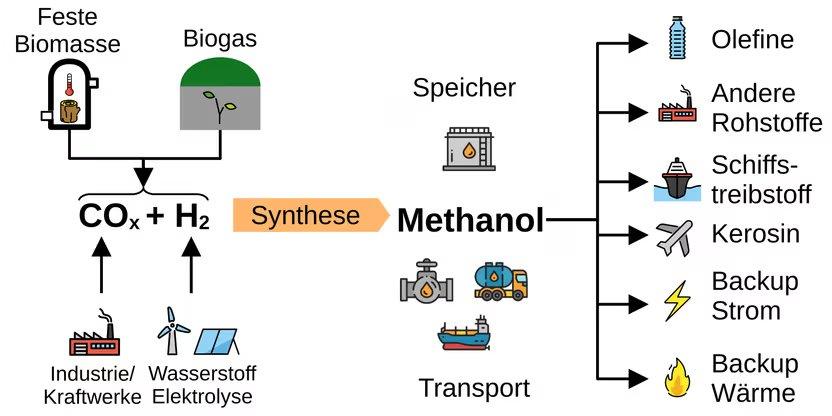
The study, titled "A minimal methanol backstop for high-electrification scenarios," was published in the journal Joule and analyzes how Europe can meet its energy needs economically while remaining climate-neutral. The results show that, compared to a few years ago, more sectors can now be directly electrified, such as battery-electric trucks or using electricity for heating.
This means the scope for hydrogen in the energy system has narrowed considerably. Chemical energy carriers are only needed where direct electrification is technically almost infeasible, including international shipping, aviation, parts of the chemical industry, and backup power plants that ensure electricity supply during prolonged periods of low wind and low sunlight. These sectors require high-energy-density liquid fuels such as methanol or kerosene, rather than hydrogen.
Professor Tom Brown, head of the "Digital Transformation in Energy Systems" research group at the Technical University of Berlin, stated that Germany is currently planning a large-scale hydrogen network, but future hydrogen demand is likely to be significantly overestimated; using methanol instead of hydrogen would allow infrastructure to adapt more flexibly to actual demand. Hydrogen molecules are small and have low density, requiring long-distance pipelines and underground storage; liquid methanol, by contrast, can be transported relatively easily by ship, rail, truck, or existing oil pipelines, and stored in tanks. This flexibility makes new infrastructure easier to build and reduces the risk of costly misinvestment.
Model calculations using the PyPSA software developed by Tom Brown's research group show that an energy system with a minimal "methanol backstop" has total system costs only about 2.4% higher than a scenario relying on hydrogen or methane for residual applications. The researchers argue that methanol's additional costs are low, but its flexibility is greater—these marginal costs are offset by advantages not fully captured in the model, such as infrastructure that can expand flexibly in line with actual developments and energy carriers that are easier to store. The research team sees this result as a contribution to the current energy policy debate: electrification expansion should remain the top priority, while sustainably produced methanol should play a role in areas where electrical solutions reach their technical limits.
Related Products



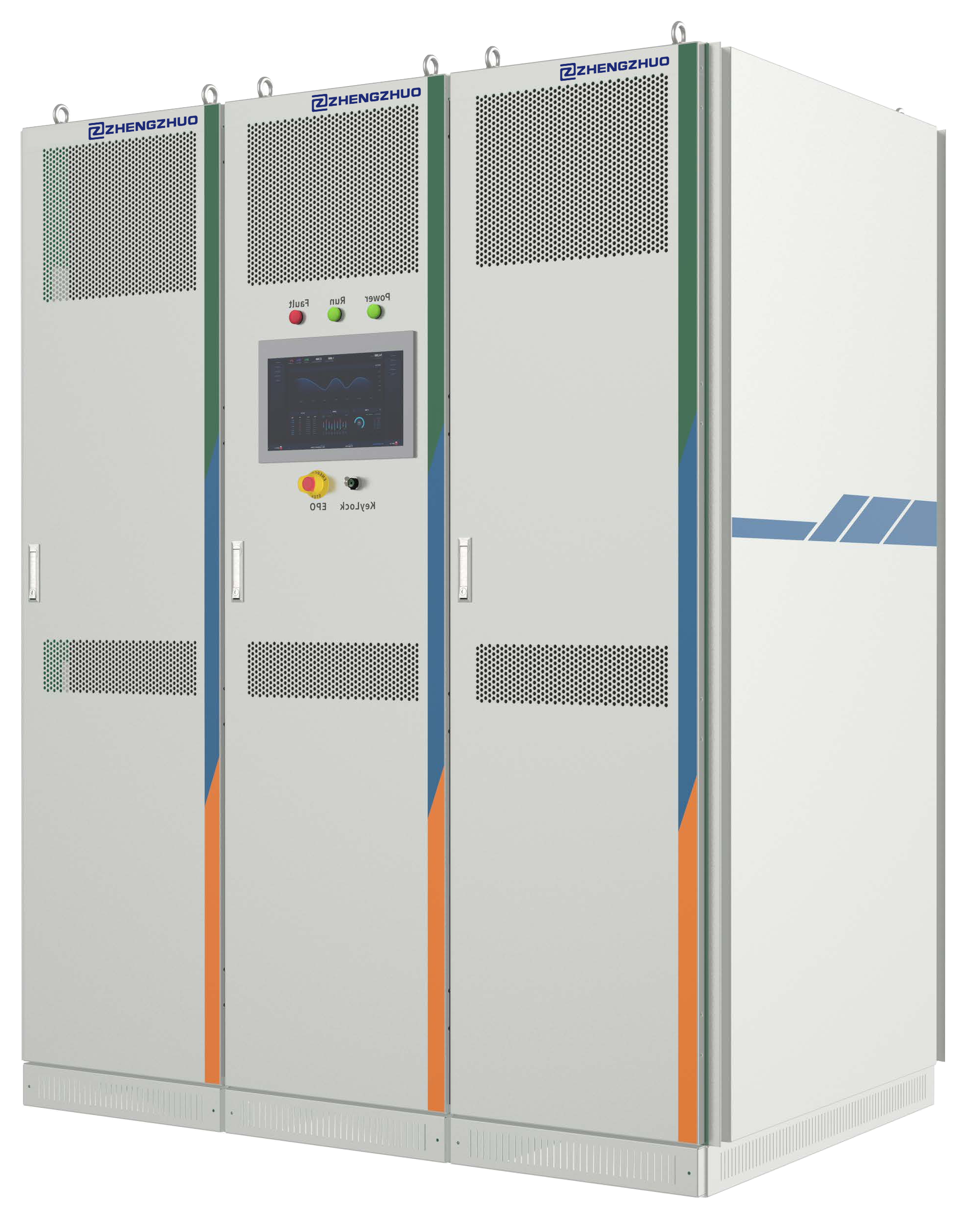
IGBT Hydrogen Production Power Supply - High Power Air Cooling
Beijing Zhengzhuo Engineering Technology Co., Ltd.
CAP1400 main feedwater flow nozzle flowmeter.
Jiangsu Hongda Instrument Technology Co., LTD.
Pneumatic high-pressure wear-resistant ball valve
Zhejiang Deca Control Valve Meter Co., Ltd.
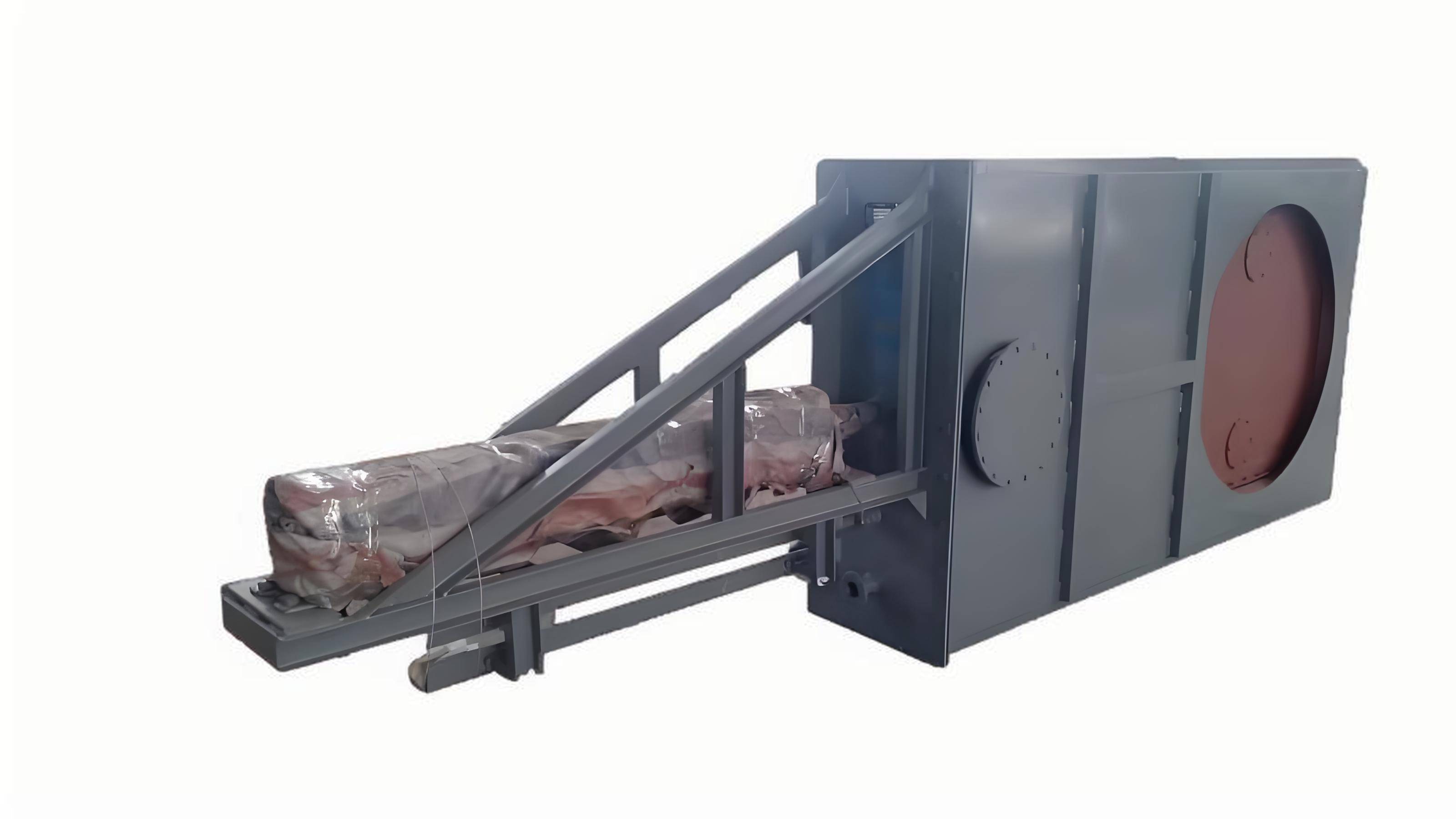
Double-slide Triple-sealed Hot Air Isolation Door
Xi'an Yingchuan Electric Power Equipment Co., Ltd.