en.Wedoany.com Reported - Brazil's Energy Research Company (Empresa de Pesquisa Energética, EPE) published the registration results for the battery auction on August 3, receiving a total of 6,091 project registrations with a combined capacity of 296.8 gigawatts (GW), setting a record for participation in Brazil's electricity sector auctions.
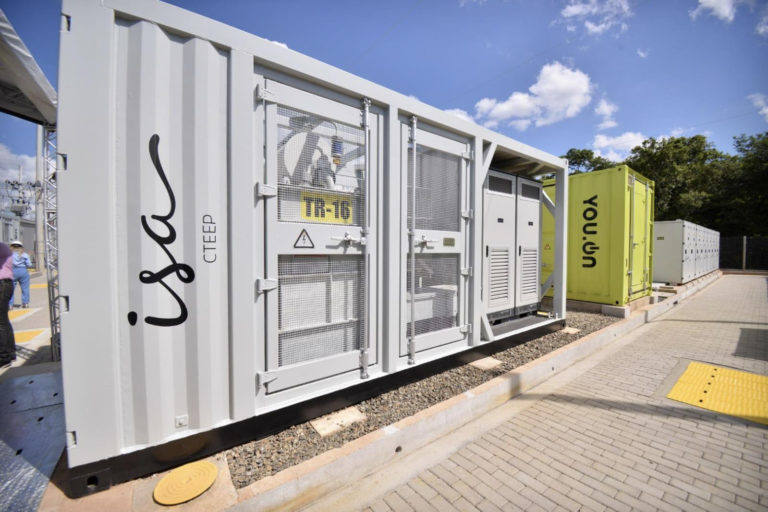
The first auction is scheduled for December 2, targeting battery energy storage systems (BESS) that meet the minimum local content requirements set by Brazil's National Bank for Economic and Social Development (Banco Nacional de Desenvolvimento Econômico e Social, BNDES), with 5,296 projects registered, totaling 261.408 GW in capacity. The second auction is scheduled for December 4, open to all energy storage system projects, with 5,734 projects registered, totaling 281 GW in capacity. Some projects have registered for both auctions.
In a statement, EPE said the high number of registered projects demonstrates strong corporate interest in deploying energy storage systems in Brazil's electricity sector and confirms the technology's strategic role in expanding system operational flexibility, supporting renewable energy integration, and meeting the future electricity demand of the National Interconnected System (Sistema Interligado Nacional, SIN). According to EPE, projects still need to pass the company's analysis and technical qualification review before they can participate in the auctions.
The Brazilian Association of Energy Storage Solutions (Associação Brasileira de Soluções de Armazenamento de Energia, Absae) believes that the number of registered projects confirms investor confidence in the domestic market and demonstrates that Brazil has the technical, industrial, and financial capabilities to promote large-scale investment. In a statement, Absae's Executive Director Fabio Monteiro Lima said the record-breaking number of registered projects proves that Brazil's energy storage market has reached a mature stage and that investors have strong interest in the sector.
Meanwhile, the association once again criticized the practice of allocating energy storage costs solely to generation companies, calling the rule "exceptional" and "contrary to the principle of equality."