Hyundai and Kia's MobED Robot Completes Autonomous Navigation Demonstration in Ship Cargo Hold
en.Wedoany.com Reported - The MobED mobile robot platform, jointly developed by Hyundai Motor and Kia, has completed an autonomous navigation demonstration aboard a multipurpose vessel, verifying the feasibility of autonomous robots performing operations in hazardous ship areas that are difficult for crew members to access.
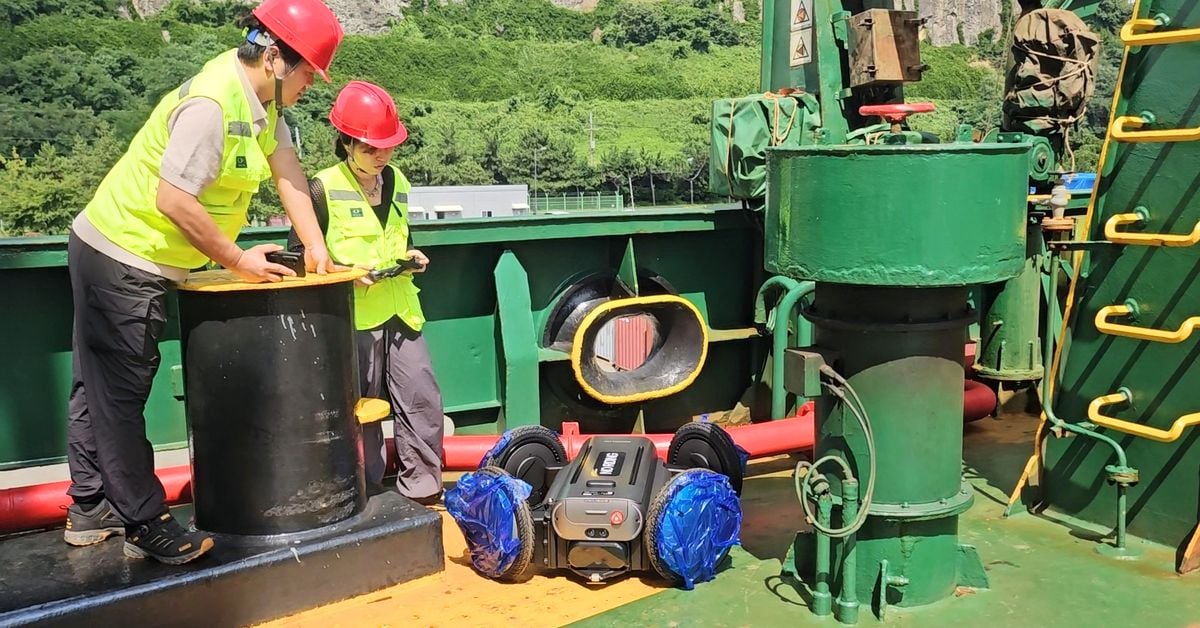
The test was conducted aboard the multipurpose vessel "HYUNDAI DUBAI" by Hyundai Motor, Kia, together with the Korean Register, HMM, HMM Ocean Service, and Goseong Engineering in Changwon, South Korea. The trial aimed to assess whether land-based autonomous robots could operate reliably in a moving ship environment affected by vibration, motion, and changing surfaces, with the demonstration tasks focusing on future smart ship operation scenarios such as cargo hold inspection, monitoring, and material transport.
MobED completed autonomous navigation tasks in the ship's cargo hold area, including straight-line and curved driving, low-speed and high-speed movement, route learning, and autonomous operation. The platform features independently controlled wheels, enabling stable movement on uneven surfaces, ramps, and thresholds, and can be equipped with inspection tools, cameras, and transport systems as needed for onboard tasks.
In narrow passageway tests, MobED successfully completed route learning and low-speed operation, but due to limited space, operators switched the robot to remote control mode in these areas rather than allowing fully autonomous navigation. The organizations involved stated that the demonstration showed autonomous robots can operate in large cargo hold areas without requiring modifications to existing ship infrastructure.
Hyundai Motor and Kia were responsible for developing the MobED platform and control technology, while the Korean Register assessed safety standards and regulations related to the robot. The participants noted that enclosed areas such as engine rooms and narrow corridors remain challenging and may require additional sensors or smaller-scale robot platforms.
Park Min-Woo, President of Hyundai Motor and Kia, stated that this demonstration is a typical example of confirming the applicability of autonomous driving technology in ship environments. The trial highlighted the role of autonomous robots in supporting seafarer safety in hazardous environments such as cargo holds containing explosive or toxic substances—areas where direct crew access poses additional risks, and robots can carry cameras or inspection equipment to perform inspection and monitoring tasks in place of personnel.
The project remains at the demonstration stage and requires further development before broader onboard applications are considered. The Korean Register stated that future work will focus on developing safety and performance standards for robot applications on ships and conducting further demonstrations. The partners will continue researching the use of robots for tasks such as cargo hold surveillance and material transport as part of future smart ship operations.
Related Products
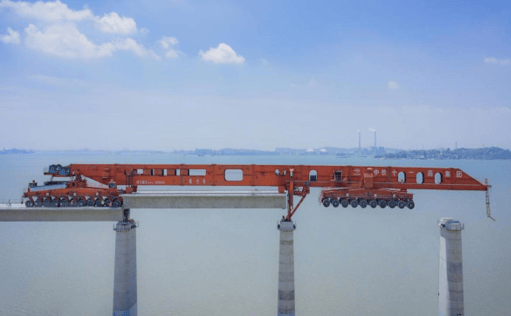

High-Speed Railway Lifting, Transporting, and Erecting Equipment: Integrated Transport and Erection Machine
Hanjiang Heavy Industry Co., Ltd. of China Railway 11th Bureau Group

Industrial and Commercial Point-Type Gas Detector
Jinan Benan Technology Development Co., Ltd.

CAP1400 main feedwater flow nozzle flowmeter.
Jiangsu Hongda Instrument Technology Co., LTD.

Pneumatic high-pressure wear-resistant ball valve
Zhejiang Deca Control Valve Meter Co., Ltd.
LBH4000 Batch Environmental Protection Asphalt Mixing Plant | Asphalt Batching Plant | Asphalt Mixing Plant
Jilin Province Road Construction Machinery Co., Ltd.