U.S. Transmission Competitive Bidding Dispute Extends to AI Power Demand
en.Wedoany.com Reported - Disputes are intensifying over whether competitive development should continue for transmission projects in the central United States, amid new electricity demand from AI data centers and advanced manufacturing. The "Grid Acceleration Alliance," comprising nine transmission and utility companies including ITC, Ameren, ATC, Entergy, Evergy, and Xcel Energy, has filed a complaint with the U.S. Federal Energy Regulatory Commission (FERC) seeking adjustments to transmission project development rules in the MISO and SPP regions. The complaint remains on FERC's pending docket under case number EL26-58-000.
The alliance proposed two options: exempting projects that could affect the timely interconnection of new load or generation from competitive solicitation requirements, or suspending MISO and SPP solicitation requirements for five years. The alliance stated that current procedures add an average of 16 to 20 months to development timelines; for every $1 billion in transmission investment implemented one year earlier, savings of $150 million to $370 million could be realized for customers. These estimates are based on economic analysis submitted by the complainants.
In its response filed with FERC, MISO stated that transmission project in-service dates are typically incorporated into regional planning before determining whether a project qualifies for competition, and that developer solicitation procedures are conducted within established construction timelines. MISO's first competitively developed project to reach commercial operation, the Duff-Coleman 345 kV transmission line, was completed approximately six months ahead of its original schedule and within the cost commitments made by the developer.
After comparing 18 operational competitive transmission projects in the United States, the R Street Institute found that competitive projects in the CAISO, MISO, SPP, and ISO-NE regions took less time from need identification to commercial operation than comparable legacy utility projects; competitive projects in the PJM region, however, were approximately 20% slower. Its cost analysis showed that final costs for competitive projects were roughly 30% lower than comparable non-competitive projects, though the report also noted the limited sample size of operational projects and insufficient transparency in cost and schedule data for legacy utility projects.
FERC Order No. 1000 required regional transmission planning to eliminate the federal right of first refusal for legacy utilities on certain interregional projects, while preserving state and local authority over siting, permitting, and state-level rights of first refusal. The rule allows regional planning bodies to select developers through competitive bidding, and MISO and SPP established their respective competitive project solicitation mechanisms accordingly.
On June 18, 2026, FERC separately launched a reform initiative for large load interconnection, requiring six regional grid operators—MISO, SPP, PJM, CAISO, ISO-NE, and NYISO—to justify existing rules or submit proposed revisions within 60 days. The scope includes interconnection application and study processes, transmission cost allocation, co-location of load and on-site generation, flexible large load service, and nearby generation studies. The six operators are also required to submit a special report within 30 days ensuring adequate generation supply for new large loads.
.
Related Products


Hydraulic Turbine Genset
Dongfang Electric Corporation Dongfang Electric Machinery Co., Ltd.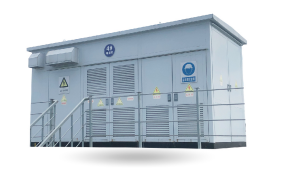
Smart Photovoltaic Prefabricated Substation
Shanghai Jinyou Jinhong Intelligent Electric Co., Ltd.
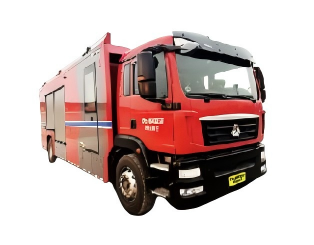
Modular Multifunctional Water Supply and Drainage Vehicle (18T)
Changsha Dewater Machinery Technology Co., Ltd.

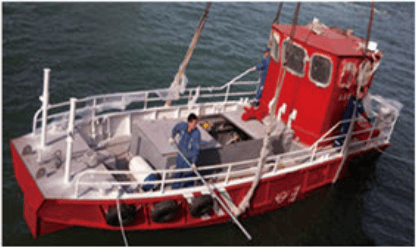
Electromagnetic Fluid Seawater Floating Oil Separation and Recover Equipment
Huate Magnet Group Co., Ltd.

Pneumatic high-pressure wear-resistant ball valve
Zhejiang Deca Control Valve Meter Co., Ltd.
Mars (Liquid Cooling) Series Industrial and Commercial Energy Storage Converter High Protection Module
Shenzhen Winline Technology Co., Ltd.