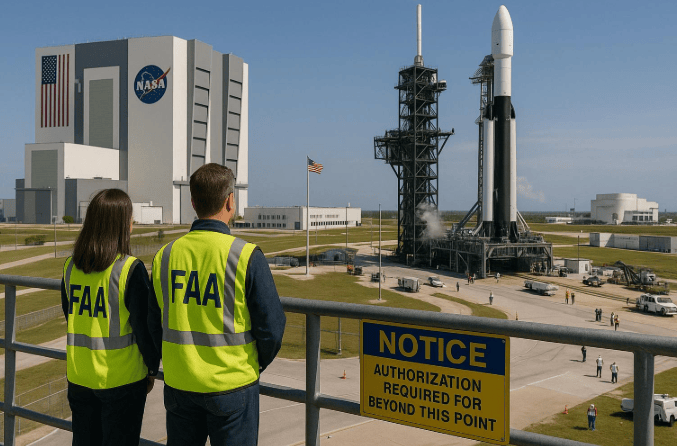
NASA to Launch Roman Space Telescope on August 30, 2026
en.Wedoany.com Reported - NASA has scheduled the launch of the Nancy Grace Roman Space Telescope for August 30, 2026, at 7:26 a.m. EDT from Launch Complex 39A at NASA's Kennedy Space Center in Florida, aboard a SpaceX Falcon Heavy rocket. The mission aims to provide an unprecedented wide-field view of the universe, investigating some of the biggest unanswered questions in astronomy, including the nature of dark energy, dark matter, and the prevalence of exoplanets beyond our solar system.
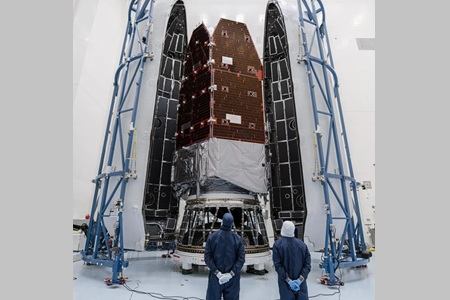
NASA stated that the telescope has completed final processing and testing at the Kennedy Space Center and is now on track for launch on August 30. This launch date is significantly earlier than originally planned: when construction was completed in January 2026, NASA indicated the telescope could launch as early as fall 2026, with a formal commitment allowing launch by May 2027; by June, the target had been moved up to August 30, approximately eight months ahead of the schedule announced when the mission entered its final preparation phase.
Roman is named after Nancy Grace Roman, NASA's first chief astronomer, who was a pioneer in the development of the agency's space astronomy program and is often referred to as the "Mother of the Hubble Space Telescope." Roman is designed to complement, not replace, existing observatories, combining Hubble-class image quality with a wide field of view. Its primary mirror measures 2.4 meters (7.9 feet) in diameter, the same as Hubble's; the Wide Field Instrument covers at least 100 times the sky area of Hubble in a single observation, and can survey the sky up to 1,000 times faster than Hubble while maintaining comparable infrared resolution and sensitivity.
The primary science goals focus on dark energy, dark matter, and exoplanets. Dark energy is a phenomenon associated with the accelerated expansion of the universe; Roman will provide new evidence for understanding cosmic expansion and dark energy by mapping the distribution of vast numbers of galaxies and studying how cosmic structure has changed over time. Dark matter neither emits nor reflects light, but its gravitational effects influence galaxies and other cosmic structures; Roman's large-scale surveys will enable scientists to study these effects across much larger areas of the sky, refining models of matter distribution. In the realm of exoplanets, Roman will conduct a microlensing survey of the crowded central region of the Milky Way, exploiting the effect where the gravity of a foreground star temporarily magnifies the light of a more distant star, to detect planets that are difficult to find with other techniques. This survey is expected to identify more than 1,000 exoplanets and reveal planets across a wide range of distances and masses, including planets farther from their stars than typical exoplanets found to date. During its five-year primary mission, Roman will also measure the light of up to one billion galaxies, building a vast dataset for astronomers studying the evolution of galaxies and large-scale structure.
The primary science instrument is the Wide Field Instrument, a ~300-megapixel near-infrared camera and slitless spectrometer whose detector system consists of 18 Teledyne H4RG-10 sensor chip assemblies, providing a field of view of approximately 0.28 square degrees. Roman also carries the Coronagraph Instrument as a technology demonstration, designed to block starlight so astronomers can directly observe nearby exoplanets and planet-forming disks, building the technological foundation for future direct studies of planets obscured by the glare of their host stars.
After launch, Roman will travel to the Sun-Earth L2 Lagrange point, located about 1.5 million kilometers (approximately 930,000 miles) from Earth in the direction opposite the Sun, where the gravitational balance between the Sun and Earth allows the spacecraft to maintain a stable orbit and enjoy a relatively unobstructed, thermally stable observing environment. The primary mission is expected to last about five years, with a design goal of ten years. The spacecraft can transmit 11 terabits of data per day, with downlink rates of approximately 250 to 500 megabits per second.
The observatory was assembled from millions of individual components by more than 1,000 technicians and engineers. NASA completed construction in January 2026, and in June the telescope was transported to the Kennedy Space Center aboard the Pegasus barge, followed by final launch preparations at the Payload Hazardous Servicing Facility, including power-on checks, solar array, thermal system, and propellant tank preparations. Before encapsulation in the Falcon Heavy fairing, engineers will load approximately 290 gallons of hydrazine fuel into Roman.
SpaceX is providing launch services under the NASA Launch Services II contract awarded in 2022, under which the launch was originally planned for October 2026; NASA will pay approximately $255 million for the launch service and related mission costs. The mission is managed by NASA's Goddard Space Flight Center, with participants including NASA's Jet Propulsion Laboratory, Caltech/IPAC, the Space Telescope Science Institute, and researchers from institutions around the world. International organizations, including the European Space Agency, the Japan Aerospace Exploration Agency, the French space agency CNES, and Germany's Max Planck Institute for Astronomy, are also contributing to the mission.
If launched as scheduled, Roman will combine the sharpness of a large space telescope with extremely broad survey capabilities, adding a new observational dimension to space-based astronomy. NASA expects the telescope's vast scientific datasets to form a long-term usable archive that, beyond its core objectives, will also support research on galaxies, black holes, stars, planetary systems, and other phenomena across the universe.
Related Products





Pantograph-Catenary Comprehensive Detection Device (1C)
CHENGDU TANGYUAN ELECTRIC CO., LTD.![IVECO Cash-in-Transit [DMT5048XYCL3-AM] - Chongqing Dima Industry Co., Ltd](https://img.wedoany.com/2026/0911/20260911030157582.png)
GSR6-27.5kV SF6 Free Gas-insulated Metal-enclosed Switchgear
Zhejiang Juhonkia Intelligent Electric Co., Ltd.


Wheel and Track Technology Business
Beijing Research & Design Institute of Rubber Industry Co., Ltd.