After One Million Units: China's Forklift Industry Ushers in Three Profound Transformations
en.Wedoany.com Reported - According to statistics from the Industrial Vehicles Branch of the China Construction Machinery Association, cumulative forklift sales in the first seven months reached 1.0098 million units, a year-on-year increase of 17.7%. Even more noteworthy is the export data: 380,500 units, up 22% year-on-year. Against the backdrop of global trade pressures, where does this counter-trend growth come from?
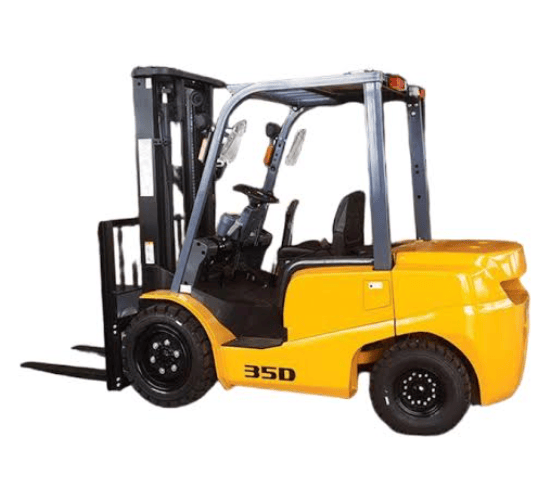
Behind these numbers, China's forklift industry relies not on a single-dimensional breakthrough, but on the convergence of three waves: electrification, intelligence, and export upgrading. With lithium-ion forklift sales exceeding 360,000 units in the first half of the year, unmanned forklifts poised for explosive growth despite a penetration rate of only 2%, and overseas manufacturing bases extending from Southeast Asia to Europe, these three transformations are redefining the value proposition of "China's forklifts."
Lithium-Powered: Electrification Enters the Deep End
Electrification has become the most distinctive growth driver in China's forklift industry. According to data from the Industrial Vehicles Branch of the China Construction Machinery Association, electric forklift sales reached 691,215 units in the first half of 2026, a year-on-year increase of 23.75%. During the same period, sales of internal combustion counterbalanced rider forklifts totaled 170,719 units, down 5.56% year-on-year. Amid this rise and fall, electric forklifts now account for over 80% of total sales, while the market space for internal combustion forklifts is being rapidly compressed.
According to a representative from Zhejiang Zhongli Machinery Co., Ltd. (hereinafter referred to as "Zhongli") who spoke to China Industrial News, an automotive logistics customer in Shanghai made bulk purchases of Zhongli lithium-ion forklifts, achieving nearly 100% electrification within its facility. "The average daily energy cost per unit dropped by approximately 70%, delivering dual benefits of cost reduction and low-carbon operations."
The rapid maturation of lithium battery technology has provided critical support for forklift electrification. Data shows that in the first half of 2026, sales of lithium-ion forklifts (Class 1-3) reached 366,447 units, up 33.34% year-on-year. This includes 116,286 electric counterbalanced rider forklifts, 10,565 electric rider warehouse forklifts, and 239,596 electric pedestrian warehouse forklifts. Domestic sales of lithium-ion forklifts totaled 205,924 units, while export sales reached 160,523 units, with both domestic and international markets expanding simultaneously.
"China's electric vehicle industry has greatly accelerated the maturity of lithium battery technology and significantly reduced costs, providing a substantial technological dividend for forklift electrification," said Liu Shihong, a consulting expert who has long studied China's industrial vehicles and mobile robotics industries. He believes that the core competitiveness of China's forklift electrification stems first from the mature development of lithium battery technology. The electrification of industrial vehicles has also provided an important market outlet for numerous small and medium-sized lithium battery manufacturers. With nearly 600,000 Class III pallet trucks sold annually, lithium batteries hold clear advantages in price, technology, and application markets.
Leading enterprises are accelerating their push into the electrification track. Zhongli has built a full-series electric equipment matrix ranging from 0.6 to 45 tons, covering products from small warehouse handling trucks to 35-ton heavy-duty forklifts and 45-ton electric reach stackers. Leveraging high-energy-density lithium batteries and quick-swap lithium battery technology, the company is helping industries such as manufacturing, automotive logistics, and e-commerce warehousing complete their green transformation. Anhui Heli sold 258,000 forklifts in the first half of the year, up approximately 22% year-on-year, with electrified products accounting for about 74% of sales. Hangcha Group has established three major vehicle platforms—lithium battery, hydrogen fuel cell, and hybrid—with multiple new energy forklifts being rolled out successively.
From a global perspective, China's first-mover advantage in the lithium battery supply chain is translating into strong export competitiveness. Industry analysts predict that the global penetration rate of lithium-ion forklifts will surge from approximately 32% in 2024 to over 70% by 2034. However, Liu Shihong also cautioned: "Although European and American markets also emphasize the electrification of industrial vehicles, they place greater emphasis on safety, quality, and after-sales service. Given China's strong position in lithium batteries, European and American companies are focusing more on niche markets and core customers." He specifically warned of risks in the Southeast Asian market: "Chinese forklift dealers at all levels are pouring in, and quality and service systems need to be established as quickly as possible."
Smart Manufacturing Breakthrough: Unmanned Forklifts on the Verge of a Breakthrough
If electrification represents an innovation in power systems, then intelligence represents a revolution in operational methods.
At Zhongli's Anji Digital Smart Factory, over 200 digital intelligent mobile robots are operating collaboratively, with multiple intelligent logistics routes covering the entire chain from raw material intake to finished product outbound. Production efficiency has improved by 80%, and material inventory turnover has doubled. To address pain points in high-altitude and high-risk warehousing operations, Zhongli also launched an innovative embodied robotic arm picking robot, "Optimus Prime," this year, capable of flexible picking at heights of up to 10 meters.
However, the development of unmanned forklifts still faces practical challenges. According to a research report from Guotai Haitong Securities, the penetration rate of unmanned forklifts in China is only about 2%. The underlying logic of traditional AGVs (Automated Guided Vehicles) is that of pre-programmed execution equipment, requiring the site to accommodate the machine—fixed paths, no decision-making capability, and shutdown upon anomalies. This is the fundamental reason for the persistently low penetration rate.
What exactly is the core bottleneck constraining the large-scale deployment of intelligent forklifts? Pan Xiaojun, Chairman of Suzhou Zhuoyi Intelligent Forklift, told China Industrial News: "Intelligent forklifts currently have long project delivery times, and technical maturity and scenario validation require continuous refinement." He specifically highlighted the difficulties of narrow-aisle AGVs: "Hardware compatibility in relevant scenarios is the core issue. In old warehouse renovation projects, the compliance of existing racking standards, floor flatness, and the regularity of pallet and goods stacking are all key factors affecting project implementation quality."
A representative from Zhongli offered a different perspective: "Single-machine intelligent technologies such as navigation, obstacle avoidance, and positioning have already matured. The real bottleneck is the combined challenge of return on investment, non-standard scenario delivery, and customer organizational capability." He elaborated on these three challenges: First, the practical constraints of input-output economics—customers rigorously calculate payback periods. "Traditional projects often require large-scale warehouse renovations, and the combined costs of software, hardware, implementation, commissioning, and ongoing maintenance are relatively high, significantly suppressing adoption willingness among SMEs." Zhongli's response is a tiered implementation path: around the four core logistics operations of loading/unloading, transfer, warehousing, and picking, enterprises can quickly start with single-machine equipment, opt for modular upgrades in core processes, or plan comprehensive full-chain digital intelligent mobile solutions, matching the transformation pace and investment budgets of enterprises of different sizes. Second, on-site non-standard scenarios are complex: "Industrial sites vary from factory to factory—rack configurations, cargo specifications, floor conditions, and production line rhythms differ enormously, multiplying the workload of project delivery, commissioning, and maintenance." Third, customer organizational adaptability is insufficient, as many manufacturing enterprises lack digital operations and maintenance talent.
"We treat ourselves as the first test customer," the representative explained. "The Anji Digital Smart Factory has achieved self-scheduling operations for over 200 robots, with an in-facility logistics unmanned rate of 100%. We distill the scenarios, algorithms, and complete delivery methodology validated in our own factory and provide them to customers."
The industry is witnessing a fundamental shift in technological approaches. In July this year, Hangcha Group released the "LogiMind" industrial embodied large model, adopting a large-brain/small-brain architecture combining cloud-based intelligence with on-site edge processing, enabling forklifts to possess autonomous perception and intelligent decision-making capabilities while reducing deployment costs. Zhongli has independently developed the USP universal scheduling platform, supporting multi-category robot collaboration and mixed scheduling across brands, and has contributed its practical experience to the drafting of the national standard "Interface Requirements for Underlying Data of Industrial Mobile Robot Scheduling Systems."
"Material handling is no longer simply about moving from point A to point B—it now incorporates a series of functions such as processing, repackaging, returns handling, and truck loading/unloading. Retrofitted traditional forklifts and unmanned forklifts designed based on traditional forklifts cannot meet market demands." In Liu Shihong's view, what the market needs are native unmanned forklifts with central dispatch, AI-driven self-judgment, and operational capabilities. In replacing traditional pallet trucks, under-ride AGVs have already achieved mainstream scale: "The market will soon move toward volumes of hundreds of thousands of units. After more than a decade of technological accumulation, unmanned forklifts will find even greater development space in the next five years amid the advancement of embodied intelligence and AI."
According to industry analyst forecasts, the average price of a single unmanned forklift will decline from RMB 220,000 in 2024 to RMB 180,000 by 2027, while the market size will grow from RMB 5.15 billion in 2024 to exceed RMB 13.3 billion by 2027, representing a compound annual growth rate of 37.4%. Between the current 2% penetration rate and large-scale application lies a market growth opportunity of tens of billions of yuan.
Global Expansion: Going Global Enters the "Second Half"
Exports are the most impressive growth driver for the forklift industry this year. According to data from the Industrial Vehicles Branch of the China Construction Machinery Association, exports of powered industrial trucks reached 318,085 units in the first half of 2026, up 20.97% year-on-year. This includes 264,464 electric forklift exports, up 24.67% year-on-year, and 53,621 internal combustion forklift exports (including container forklifts), up 5.50% year-on-year. July alone saw exports of 62,200 units, up 27.2% year-on-year, a further improvement over June.
What exactly is the core competitiveness of China's electric forklifts in the global market? A representative from Zhongli believes it absolutely cannot rely on low-cost pricing, but rather on the combination of global R&D and manufacturing capabilities, strong product innovation and iteration capabilities, localized service capabilities, and the advantages of a complete supply chain. He offered an analogy: "Doing business globally is like establishing a position—you can't just ship goods over and sell them. Zhongli's advantage comes from the comprehensive localization system built through early deployment—product focus on electrification and intelligence, fully integrated local R&D, production, sales, and service, with fast response, agile iteration, and precise adaptation to local operating conditions. This is a comprehensive capability many overseas competitors lack." Zhongli adheres to a strategy of "global operations + localized management," with 13 global R&D and production bases, over 100 localized operations teams, products sold to more than 100 countries and regions, and a consistently high proportion of overseas revenue.
Regarding intelligent forklifts, Pan Xiaojun noted that overseas market acceptance is relatively good, but certification is a hard threshold. "Intelligent forklift exports to the United States and Canada require UL North American safety certification, while exports to Europe require CE EU safety certification. If international certification is not planned at the product design stage, subsequent supplementary certification poses a considerable challenge." He also mentioned an easily overlooked non-product factor: "The low approval rate for technical engineers applying for U.S. visas creates practical constraints on technical services and project delivery in the U.S. and Canadian markets." At the same time, it must be acknowledged that although China's forklift industry has a complete supply chain and outstanding cost-performance advantages, local brands still hold advantages in high-end niche markets in Europe and America, and Chinese companies still lag in high-end product matrices and the depth of overseas localized service networks.
A representative from Zhongli further added: "Developed markets in Europe and America have relatively high acceptance of unmanned forklifts and are willing to pay for efficiency, safety, and labor replacement, but they are very cautious in selection, prioritizing verification of safety certifications and real-world implementation cases. Southeast Asian and Latin American markets, by contrast, place greater emphasis on delivery speed and service capability. We implement differentiated products and localized operations for different markets."
In response to certification barriers, Zhongli implements localized quality requirements for different markets: complete machines for Europe pass CE certification, while those for the United States comply with ANSI industrial equipment standards, with electrical components meeting UL North American safety certification standards. "International certification should be incorporated into product planning at the design stage; otherwise, supplementary certification later is not only costly but may also delay market expansion windows," Pan Xiaojun emphasized.
More importantly, the overseas expansion model of Chinese forklift companies is upgrading from simple product exports to the export of industrial capabilities. German industrial giants KION (Linde) and Jungheinrich have both made strategic investments in Zhongli. Jungheinrich Group has also partnered with Zhongli to jointly create the global lithium battery equipment brand AntOn by Jungheinrich, collaboratively exploring international markets. Meanwhile, Zhongli is methodically advancing the layout of a production base in Thailand, strengthening overseas local delivery capabilities, enhancing supply chain resilience, and actively responding to global trade uncertainties. Anhui Heli ranks first in market share in over 30 markets, with overseas revenue accounting for 45%. Hangcha Group's Thailand manufacturing base officially commenced production in June 2026, and its French joint venture lithium battery plant successfully opened in July. LiuGong Forklift saw overseas sales surge 40% in the first half of the year, with overseas sales exceeding 50% of total revenue.
From "selling abroad" to "manufacturing abroad," from trade going global to manufacturing, technology, and brand going global, the globalization strategy of Chinese forklift companies is undergoing a qualitative leap. The establishment of overseas local production capacity not only circumvents trade barriers and reduces logistics costs, but also enables closer proximity to market demands and timely localized services—a critical step in transitioning from "cost-performance competition" to "brand competition."
Related Products

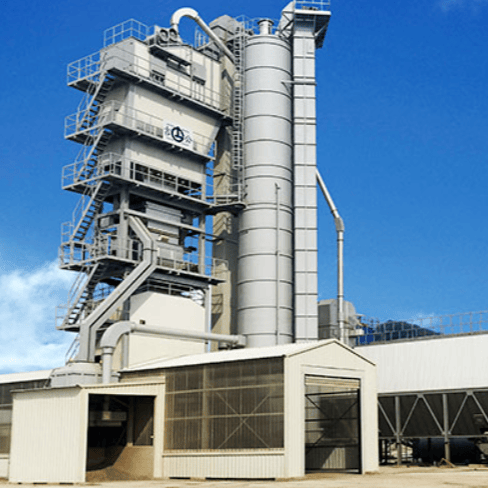
LBH4000 Batch Environmental Protection Asphalt Mixing Plant | Asphalt Batching Plant | Asphalt Mixing Plant
Jilin Province Road Construction Machinery Co., Ltd.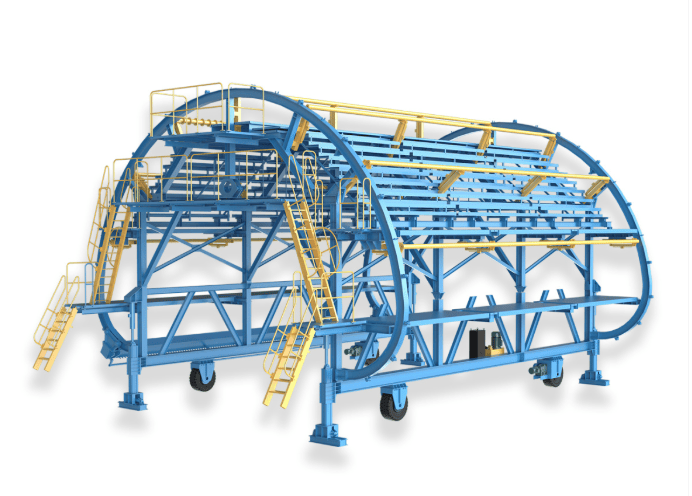
QLZNGJ Intelligent Steel Reinforcement Trolley
Luoyang China Railway Qiangli Machinery Co., Ltd.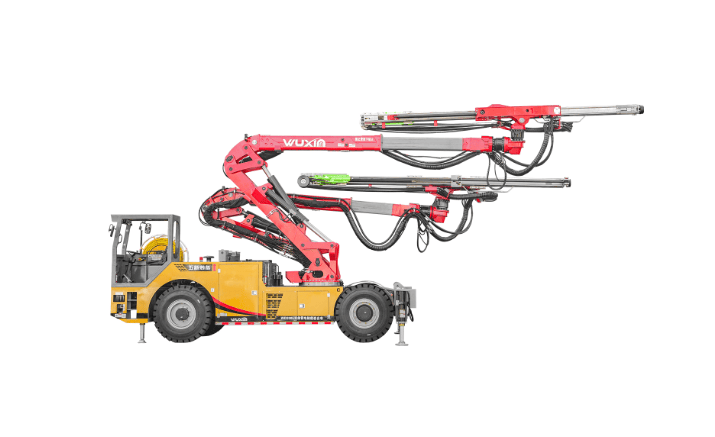
Double-Boom Computerized Rock Drilling Jumbo WD200E
Hunan Wuxin Intelligent Equipment Group Co., Ltd.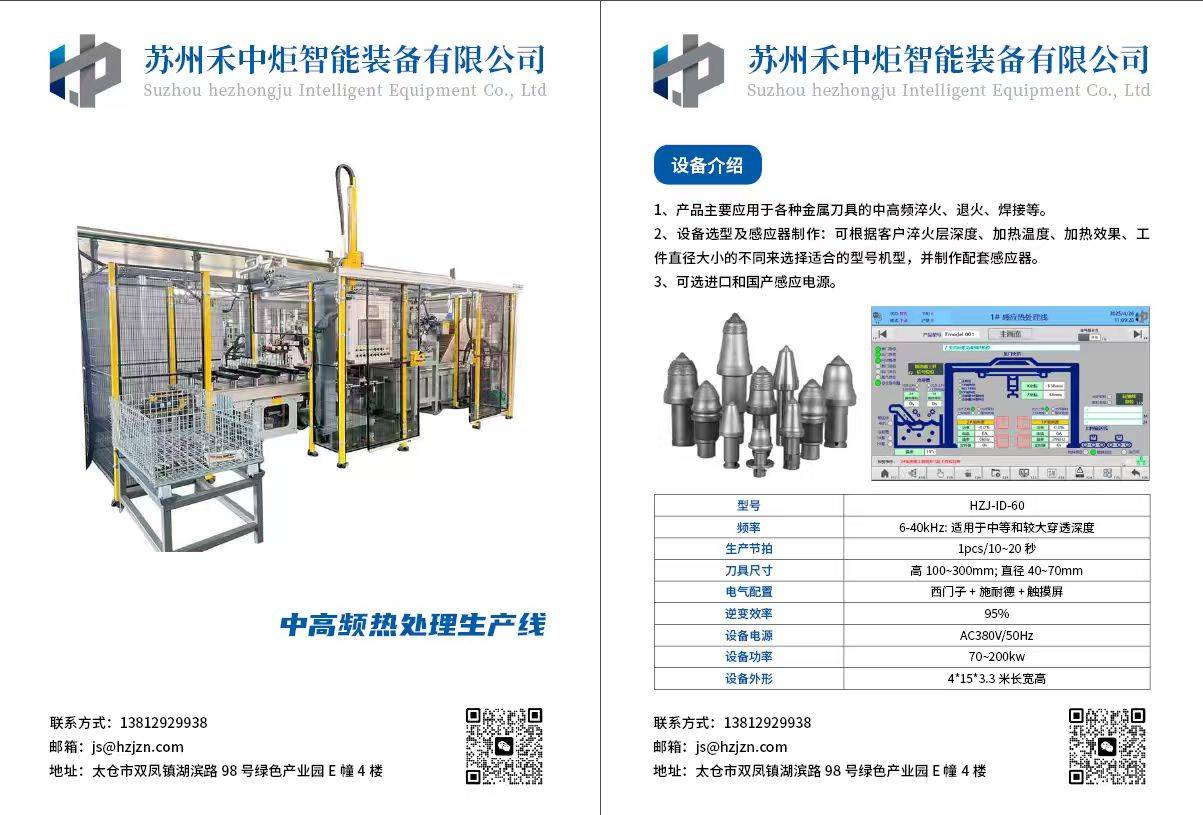
Excavator Bucket Teeth Heat Treatment Production Line
Suzhou Hezhongju Intelligent Equipment Co., Ltd.
Pneumatic high-pressure wear-resistant ball valve
Zhejiang Deca Control Valve Meter Co., Ltd.
Standard Nozzle Flowmeter
Jinggong Automatic Control Instrument Complete Technology Development Company