Tennessee Grants Type One Energy License for 400 MWe Fusion Power Plant
en.Wedoany.com Reported - The Tennessee Department of Environment and Conservation has issued a license to U.S. fusion energy developer Type One Energy, allowing it to build a fusion power plant at the site of the Tennessee Valley Authority's (TVA) former Bull Run fossil fuel plant in Clinton, Tennessee. Type One Energy submitted an initial permit application in January for its Infinity Two, a 400 MWe baseload plant utilizing stellarator fusion technology.

In 2023, the U.S. Nuclear Regulatory Commission (NRC) announced it would establish a regulatory framework for fusion energy systems based on the existing byproduct material licensing process. These systems generate electricity from the energy released when hydrogen atoms combine to form helium, rather than through the fission of uranium atoms. Because fusion systems do not involve special nuclear materials such as plutonium, uranium-233, or enriched uranium, and do not produce the self-sustaining neutron chain reaction required for nuclear fission reactors as defined by NRC regulations, they are not subject to NRC nuclear reactor regulatory requirements.
As an Agreement State, Tennessee has the authority, under a special agreement with the NRC, to license and inspect the use or possession of byproduct, source, or special nuclear materials within the state. The state submitted a rule amendment establishing its framework for registering and licensing fusion devices, processes, and related activities. Chapter 0400-20-14 of the current Rules and Regulations, along with its associated definitions, establishes the state's licensing requirements for fusion devices and fusion-related activities. The new regulations took effect on June 9.
David Salyers, Commissioner of the Tennessee Department of Environment and Conservation, stated that issuing this license is a significant milestone that solidifies Tennessee's reputation as a global nuclear innovation hub; the state is proud to have developed this pioneering fusion energy regulatory framework, which will serve as a model for other states.
Christofer Mowry, CEO of Type One Energy, stated that for the first time, a dedicated licensing process for fusion power plants has been developed, and an operating license specific to a fusion device has been issued under it, aligning with the national fusion energy regulatory framework. The importance of this milestone cannot be overstated. Tennessee's licensing process has now become an international benchmark, demonstrating how to unlock the attractive economics of this transformative power generation technology while ensuring the "inherent safety by design" of fusion power plants. He also stated that Type One Energy is honored to receive the first fusion device license for Project Infinity.

The stellarator fusion reactor being developed by Type One Energy differs from tokamak fusion reactors—such as the Joint European Torus in the UK or the International Thermonuclear Experimental Reactor (ITER) under construction in France. While a tokamak is based on a uniform toroidal shape, a stellarator twists the torus into a figure-eight shape. This design aims to circumvent a problem faced by tokamaks: the magnetic coils that confine the plasma necessarily have a lower density on the outer side of the torus.
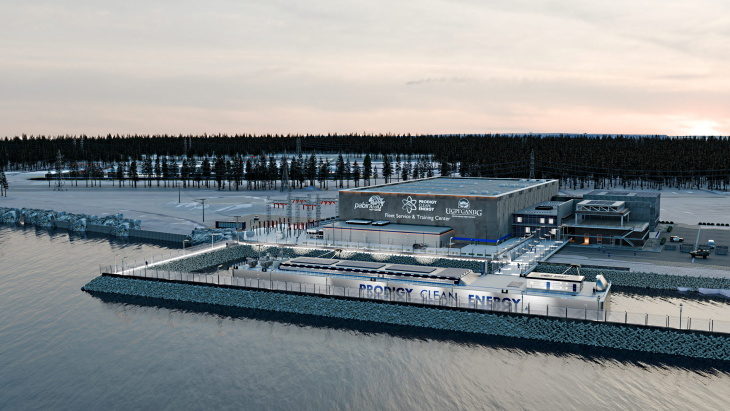
Type One Energy's Project Infinity includes the Infinity One prototype, a workforce training center, and the 400 MWe Infinity Two fusion power plant, to be advanced in multiple phases at TVA's Bull Run site. Through a collaborative project between Oak Ridge National Laboratory, TVA, and the University of Tennessee, the company's commercial site will serve as a fusion development campus. The Knoxville-based company plans to break ground on the first phase of Project Infinity later this year and expects full commissioning by 2034.
Tennessee Governor Bill Lee stated that as a global nuclear hub, Tennessee is building the workforce, infrastructure, and regulatory framework needed to lead the next generation of nuclear innovation. By creating a clear pathway for emerging technologies such as fusion, the state is advancing reliable, abundant American energy for generations to come.
Related Products
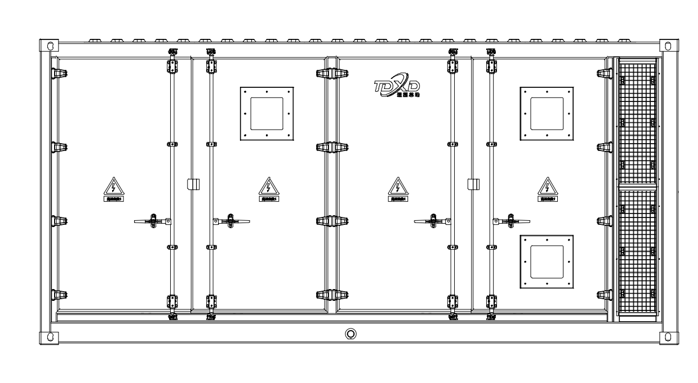

5012kWh DC Energy Storage System TD-EES-5012kWh
Suzhou Tongding Xindong Energy Storage Technology Co., Ltd.

Double-slide Triple-sealed Hot Air Isolation Door
Xi'an Yingchuan Electric Power Equipment Co., Ltd.


0.66kV Power Supply Instrument Transformer
Guangdong Sihui Instrument Transformer Works Co., Ltd.

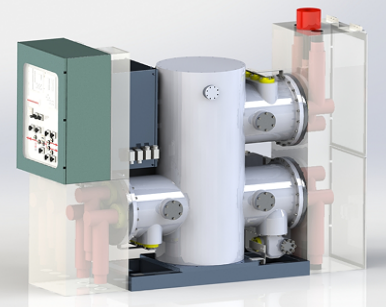

PCS-901 Series Ultra (Extra) High-voltage Transmission Line Complete Protection Device
Nanjing NR Electric Co., Ltd.