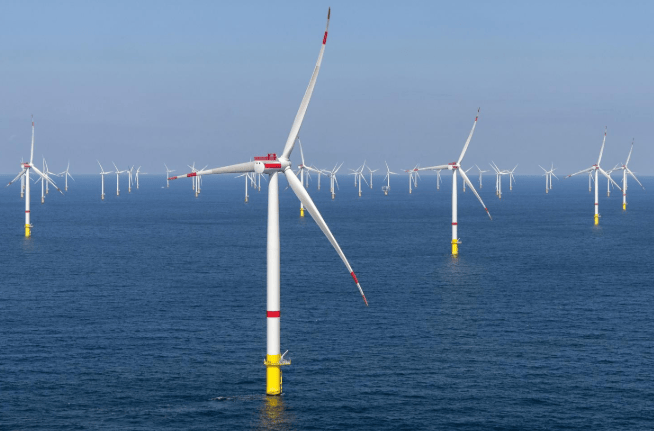
Vietnam Joins Forces with GIZ to Finalize North-South Industrial Port Clusters, Plans Major Investment in Offshore Wind Heavy Equipment Supply Chain
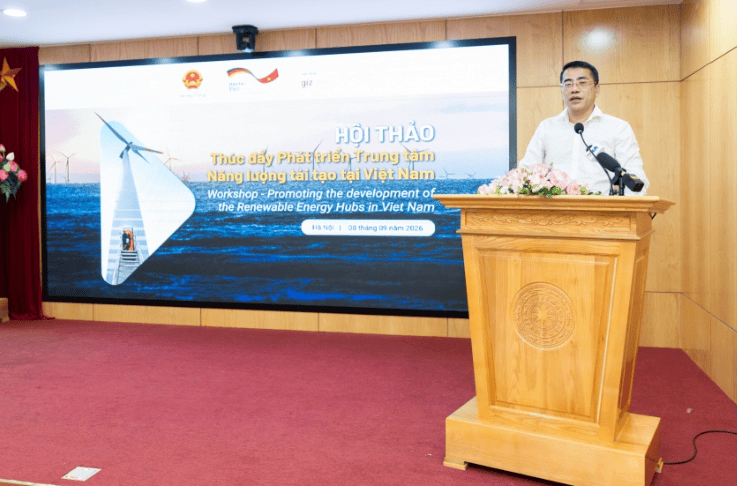
en.Wedoany.com Reported - On September 8, the Electricity Authority of Vietnam (EAV) and the German Agency for International Cooperation (GIZ) held discussions in Hanoi with enterprises and international experts on plans for renewable energy industry and service hubs. Under Vietnam's revised Power Development Plan VIII, the country aims to establish two cross-regional renewable energy industry and service centers by 2030, integrating new energy power generation, equipment manufacturing, port logistics, construction and installation, operations and maintenance services, green industrial parks, and R&D training into a single industrial system. The discussions further proposed the spatial layout of two major north-south industrial port clusters and the engineering requirements for supporting ports for offshore wind.
The current government plan has already defined the basic areas and power generation scale of the two centers. The northern center is planned for Hai Phong, Quang Ninh, Thai Binh and surrounding areas, with approximately 2,000 MW of offshore wind and approximately 500 MW of onshore and nearshore wind capacity planned, along with new energy equipment manufacturing plants, specialized ports, construction, installation and O&M logistics facilities, low-carbon industrial parks, and R&D training institutions. The south-central–southern center is planned to cover Ninh Thuan, Binh Thuan, Ba Ria–Vung Tau, Ho Chi Minh City and other areas, with approximately 2,000–2,500 MW of offshore wind and approximately 1,500–2,000 MW of onshore and nearshore wind capacity planned, along with corresponding manufacturing, port logistics, O&M, and industrial supporting facilities.
The discussions further translated the industrial center plans into specific requirements for ports and heavy equipment supporting conditions. The meeting noted that individual components of offshore wind towers, foundation structures, and turbine parts can weigh up to approximately 2,500 tons, requiring supporting ports to be equipped with deep-water channels, high-load-bearing wharves, large pre-assembly yards, and berths capable of accommodating specialized construction vessels. Engineering estimates used in the discussions show that port storage yards and wharf load-bearing capacity need to reach approximately 15–25 tons per square meter, and that each 1 GW of offshore wind supporting capacity may require approximately 30 hectares of assembly and storage space; basic port infrastructure investment is estimated at approximately USD 1.16 billion per 100 hectares. This figure is an infrastructure estimate at the discussion stage and does not represent an approved investment amount for any individual project by the Vietnamese government.
The southern industrial port cluster currently proposes Ba Ria–Vung Tau, Binh Thuan, and Ninh Thuan as key areas, leveraging existing oil and gas engineering foundations, deep-water ports, and offshore engineering manufacturing capabilities to develop offshore wind component manufacturing, assembly, and O&M services. The northern cluster centers on Hai Phong and Quang Ninh, building a large new energy equipment supporting industrial zone based on local steel, machinery manufacturing, and port infrastructure. At the discussions, the Vietnam Petroleum Institute noted that existing steel structure manufacturing, offshore engineering structures, port logistics, and technical personnel can serve as the existing industrial foundation for the offshore wind manufacturing and engineering service system.
The installed capacity targets set out in the revised Power Development Plan VIII further define future equipment and engineering demand. By 2050, Vietnam's onshore and nearshore wind installed capacity is planned to reach 84.696–91.4 GW, offshore wind 113.503–139.097 GW, and solar power 293.088–295.646 GW. By 2030, the share of renewable energy generation in the power mix is targeted at approximately 28%–36%, rising further to 74%–75% by 2050. The plan also requires the development of domestic new energy equipment manufacturing, energy storage equipment, and related electrical machinery industries.
The industrial centers remain at the stage of planning research and deepening implementation plans. EAV and GIZ are assessing Vietnam's existing manufacturing capacity, infrastructure gaps, and the legal and financing conditions required to build the hubs. The discussions proposed that equipment manufacturers establishing long-term production bases in Vietnam would need a project development pipeline spanning 10–25 years; direct power purchase agreements, centralized new energy development zones, and phased localization mechanisms were also included in follow-up research topics. The Vietnamese government has at this stage defined the direction and key areas of the two cross-regional centers, but specific port expansion projects, investors for equipment manufacturing plants, individual investment amounts, land scales, and implementation timelines still require further determination.
Related Products


CAP1400 main feedwater flow nozzle flowmeter.
Jiangsu Hongda Instrument Technology Co., LTD.
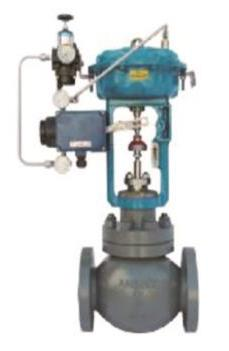
Quick-Change Single-Seat Control Valve / Quick-Change High-Pressure Single-Seat Control Valve
Beijing Consen Automation Technology Co., Ltd.
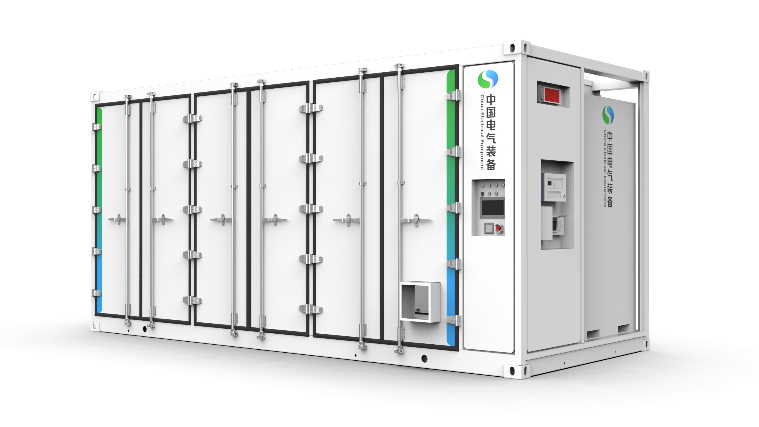
MESS8201-2507/5015-BN Prefabricated Liquid-cooled Energy Storage Battery Container
Xuchang Xuji Electric Science Energy Storage Technology Co., Ltd.

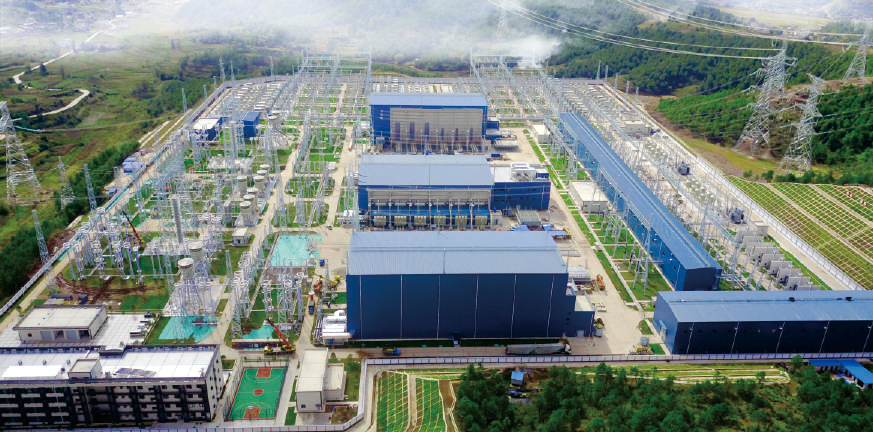
High-voltage Direct Current (HVDC) Transmission System Research and Integrated Design
XI'AN XD POWER SYSTEMS CO., LTD.